From the patch towns built for coal workers to the mill and railroad streets of Greensburg, Jeannette, Latrobe, Monessen and New Kensington, a lot of Westmoreland County was built before anyone planned for single-floor living. Bedrooms and bathrooms sit upstairs, and a full staircase is the only way to reach them.
Add the hills of the Laurel Highlands and the slopes many houses are built into, and a person with limited mobility can face stairs both inside and out. This page covers what kind of stair lift tends to fit local homes and which programs in the county and state may help with the cost.
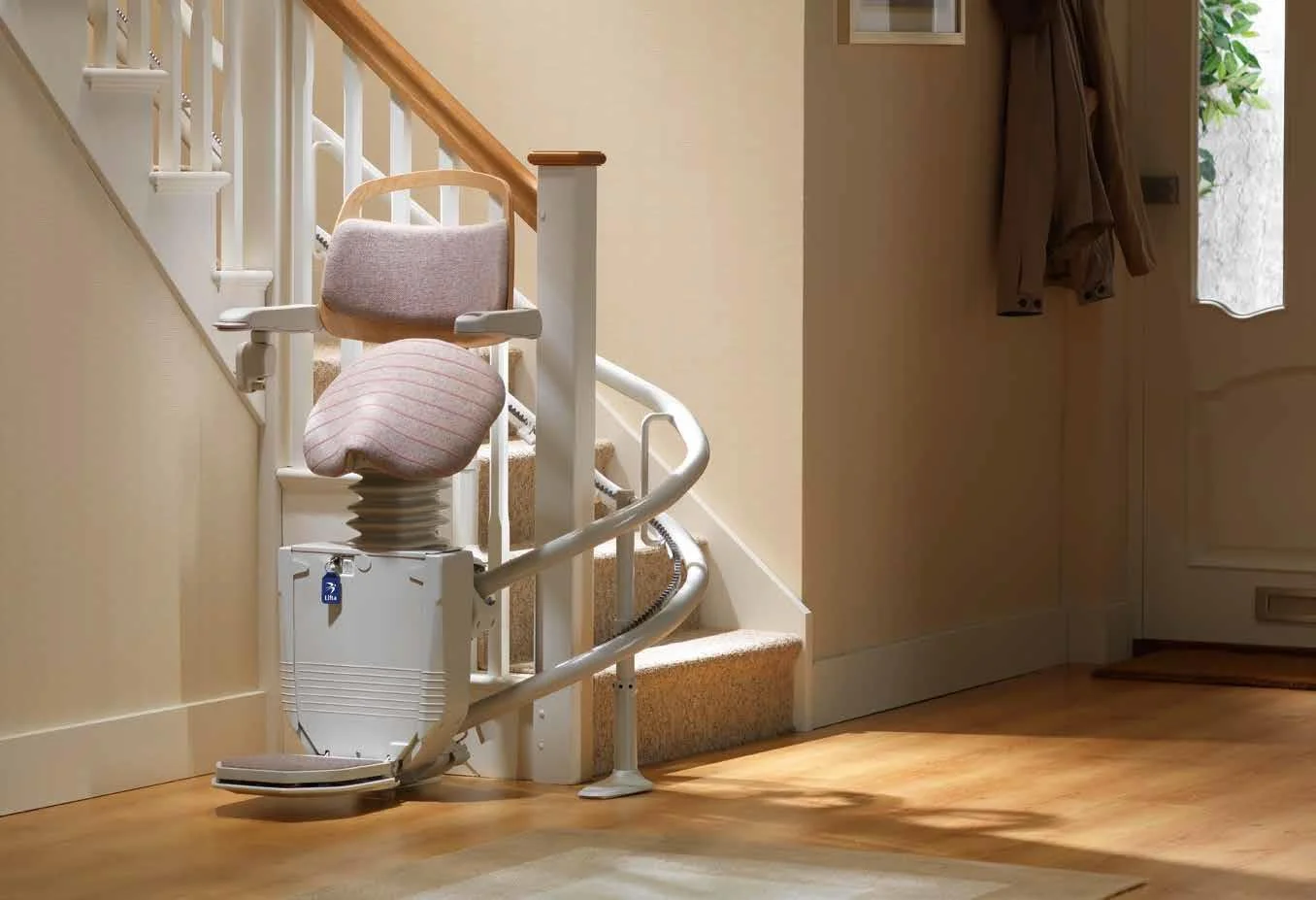
Westmoreland County's housing grew out of its coal and steel boom. Coal companies put up rows of uniform wood-frame double houses and clapboard single-family homes, and the mill towns added dense multistory housing in the late 19th and early 20th centuries.
That layout is the problem and the reason a stair lift works. When the only full bath is on the second floor, getting up the stairs safely is what lets someone stay in the house. About 78.4% of residents are homeowners, so most people here can make that change to a home they already own.
A straight staircase in a detached house or single-family home is usually the simplest fit. A straight rail mounts to the stair treads, not the wall, so plaster walls in older houses are not a concern.
Row houses and older double houses often have narrow stairs, a turn at the top, or a landing halfway up. Those usually call for a curved rail built to the exact shape of the staircase. Split-level homes, common on the county's hillsides, can mean several short flights, and each one needs to be measured on its own.
The county covers about 1,036 square miles, and its eastern half rises into Chestnut Ridge and the Laurel Mountains. On ridge-and-valley ground like this, many homes have raised entries and exterior steps before you even get to the indoor staircase.
January averages around 28-29°F here, so outside steps get icy. An outdoor stair lift built for weather, or a platform lift where a wheelchair is involved, can take that hazard away at the front or back door.
About 23.7% of Westmoreland County residents are 65 or older. Many have lived in the same multistory house for decades and would rather adapt it than move.
For them, the county's Veterans Affairs & Services office at 2 N. Main Street, Suite 205, in Greensburg can be reached at (724) 830-3530.
The clearest path is Pennsylvania's Community HealthChoices Medicaid waiver, which lists stair glides as a covered benefit for people who qualify. For residents 60 and older, the Westmoreland County AAA at 200 S. Main St. Suite 207 in Greensburg is the place to start, since it handles assessments and OPTIONS intake.
Veterans with a qualifying service-connected disability can look at VA housing grants, and people with disabilities of any age can contact the Disability Options Network. The PA Assistive Technology Foundation (PATF) is another statewide resource worth asking about. Each program is summarized below.
This Medicaid waiver lists stair glides as a covered benefit and also covers home adaptations, decided case by case for Pennsylvania residents 21 and older who qualify for long-term services and supports. Approval needs clinical justification and sign-off from your Service Coordinator; call (800) 274-3258.
OPTIONS provides in-home services for Pennsylvanians 60 or older, with a sliding-scale cost share and no income cap to qualify. The source does not mention stair lifts specifically, though home modifications are offered on a limited basis; call (717) 783-1550 or the county AAA.
The county AAA does in-home assessments and care management for residents generally 60 and older and is the local gateway to OPTIONS and CHC assessments. Whether it pays for stair lifts directly is not known, so call (724) 830-4444 and ask.
These federal grants help veterans with qualifying service-connected disabilities adapt a home they own or will own, with SAH up to $126,526 and SHA up to $25,350 (FY 2026). The source does not mention stair lifts specifically; call (800) 827-1000.
DON is the Center for Independent Living serving Westmoreland County, offering free or low-cost advocacy and a DME reuse program that may provide refurbished equipment to people with disabilities of any age. The source does not mention stair lifts; call (724) 652-5144.
Older adults
200 S. Main St. Suite 207, Greensburg, 15601
Veterans
2 N. Main Street, Suite 205, Greensburg, 15601
Through the Community HealthChoices waiver it can. Stair glides are listed as a covered benefit, decided case by case, and need a documented need in your InterRAI assessment plus authorization from your Service Coordinator. Call (800) 274-3258.
Yes, the OPTIONS program serves Pennsylvanians 60 or older with no income cap, using a sliding-scale contribution. Home modifications are offered on a limited basis. Start with the Westmoreland County AAA at (724) 830-4444.
Usually, yes. Narrow or turning stairs often need a curved rail made to the staircase's exact shape, while a straight flight can take a standard straight rail. We measure the stairs in person before recommending either.
Many homes on the county's hillsides have raised entries and exterior steps. An outdoor stair lift built for weather can handle those, and a platform lift is an option when a wheelchair is in use.
The county's Veterans Affairs & Services office in Greensburg is at (724) 830-3530. Veterans with a qualifying service-connected disability can also ask the VA about SAH and SHA grants at (800) 827-1000.
CHC covers Pennsylvania residents 21 and older who qualify, and the Disability Options Network serves people with disabilities of any age, including a DME reuse program. Call DON at (724) 652-5144.
Tell us about the stairs in your home and we will explain which lift fits, what it costs and how installation works.
