Nevada covers 103 towns spread across counties as different as Clark County, Washoe County, Esmeralda County and White Pine County. A home in one may sit close to everything, while a home in another can be a long drive from the nearest service shop. That distance changes how a stair lift gets measured, installed and serviced, so we plan each job around where the house actually is.
About 16.4% of Nevadans are 65 or older, and many of them want to stay in the homes they already own. A stair lift is often the change that makes that possible when the bedroom or bathroom is up a flight of steps. This page walks through which lift fits which staircase, who in Nevada helps pay, and where to find your county's own page.
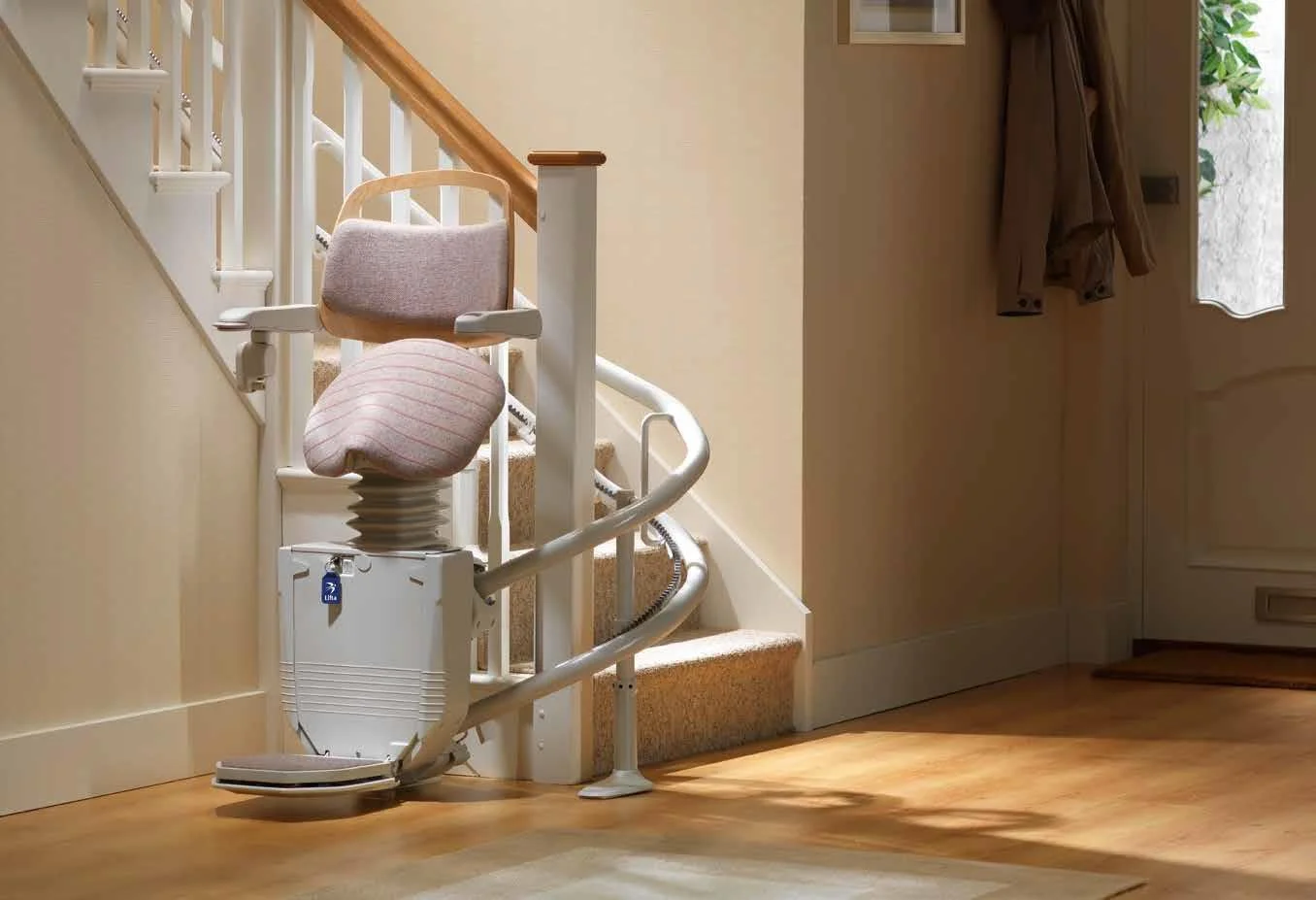
The staircase decides the lift more than anything else. A straight run with no landings takes a straight rail, which is the simplest and usually the quickest install. Stairs that turn, wrap around a landing or split partway up need a curved rail built to that exact shape.
Steps outside the house, such as a run from the driveway to the front door, call for an outdoor model with weather-resistant parts. When the person uses a wheelchair and cannot transfer to a seat, a platform lift is the better fit. We measure first and recommend after, so you are not paying for more lift than the stairs need.
Roughly 58.2% of Nevada households own their home. That matters because some funding treats owned and rented homes differently. The Nevada Assistive Technology for Independent Living (AT/IL) Program, for example, caps rental-home modifications at $3,000 but funds owned-home modifications based on assessed need.
If your parent rents, talk with the landlord before anything is ordered. A straight stair lift mounts to the stair treads rather than the wall, which can make the conversation easier, but written permission still protects everyone.
The key detail is that two VA pieces do different jobs. The HISA grant pays for structural changes such as ramps, up to $6,800 for service-connected needs or $2,000 for non-service-connected needs, but not the lift itself.
The stair lift comes through VA Prosthetics (PSAS) when it is medically prescribed, and there is no set dollar cap on that route. Ask the VA doctor about a prescription first, then call (877) 222-8387 to start the process.
Nevada has several programs that can cover a stair lift or the home changes around it. The Nevada Medicaid HCBS Waiver for the Frail Elderly (FE Waiver) funds home accessibility adaptations under an approved plan. The AT/IL program offers grants on a sliding-scale cost share.
For homeowners outside the cities, the Rural Nevada Development Corporation Homeowner Rehabilitation Program uses a forgivable lien with no monthly repayment. One program to rule out early is the Nevada Community Options Program for the Elderly (COPE), which funds in-home care but not modifications. Details and phone numbers for each are listed below.
We have pages for Carson City County, Churchill County, Clark County, Douglas County, Elko County, Esmeralda County, Eureka County, Humboldt County, Lander County, Lincoln County, Lyon County, Mineral County, Nye County, Pershing County, Storey County, Washoe County and White Pine County. Each one covers local details for that area.
Start with the county where the home is, not where the family lives. Funding rules and scheduling follow the address of the house getting the lift.
A Medicaid 1915(c) waiver benefit that funds home accessibility adaptations for Nevada seniors, with no fixed cap beyond what the approved plan allows. Call (775) 687-4210 to ask about eligibility.
A state-funded assistive technology grant with a sliding-scale cost share that covers stair glides and home-access modifications for disabled Nevadans, with a $3,000 cap on rental-home work and owned-home work funded per assessed need. Call (866) 206-5242.
A forgivable-lien rehab program with no monthly repayment that covers stair lifts as an accessibility modification for rural Nevada homeowners, sized to the approved rehabilitation scope. Call (866) 404-5204.
VA Prosthetics (PSAS) covers a medically prescribed stair lift with no set dollar cap, while the HISA grant ($6,800 service-connected, $2,000 non-service-connected) covers ramps and structural changes but not the lift. Call (877) 222-8387.
A state-funded, non-Medicaid program that keeps at-risk seniors at home with in-home care services. It does not cover stair lifts or home modifications; call (775) 687-4210 for care questions.
The Nevada Medicaid HCBS Waiver for the Frail Elderly (FE Waiver) funds home accessibility adaptations under an approved plan, with no fixed cap. Call (775) 687-4210 to ask whether your parent qualifies.
Yes, through the Nevada Assistive Technology for Independent Living (AT/IL) Program, which funds rental-home modifications up to $3,000. Get the landlord's written permission before the lift is ordered.
No. HISA covers ramps and structural changes, up to $6,800 for service-connected needs or $2,000 otherwise. The stair lift comes through VA Prosthetics (PSAS) with a medical prescription; call (877) 222-8387.
No. The Nevada Community Options Program for the Elderly (COPE) pays for in-home care services, not stair lifts or other modifications.
The Rural Nevada Development Corporation Homeowner Rehabilitation Program uses a forgivable lien with no monthly repayment. Call (866) 404-5204 to learn how the lien works for your home.
A platform lift carries the wheelchair itself instead of asking the rider to transfer. We check the stair width and layout during the in-home visit to see if one fits.
Tell us about the stairs in your home and we will explain which lift fits, what it costs and how installation works.
