Butler County covers 52 towns, from Cranberry, Seven Fields and Zelienople in the south to Slippery Rock and Winfield farther out. Much of it sits on rolling western Pennsylvania ground, cut by hills and creek valleys, and the houses built on that ground tend to have stairs. Split-levels, two- and three-story homes, and townhouses are common, and so are long, steep original staircases in the older neighborhoods around the City of Butler.
This page walks through what those homes mean for a stair lift, which type tends to fit, and which local and state programs may help with the cost. If you are helping a parent stay in the house they have lived in for decades, the details below should help you sort out a sensible next step.
Butler's historic core is old and multistory. The Butler Historic District includes 128 contributing buildings built between about 1828 and 1952, in styles that include Late Victorian. Most of the district is commercial and institutional, but there are residential buildings in the central business district too.
Homes from that era often have narrow, steep staircases that were never meant for someone with bad knees or a walker. A stair lift mounts to the stair treads, not the wall, so it usually works in these houses without tearing into plaster or trim. We look at stair width, headroom at the top, and where the rail can end so it does not block a doorway.
The region north of Pittsburgh is hilly, and the City of Butler alone covers about 2.7 square miles of rolling terrain with the Connoquenessing Creek running through it. Building on slopes like these often produced split-level and multistory homes with several short flights of interior stairs.
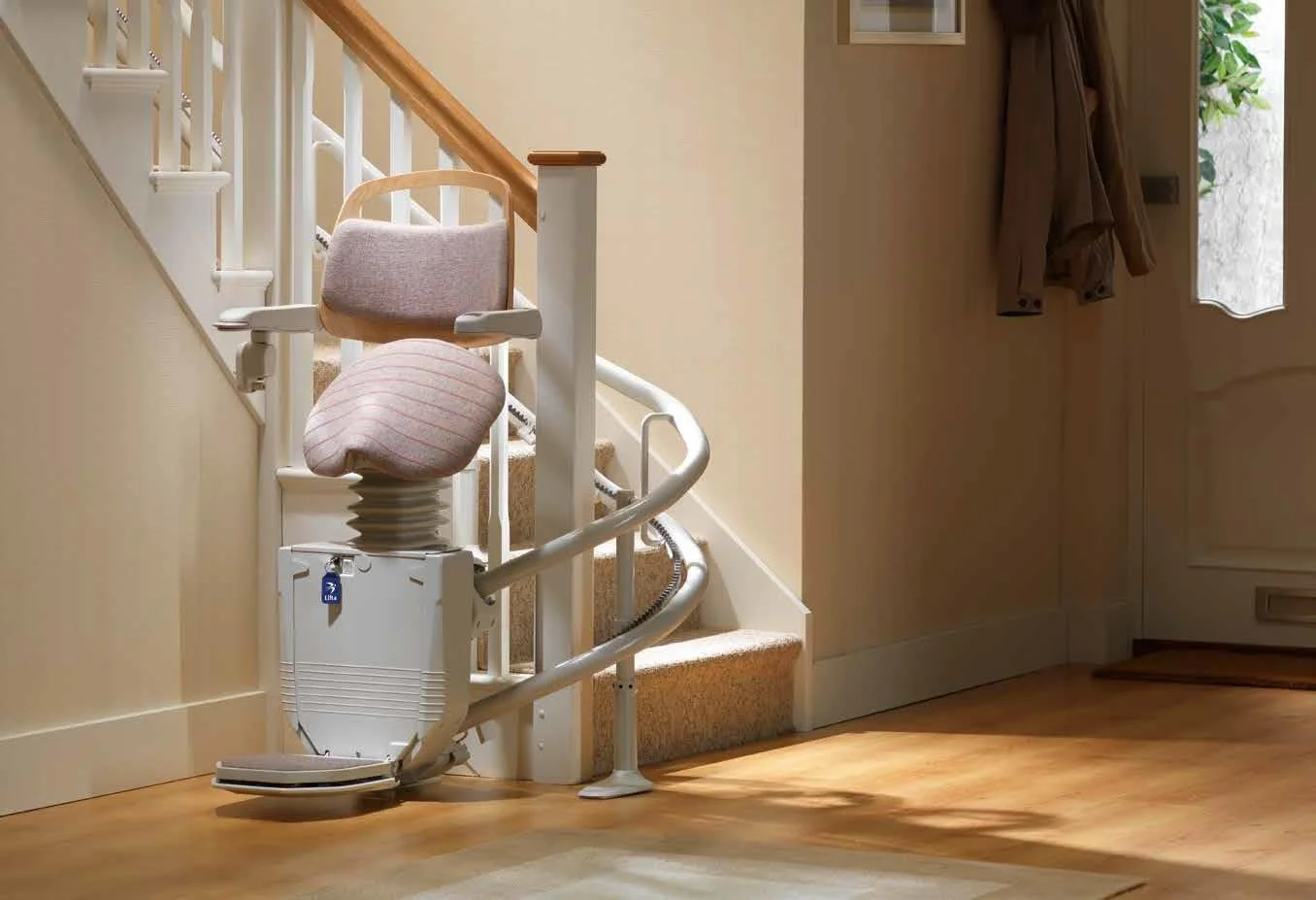
A single straight flight is the simplest case and usually takes a straight rail. Stairs that turn at a landing, or split-level runs that change direction, need a curved rail built to the shape of your staircase. Where the trouble is getting from the driveway or yard into the house, an outdoor lift or a platform lift may be the better fit, especially for someone who uses a wheelchair.
Housing in the county runs from detached single-family homes to duplexes, townhouses and low-rise buildings. About 76.8 percent of households own their homes, which matters because an owner can approve an installation without waiting on a landlord.
In a duplex or townhouse, the staircase is often tight and enclosed. That is usually still workable, but it is worth measuring before deciding. About 20.3 percent of county residents are 65 or older, and many of them are long-time homeowners from the area's industrial workforce who want to stay put.
The clearest path to coverage is Medicaid. Through Pennsylvania Community HealthChoices, stair glides are covered through traditional Medicaid via the CHC managed care organizations when they are medically necessary, for adults who meet a nursing-facility level of care.
For residents 60 and older, the Butler County Area Agency on Aging is the local starting point. It handles the OPTIONS Program assessments, can refer people toward the CHC waiver, and keeps a list of home-modification and mobility contractors. Call (724) 282-3008.
VA grants exist for home adaptations, though the HISA grant does not cover stair lifts. Butler County Veterans Services at (724) 284-5352 can help a veteran sort out what applies. Income-qualified owners in certain townships may also look at the county's owner-occupied rehabilitation program, and the PA Assistive Technology Foundation (PATF) is another statewide resource.
Covers stair glides case by case when medically necessary, through traditional Medicaid via the CHC managed care organizations, for adults 21 and older who meet a nursing-facility level of care and qualify financially. Call (800) 692-7443.
A state, Lottery-funded in-home services program for Pennsylvania residents 60 and older with unmet daily-living needs; there is no income limit, only a sliding-scale co-pay. The source does not mention stair lifts; call (717) 783-1550.
The county's front door for residents 60 and older, offering assessments, care management, OPTIONS, CHC waiver referrals and a home-modification contractor list. Stair lift funding is not mentioned directly; call (724) 282-3008.
A lifetime VA grant of $6,800 or $2,000, depending on the condition, for medically necessary changes such as home entry, bathroom access and entrance paths. It does not cover stair lifts; call (800) 827-1000.
VA grants for veterans with severe service-connected disabilities who own their homes, with maximums the VA adjusts each year. The source does not mention stair lifts; call (800) 827-1000.
A Center for Independent Living serving people with disabilities in Butler County, offering an assistive technology loan library and help navigating benefits and funding. Whether it helps with stair lifts is unknown.
A CDBG-funded home rehabilitation program for very low- to moderate-income owners in Buffalo, Butler, Clinton, Jackson, Jefferson, Lancaster, Slippery Rock and Winfield townships, run from a waiting list with limited funds. Stair lifts are not mentioned; call (724) 287-6797.
Older adults
111 Sunnyview Circle, Butler, 16001
Veterans
124 W Diamond Street, Butler, 16001
It can. Stair glides are covered case by case through traditional Medicaid via the Community HealthChoices managed care organizations when medically necessary, for adults 21 and older who meet a nursing-facility level of care. You work with a CHC Service Coordinator on a service plan. The number is (800) 692-7443.
The Area Agency on Aging and OPTIONS serve people 60 and older, but Community HealthChoices starts at age 21 for those who meet its care and financial rules. Transitional Paths to Independent Living also serves people with disabilities in Butler County regardless of age.
No. There is no income eligibility limit, only a sliding-scale co-payment based on income. The source does not say whether stair lifts are included, so ask during the assessment through the Butler County Area Agency on Aging at (724) 282-3008.
The HISA grant does not cover stair lifts. The SAH and SHA grants are for severe service-connected disabilities, and the source does not mention stair lifts for them. Call the VA at (800) 827-1000 or Butler County Veterans Services at (724) 284-5352 to review your case.
Usually, yes. Split-level and multistory homes are common in this hilly part of the state. Each straight flight can take a straight rail, and stairs that turn at a landing need a curved rail made to fit.
Currently funded townships are Buffalo, Butler, Clinton, Jackson, Jefferson, Lancaster, Slippery Rock and Winfield. The home must be owner-occupied and the household very low-, low- or moderate-income. Funding is limited, so call (724) 287-6797 to ask about the waiting list.
Tell us about the stairs in your home and we will explain which lift fits, what it costs and how installation works.
