Our Montana pages reach 249 towns, from Yellowstone County and Cascade County to Flathead County, Missoula County, Silver Bow County and Wibaux County. Every county on this page links to its own guide, so you can see what applies close to home.
This hub covers what a Montana family should sort out first: which kind of stair lift fits the stairs in the house, and which state, Medicaid and VA programs can carry part of the cost. The program details below come from the agencies that run them, with phone numbers so you can call directly.
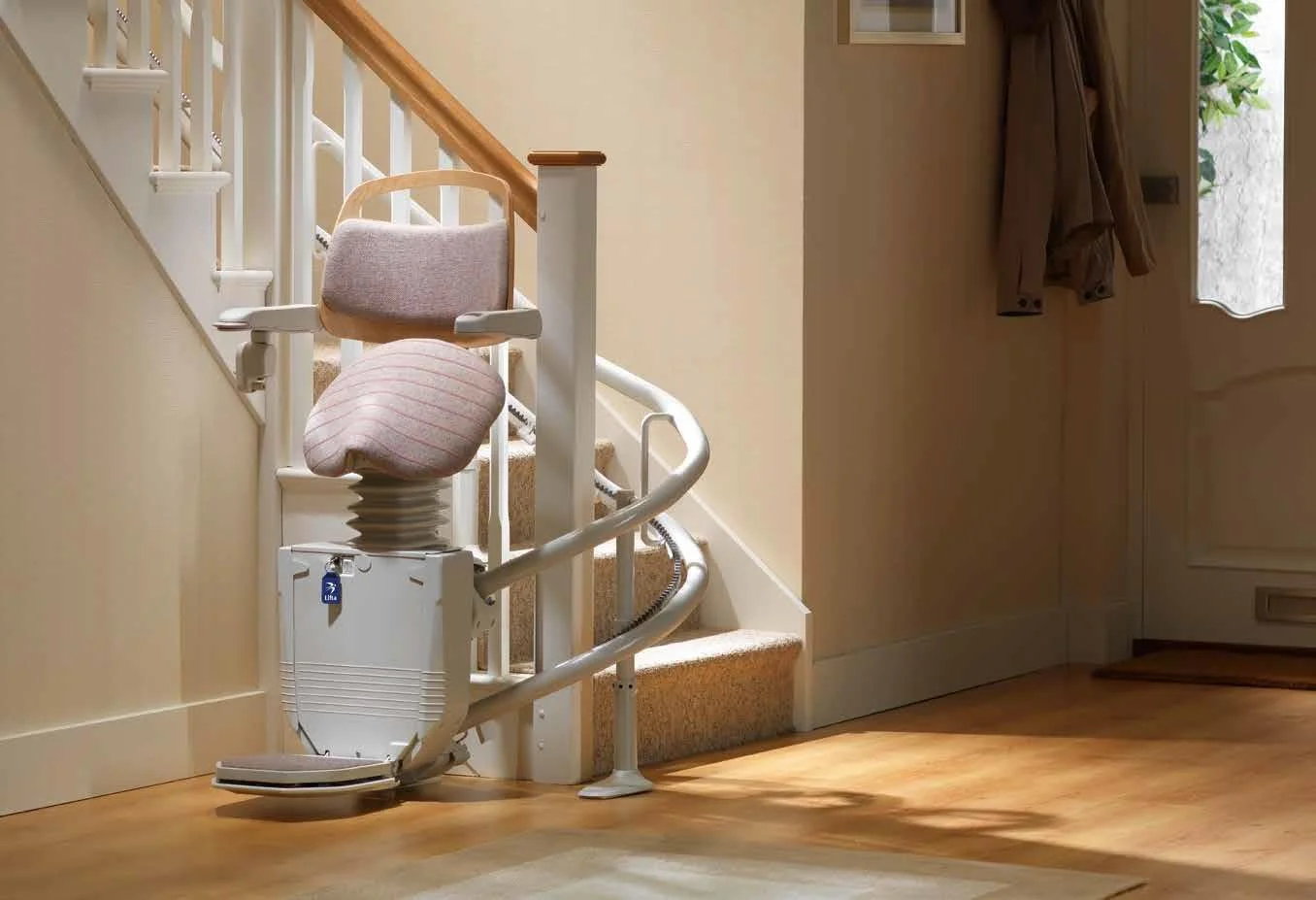
The shape of the stairs decides most of the job. A straight run with no landings or turns takes a straight stair lift, which uses a standard rail and is usually the simplest install.
Stairs that turn, wrap around a landing or split into two flights need a curved lift. The rail is built to match that staircase, so we measure carefully before anything is ordered.
Steps up to a porch or a split entry outside the house call for an outdoor model made for weather. If the person uses a wheelchair and cannot transfer to a seat, a platform lift that carries the chair is the better fit.
About 18.1% of Montanans are 65 or older, and 63.4% own their homes. For homeowners, a stair lift is often the change that keeps a bedroom or bathroom on the second floor within reach without a move.
That matters because the VA has its own route to paying for a lift, which works differently from the state programs and is covered in its own section below.
Montana has more than one path, and they suit different situations. For someone on Medicaid who needs long-term care at home, the Big Sky Waiver can fund a stair lift as an environmental adaptation under an approved plan of care.
If Medicaid is not an option, the Montana Assistive Technology Loan offers up to $1,500 at 0% and up to $50,000 at 3.5% for stair lifts and home modifications. Homeowners 68 and older can also look at the state Reverse Annuity Mortgage, which has no repayment until the home is sold.
Some programs help indirectly. Community First Choice Services pays for in-home personal assistance, not lifts, and the property tax programs free up household cash rather than paying for modifications. The full list is below.
Veterans often hear about the HISA grant first. HISA pays up to $6,800 for service-connected needs or $2,000 for non-service-connected needs, but it covers ramps and structural changes, not the stair lift itself.
The lift comes through VA Prosthetics (PSAS) when it is medically prescribed, and there is no set dollar cap. Ask the VA provider about a prescription first, then call (877) 222-8387 with questions.
Each county guide, from Beaverhead County to Yellowstone County, covers the same programs with local context. Pick yours from the list on this page and request a home assessment so we can measure the stairs and recommend a lift type.
A Medicaid 1915(c) home and community-based services waiver that funds stair lifts as an environmental adaptation, with no fixed cap beyond the approved plan of care. Call (406) 444-4077.
A low-interest loan that covers stair lifts and home modifications, up to $1,500 at 0% or up to $50,000 at 3.5%. Call (406) 243-5511.
A state reverse mortgage for seniors 68 and older that can be used for home modifications, from a minimum of $15,000 up to $150,000 or 80% of appraised value, with no repayment until the home is sold. Call (406) 841-2840.
VA Prosthetics (PSAS) covers a medically prescribed stair lift with no set dollar cap, while HISA pays $6,800 (service-connected) or $2,000 (non-service-connected) for ramps and structural changes, not the lift. Call (877) 222-8387.
A Montana Medicaid State Plan benefit for in-home personal assistance; it does not cover stair lifts. Call (406) 444-4077.
Property tax relief and a refundable credit of up to $1,150 that free up household cash; it is not a modification grant and does not pay for stair lifts. Call (406) 444-6900.
It can through the Big Sky Waiver, which funds stair lifts as an environmental adaptation under an approved plan of care. Community First Choice Services, the other Medicaid benefit listed here, does not cover lifts. Both can be reached at (406) 444-4077.
Yes. The Montana Assistive Technology Loan covers stair lifts and home modifications, up to $1,500 at 0% and up to $50,000 at 3.5%. Call (406) 243-5511.
The state Reverse Annuity Mortgage lets seniors 68 and older borrow against the home for modifications, with no repayment until the home is sold. Loans run from $15,000 up to $150,000, capped at 80% of appraised value. Call (406) 841-2840.
No. HISA covers ramps and structural changes. The stair lift itself comes through VA Prosthetics (PSAS) when medically prescribed, with no set dollar cap. Call (877) 222-8387.
A staircase that turns at a landing usually needs a curved lift with a rail built to match. We confirm this by measuring at the home before ordering.
Only indirectly. It is a refundable credit of up to $1,150 that frees up household cash, not a modification grant. Call (406) 444-6900 for details.
Tell us about the stairs in your home and we will explain which lift fits, what it costs and how installation works.
