Teton County stretches across about 2,272 square miles of north-central Montana, with Choteau as the county seat and smaller places like Fairfield, Dutton, Power, Bynum and Pendroy spread among the farms and ranches. Most homes here are freestanding single-family houses on their own ground, not apartments or new subdivisions.
That shapes how a stair lift gets chosen and installed. A split-level house in Choteau needs a different plan than a ranch-style farmhouse outside Fairfield with a basement stairway, and the long drives between towns mean it pays to get the measurements right the first time.
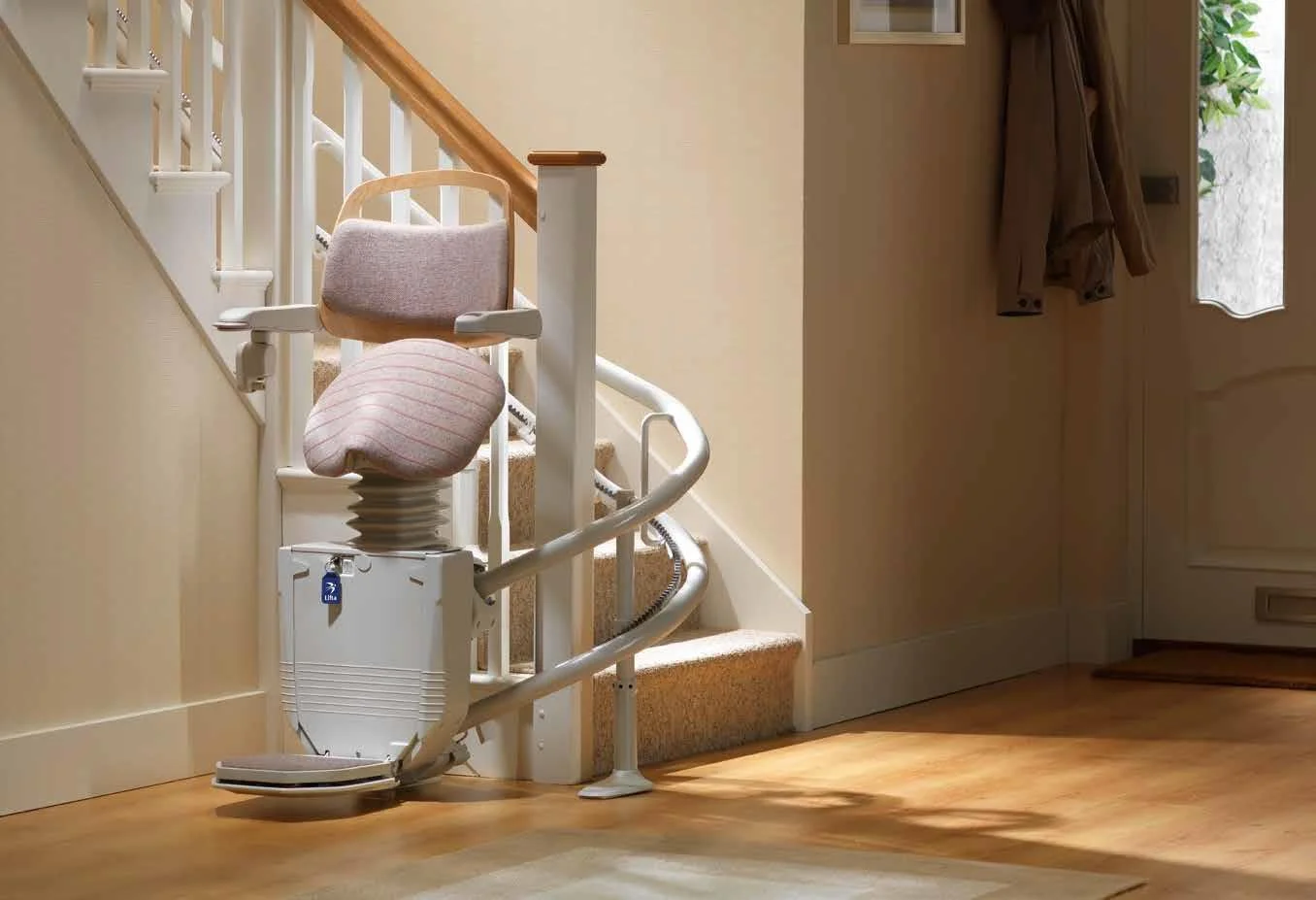
The common house types in the county are single-family homes, detached houses, ranch-style homes and split-level homes. Each one puts the stairs in a different place, and that decides which lift makes sense.
A ranch-style home often keeps daily living on one floor, so the stairway that matters is usually the one to the basement, where laundry, storage or a spare bedroom may be. If that run is straight with no turns, a straight stair lift is the simplest fit.
Split-level homes are different. They tend to have short flights between levels, sometimes with a turn or landing, and a stairway that changes direction usually calls for a curved rail built to that exact staircase.
On detached houses and farm homes, the hardest steps are sometimes outside: the porch, a back entry or the steps down to the yard. Outdoor stair lifts are built for weather exposure and can cover those entry steps.
When someone uses a wheelchair and cannot transfer to a seat, a platform lift is the option to look at instead. It carries the chair itself, so it needs more room and more planning at the top and bottom.
About 22.6% of Teton County residents are 65 or older, and roughly 62.6% of households own their homes. Owning the house matters, because a permanent rail and outdoor lift are easier to approve and install when the family makes the decisions.
If that includes someone in your family, read the VA programs below carefully, since one of them specifically does not pay for stair lifts.
With about 2.8 persons per square mile, Teton County is very spread out. Contractors and equipment installers based in regional hubs like Great Falls can face long drive times to reach homes here.
Practical steps help. Have the stairway measurements, photos of both ends and any turns ready before the first visit, and ask that the survey, installation and a walkthrough on using the lift be planned so fewer trips are needed.
No program in this area is confirmed to pay for stair lifts outright, so it is worth asking several offices directly. The Montana Big Sky Waiver lists environmental adaptations as a possible service, and the VA SAH and SHA grants fund accessibility remodeling without naming stair lifts either way.
The VA HISA grant is the exception: it lists stair glides as excluded equipment, so do not plan on it for a lift. Other statewide options to ask about include the Montana Assistive Technology Loan (MATL), the Reverse Annuity Mortgage (RAM), Community First Choice Services (CFCS), and the Property Tax Assistance Program (PTAP) & Elderly Homeowner/Renter Credit.
For local help, the Area III - North Central Montana (Hi-Line) office at 2 West 2nd Street in Havre can be reached at (406) 265-5464. Veterans can contact the Montana Veterans Affairs Division - Great Falls Veteran Service Office at 600 Central Ave #418, Great Falls, at (406) 452-2265.
Montana's main Medicaid home and community services waiver, which lists environmental adaptations as a possible service but does not name stair lifts, so ask your case management team whether one would qualify. Applicants must be financially eligible for Medicaid; call (800) 219-7035.
The Area Agency on Aging for Teton County, based in Conrad, offering information and assistance, LIEAP energy help, SHIP Medicare counseling and food programs; its listing does not mention home modifications or stair lifts. It is the right first call for referral to the Big Sky Waiver at (406) 271-7553.
A VA grant for medically necessary home alterations such as ramps and roll-in showers, but it explicitly excludes stair glides and porch lifts, so it will not pay for a stair lift. Call (800) 827-1000 for questions about other uses.
VA grants for homeowners with qualifying severe service-connected disabilities to buy, build or remodel a home for accessibility, with SAH up to $126,526 and SHA up to $25,350 for FY2026. The VA page does not say whether stair lifts are covered, so ask before you apply.
Older adults
2 West 2nd Street, Havre, 59501
Veterans
600 Central Ave #418, Great Falls, 59401
Possibly, through the Montana Big Sky Waiver, which lists environmental adaptations as a service. The program page does not name stair lifts, so ask your assigned case management team whether one qualifies in your case, or call (800) 219-7035.
No. The VA lists stair glides and porch lifts as excluded removable equipment under HISA. It covers permanent changes like entrance ramps, roll-in showers and lowered fixtures.
Start with the North Central Area Agency on Aging at (406) 271-7553. It serves Teton County and can refer you to the Big Sky Waiver and other state aging services.
Split-level homes often have short flights with turns or landings. A straight lift works only if each run has no change in direction; otherwise a curved rail built to the staircase is the usual answer.
Yes, outdoor stair lifts are made for entry and porch steps. If the user stays in a wheelchair, a platform lift is the option to consider instead.
The Montana Veterans Affairs Division - Great Falls Veteran Service Office at 600 Central Ave #418 in Great Falls can help, at (406) 452-2265. The VA itself can be reached at (800) 827-1000.
Tell us about the stairs in your home and we will explain which lift fits, what it costs and how installation works.
