Roosevelt County stretches across 2,369 square miles of grassland in far northeastern Montana, with six towns strung along the map: Wolf Point, Poplar, Culbertson, Brockton, Bainville and Froid. Roughly three-fourths of the county's land lies within the Fort Peck Indian Reservation, and most people here live in single-family homes, ranch-style houses and split-level homes that have been lived in for a long time.
That older, aging-in-place housing is where a stair lift earns its keep. Wolf Point, the county seat, supports a 50-bed hospital with an attached 85-bed nursing-home complex, but many families would rather keep a parent at home. This page walks through what the homes and winters here mean for a stair lift and where to look for help paying for one.
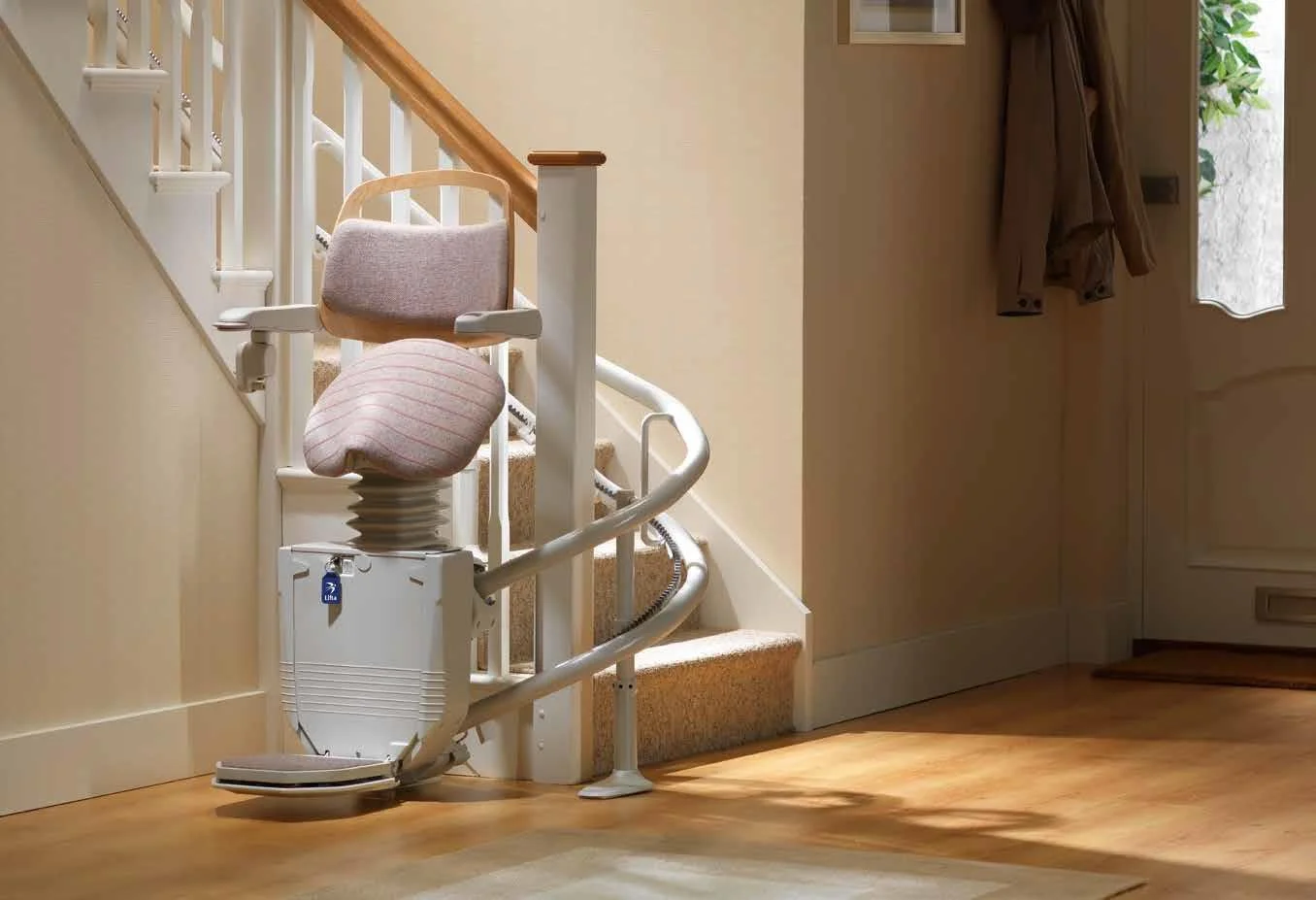
A split-level home usually has short runs of stairs between levels. If a run goes straight with no turn or landing, a straight stair lift is the simplest fit and typically the quickest to install. Each separate run needs its own rail, so we look at how many levels a person actually uses every day.
Ranch-style and detached houses often put everything on one floor, which sounds easy until you count the steps down to a basement laundry or up from the yard to the door. A basement stair that turns at the bottom or has a landing calls for a curved lift with a rail built to that staircase. We measure first so you know which kind you are dealing with before anything is ordered.
The climate here is cold and semi-arid, with about 28.2 inches of snow in an average year and a record low of -52 F. Icy entry steps are a real hazard for older residents, and for some families the outside stairs are a bigger problem than the inside ones.
An outdoor stair lift is built for weather and can carry a person up porch or deck steps instead of making them climb on ice. Where steps are not workable at all, or a wheelchair user needs to stay in the chair, a vertical platform lift is the other option to consider. We will tell you honestly which one your entry can take.
Roosevelt County has a population of 4,951, and 13.3% of residents are 65 or older. About 61.9% of residents own their homes, which matters because a permanently installed lift usually makes the most sense in a home you plan to stay in.
If you are a veteran or helping one, read the VA notes below carefully, because one of the VA grants people ask about first does not cover stair lifts.
Money is a real constraint here. County figures show a 2010 median household income of $37,451 and about 21.5% of residents below the poverty line, so free or low-cost help is worth chasing before you pay out of pocket.
None of the programs listed below names stair lifts outright, and the VA HISA grant specifically excludes them. Still, several fund home modifications in general, so the honest approach is to call, describe the stairs and the person's need, and ask whether a lift can be included. The USDA Section 504 program and the Big Sky Waiver are the most promising places to start.
Statewide, Montana also has the Montana Assistive Technology Loan (MATL), the Reverse Annuity Mortgage (RAM), Community First Choice Services (CFCS), and the Property Tax Assistance Program (PTAP) & Elderly Homeowner/Renter Credit. These may help directly with equipment or free up money in the household budget.
For aging services across the region, Area I - Action for Eastern Montana is at 2030 N. Merrill Ave., Glendive 59330, phone (406) 377-3564. They can point you to in-home services and other resources for Roosevelt County.
Veterans can reach the Montana Veterans Affairs Division - Great Falls Veterans Service Office at 600 Central Plaza #300, Great Falls 59401, phone (406) 452-2265, for help sorting out which VA benefits apply.
A Montana Medicaid waiver for people who are financially eligible and meet nursing-facility level of care; it covers environmental adaptations such as ramps and bathroom changes, but stair lifts are not named and there is currently a waiting list. Call (800) 219-7035.
The regional aging agency based in Glendive serves residents 60 and older and their spouses, coordinating transportation, personal care, homemaker, respite and meal services. Its listing does not mention stair lift or home-modification funding; call (406) 377-3564.
Serves anyone 60 or older and their spouse in Bainville, Culbertson, Froid, Poplar or Wolf Point with homemaker help, limited respite, home-delivered meals, SHIP/Medicare counseling and referrals, with no income guidelines. It does not list a stair lift program; call (406) 653-6221.
Tribal social services for enrolled members and eligible reservation residents, including meals, case management, personal care and respite. No home-modification or stair lift service is listed; call (406) 768-2432.
Provides public housing units, project-based units and vouchers for Fort Peck Reservation residents and tribal members. No accessibility-modification or stair lift program is documented; call (406) 768-3459.
A federal grant for repairs and renovation of existing homes for enrolled tribal members on the Fort Peck Reservation with income at or below 150% of HHS poverty guidelines who live in substandard housing. The official page does not address stair lifts or accessibility changes specifically.
Offers very-low-income rural homeowners loans up to $40,000 at 1% and grants up to $10,000 for those 62 and older, and it explicitly funds accessibility changes like ramps and walk-in tubs, though stair lifts are not named. Call (406) 585-2587.
A lifetime benefit of $6,800 or $2,000 for medically needed home changes prescribed by a VA physician. The VA explicitly excludes stair glides, so this grant does not pay for a stair lift.
Grants of up to $126,526 (SAH) or $25,350 (SHA) for veterans with qualifying severe disabilities to build or modify an accessible home. Stair lifts are not specifically mentioned on the official VA page.
Older adults
2030 N. Merrill Ave., Glendive, 59330
Veterans
600 Central Plaza #300, Great Falls, 59401
No. The official VA page for HISA excludes stair glides, along with porch lifts and portable ramps. Veterans with severe qualifying disabilities can ask about the SAH or SHA grants, which fund home modifications, though stair lifts are not named there either.
The USDA Section 504 program explicitly funds accessibility modifications such as ramps and walk-in tubs for very-low-income rural homeowners, and the Big Sky Waiver covers environmental adaptations. Neither names stair lifts, so call and ask whether a lift can be included for your situation.
Yes, there are tribal resources. Fort Peck Assiniboine & Sioux Tribes Community/Elderly Services at (406) 768-2432 offers case management and in-home services, and enrolled members with low income may qualify for the BIA Housing Improvement Program for home repairs.
The county and regional aging services start at age 60, though a spouse of any age can be served. Programs without an age floor include the Big Sky Waiver, USDA Section 504 loans and the VA grants; USDA grants, as opposed to loans, are limited to homeowners 62 and older.
Outdoor models are built for weather, and with about 28.2 inches of snow a year and record lows of -52 F, the entry steps are often where a lift helps most. We will look at your porch or deck steps and tell you whether an outdoor stair lift or a platform lift is the better fit.
Start with Roosevelt County Council on Aging / Aging Services at (406) 653-6221 or Area I - Action for Eastern Montana at (406) 377-3564. They can explain local services and refer you to other help.
Tell us about the stairs in your home and we will explain which lift fits, what it costs and how installation works.
