Most of Valley County's houses sit in Glasgow, the county seat. The town grew fast twice: once when work on the nearby Fort Peck Dam began in 1933, and again during the Glasgow Air Force Base years from the late 1950s through 1969. Those two building waves left a lot of single-family, ranch-style and split-level homes that people still live in today.
Out past Glasgow, homes are spread across Frazer, St. Marie, Nashua, Hinsdale and Fort Peck, along the valleys of the Milk and Missouri Rivers. This page walks through how those homes tend to work with a stair lift, what the rural distances mean for scheduling, and which programs may help with the cost.
Ranch-style homes usually have one main floor, so the stairs that cause trouble are often the ones down to the basement, where the laundry or a spare bedroom may be. A straight basement stairway is typically a good fit for a straight-rail lift, which is the simplest type to install.
Split-level homes are different. They have several short flights between levels, and getting from the bottom to the top can mean more than one run or a turn. Depending on the layout, that can call for separate straight lifts or a curved rail built to the stairway.
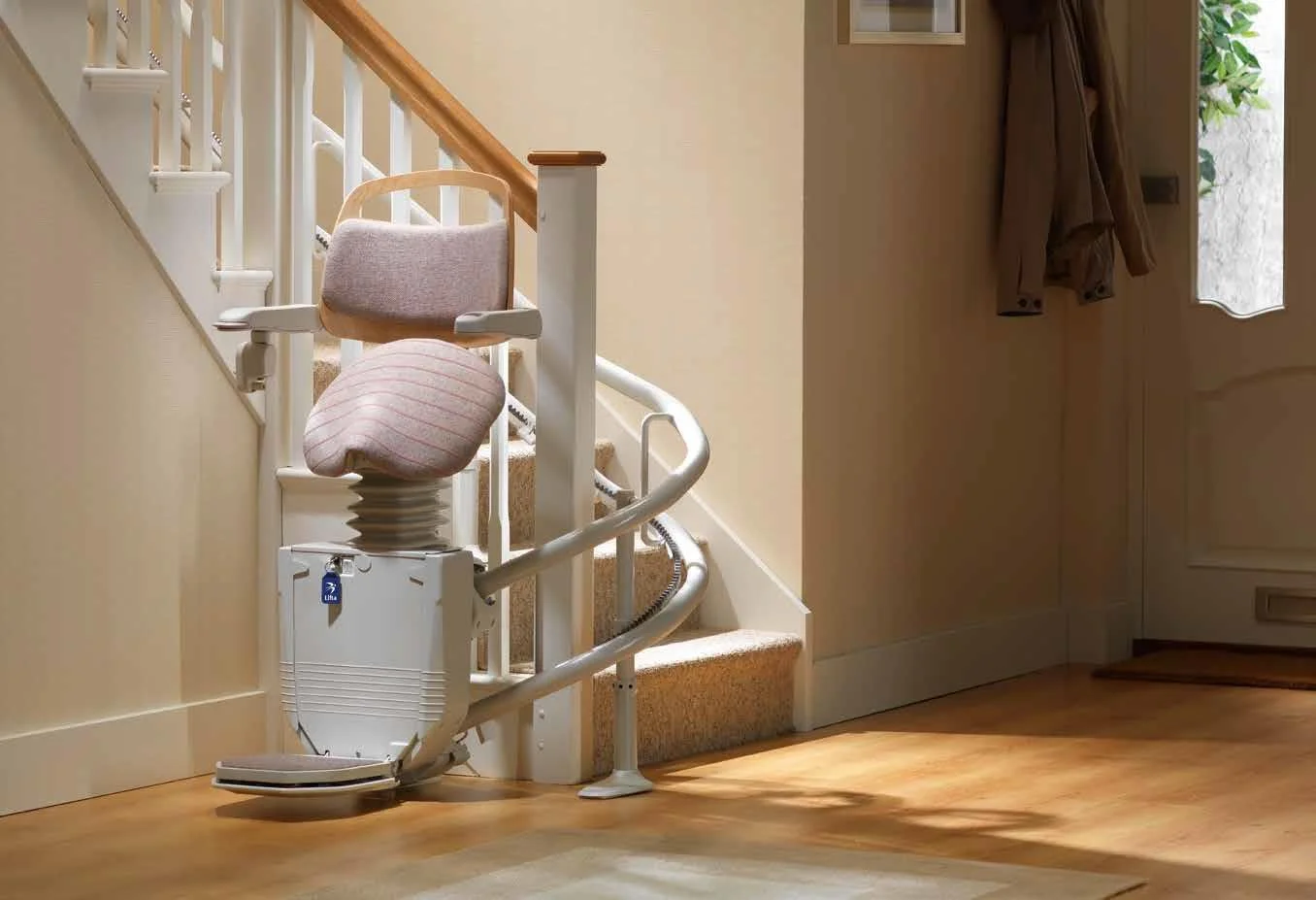
Single-family homes with a full second story usually need a lift on the main staircase. If that staircase turns at a landing, a curved lift is the likely answer, and it takes more measuring and lead time than a straight one.
In townhouses, the inside stairs are often narrow and straight, which can suit a straight lift that folds up out of the way. Walk-up apartments raise a different question: whether the owner will allow equipment on a shared stairway, so talk to the landlord early.
Steps up to a porch or entry door are a separate job from the inside stairs. An outdoor stair lift or a platform lift can handle those, and a platform lift is the option to consider if someone uses a wheelchair and cannot transfer to a seat.
Valley County is open prairie, with a 2020 Census density of approximately 1.5 persons per square mile. That means fewer local contractors and longer drives for installers and home-modification assessors.
In practice, it helps to plan ahead rather than wait for a fall or a hospital discharge. Have the stairs measured, gather the paperwork for any funding program, and line up the install date before the need is urgent.
About 23.9% of Valley County residents are 65 or older, and 72.8% own their homes. For a homeowner, a lift is usually a question of fit and budget rather than permission.
Agriculture is the main economic activity, and much of the resident base is aging and on a fixed income. That makes funding programs with set limits worth checking before you buy.
No single program here clearly promises to pay for a stair lift, so start with the people who can sort out your options. Area I - Action for Eastern Montana in Glendive, at (406) 377-3564, handles aging and disability information and referral for Valley County. North Central Independent Living Services has a Glasgow office at (406) 228-2075.
Veterans can reach the Montana Veteran Affairs Division office in Havre at (406) 265-4225. Statewide programs worth asking about include the Big Sky Waiver (Home & Community-Based Services), Montana Assistive Technology Loan (MATL), Reverse Annuity Mortgage (RAM), VA Benefits for Veterans (HISA + Prosthetics), Community First Choice Services (CFCS), and the Property Tax Assistance Program (PTAP) & Elderly Homeowner/Renter Credit. Details on the main programs are below.
A Montana Medicaid home and community-based program for people who are financially eligible for Medicaid and meet nursing-facility level of care; it lists Environmental Adaptations as a service but does not name stair lifts, and there is currently a waiting list. Call (406) 444-4077.
Information, referral and options counseling for adults 60 and older and people with disabilities 18 and older in Area I, which includes Valley County; the source does not mention stair lifts or home modifications. Call (406) 377-3564.
A VA grant for medically necessary structural home alterations, up to $6,800 lifetime for service-connected disabilities (or non-service-connected with a service-connected rating of 50%+) and $2,000 for other non-service-connected disabilities. It does not cover stair lifts, since stair glides are excluded as removable equipment.
A VA grant of up to $126,526 (FY2026) for veterans with qualifying severe service-connected disabilities who own or will own the home. The source does not list stair lifts among covered adaptations.
A VA grant of up to $25,350 (FY2026) for veterans with qualifying service-connected disabilities, such as loss or loss of use of both hands, who own or will own the home. Stair lifts are not itemized in the source.
Information, referral and advocacy for people with disabilities of any age in its service area, with a branch in Glasgow; the source does not mention stair lifts or home modifications. Call (406) 228-2075.
Older adults
2030 N. Merrill Ave., Glendive, 59330
Veterans
232 1st St. W, Havre, 59501
No. The HISA grant excludes stair glides as removable equipment. The SAH and SHA grants do not itemize stair lifts either, so ask the Montana Veteran Affairs Division in Havre at (406) 265-4225 about your situation.
Yes, for information and referral. Action for Eastern Montana serves people with disabilities age 18 and older, and North Central Independent Living Services in Glasgow serves people with disabilities of any age.
Start with Area I - Action for Eastern Montana at 2030 N. Merrill Ave. in Glendive, (406) 377-3564. It is the Aging and Disability Resource Center for Valley County.
It lists Environmental Adaptations as a service, but the source does not name stair lifts. You must be financially eligible for Medicaid and meet nursing-facility level of care, and the program has a waiting list. Call (406) 444-4077.
Split-levels have several short flights, so it depends on which levels you need to reach. Some homes work with one or more straight lifts, while others need a curved rail around a turn.
The county is very rural, with approximately 1.5 persons per square mile, so there are fewer local contractors and installers travel farther. Scheduling an assessment early helps.
Tell us about the stairs in your home and we will explain which lift fits, what it costs and how installation works.
