Mississippi is spread across 356 towns, from DeSoto County and Lee County in the north to Hinds, Rankin and Madison counties in the middle of the state and Harrison, Hancock and Jackson counties along the southern edge. Each home we visit has its own staircase, and that staircase decides which lift will work, not the town on the mailbox.
This page walks through the main kinds of stair lifts, what the state's numbers say about who is likely to need one, and which Mississippi and federal programs may help with the cost. Some programs pay for the lift itself, some pay for other home changes, and some do not cover lifts at all, so it helps to know the difference before you make calls.
A straight stair lift fits a single run of steps with no turns or landings. It rides on a rail fastened to the stair treads, not the wall, and it is usually the quickest to install.
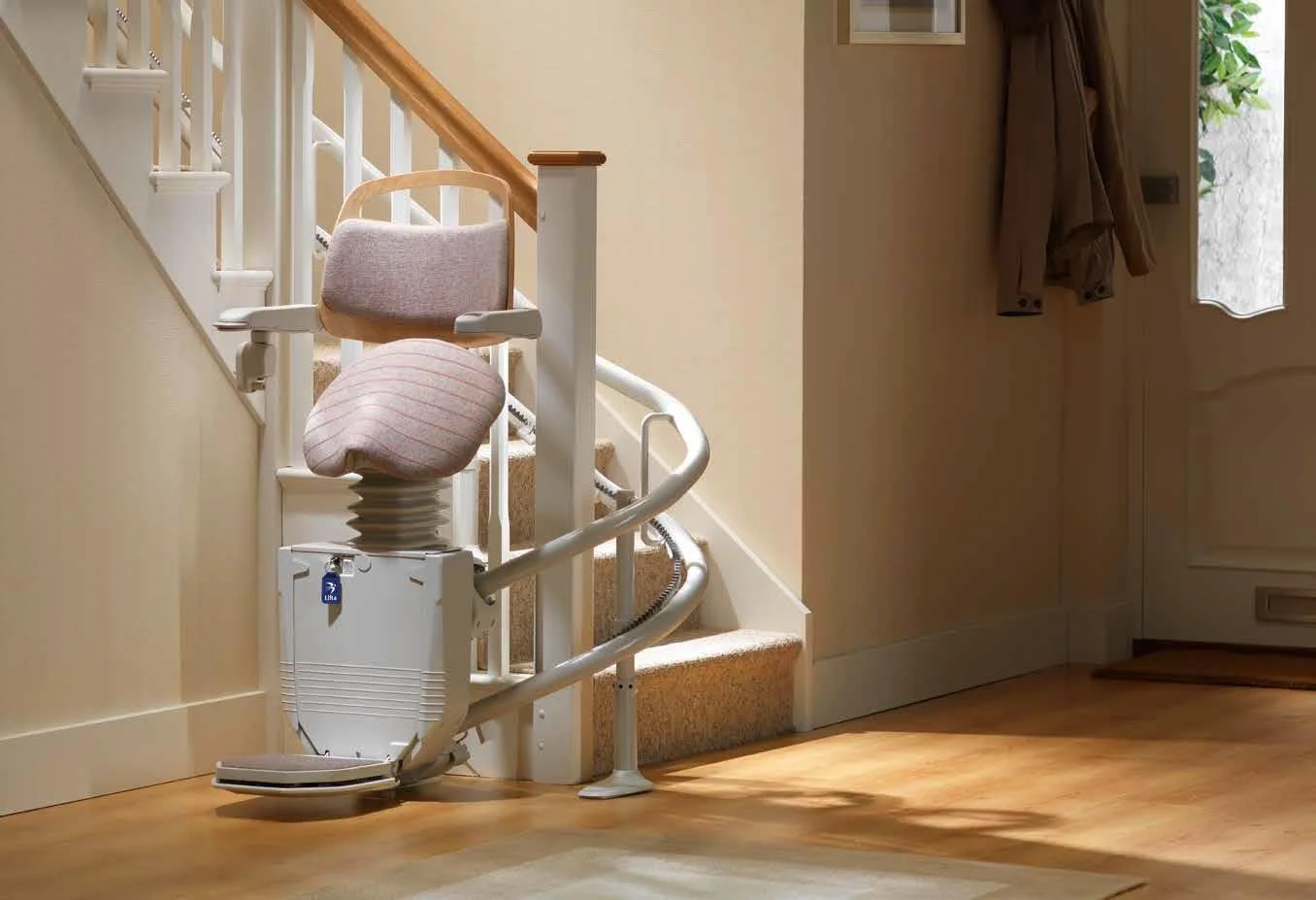
If the stairs turn, wrap around a landing or have a mid-level stop, you need a curved lift. The rail is built to the exact shape of your staircase, so we take careful measurements first.
Steps outside the house, such as a porch or a back entry, call for an outdoor lift made to handle weather. For someone who uses a wheelchair and cannot transfer to a seat, a platform lift may make more sense than a chair-style lift.
About 16.2 percent of Mississippians are 65 or older, and many of them want to stay in the house they already know. A stair lift is often the change that lets a bedroom or bathroom on another floor stay usable.
Roughly 60.1 percent of households own their home. Owners can generally decide on a permanent installation themselves, while renters will need the landlord's approval before any rail goes in.
That is a large group, and it matters because the VA has a path that can pay for the lift itself, covered in the next section.
Start with the program that fits the person. For a veteran, the VA Prosthetics route is the one that can cover the stair lift when it is medically prescribed. HISA grants, by contrast, pay for structural changes like ramps, not the lift.
For adults on Medicaid, the Mississippi Independent Living Waiver lists home changes as environmental accessibility adaptations under an approved plan of services. The Mississippi Elderly and Disabled Waiver is different: it pays for in-home care and does not cover home modifications.
Homeowners who need broader repairs can ask the Mississippi Home Corporation HOME Program, which may consider accessibility work case by case. The homestead exemption and MS Project START will not pay for a lift, but they can lower other costs or let you try equipment first.
We install throughout Mississippi, including Adams, Alcorn, Bolivar, Coahoma, DeSoto, Forrest, Harrison, Hinds, Jackson, Jones, Lafayette, Lauderdale, Lee, Lowndes, Madison, Oktibbeha, Rankin, Warren and Washington counties, along with the rest of the counties in the state.
Detailed county pages are not up yet. If your county is not named here, call anyway and we will set up a time to look at your stairs.
A Medicaid home and community-based waiver that covers home modifications for eligible adults as an environmental accessibility adaptation, with no fixed cap beyond the approved plan of services. Call (800) 443-1000.
State-administered federal HOME rehabilitation aid for owner-occupied homes that may cover an accessibility modification on a case-by-case basis, subject to federal and local program limits. Call (601) 718-4642.
VA Prosthetics (PSAS) can cover a medically prescribed stair lift with no set dollar cap, while HISA grants of $6,800 (service-connected) or $2,000 (non-service-connected) pay for ramps and structural changes, not the lift. Call (877) 222-8387.
A Medicaid waiver that pays for in-home care but does not cover stair lifts or other home modifications. Call (800) 421-2408.
A free program offering short-term assistive technology loans and refurbished equipment; it provides no funding and does not cover stair lifts. Call (800) 852-8328.
A property-tax exemption for homeowners 65 or older or totally disabled that exempts up to $12,500 of assessed value (2026). It does not pay for a stair lift but can ease the yearly cost of staying in the home.
It depends on the waiver. The Mississippi Independent Living Waiver covers home modifications as an environmental accessibility adaptation under an approved plan, and you can reach it at (800) 443-1000. The Mississippi Elderly and Disabled Waiver does not cover home modifications.
Both can happen, through different benefits. VA Prosthetics can cover a medically prescribed stair lift with no set dollar cap, while HISA covers ramps and structural changes. Call (877) 222-8387 to ask about either.
MS Project START offers free short-term assistive technology loans and refurbished equipment at (800) 852-8328. It does not fund or cover stair lifts, so ask them what they have available.
Yes. The Mississippi Senior / Disabled Homestead Exemption exempts up to $12,500 of assessed value (2026) for homeowners 65 or older or totally disabled. It does not pay for the lift but lowers property taxes.
A curved stair lift. Its rail is made to fit your staircase, so we measure the stairs in person before ordering.
We work across Mississippi, including counties such as DeSoto, Hinds, Rankin, Harrison and Lee. If you do not see your county on this page, call and we will schedule a visit.
Tell us about the stairs in your home and we will explain which lift fits, what it costs and how installation works.
