From Ada County and Canyon County in the southwest to Kootenai County, Bonner County and Boundary County up north, we have pages for 195 Idaho towns. A ranch house in Twin Falls County and a two-story home in Bonneville County need very different equipment, so this page explains the choices and the programs before you call.
Most families reach us after a fall, a new diagnosis or a parent saying the stairs have become a chore. The first step is always the same. We measure the staircase, check the wall and floor where the rail will sit, and tell you which kind of lift fits and why.
A straight stair lift runs on a single rail along a flight with no turns or landings. It is the simplest to install and usually the quickest to get in place, because the rail can be cut to length.
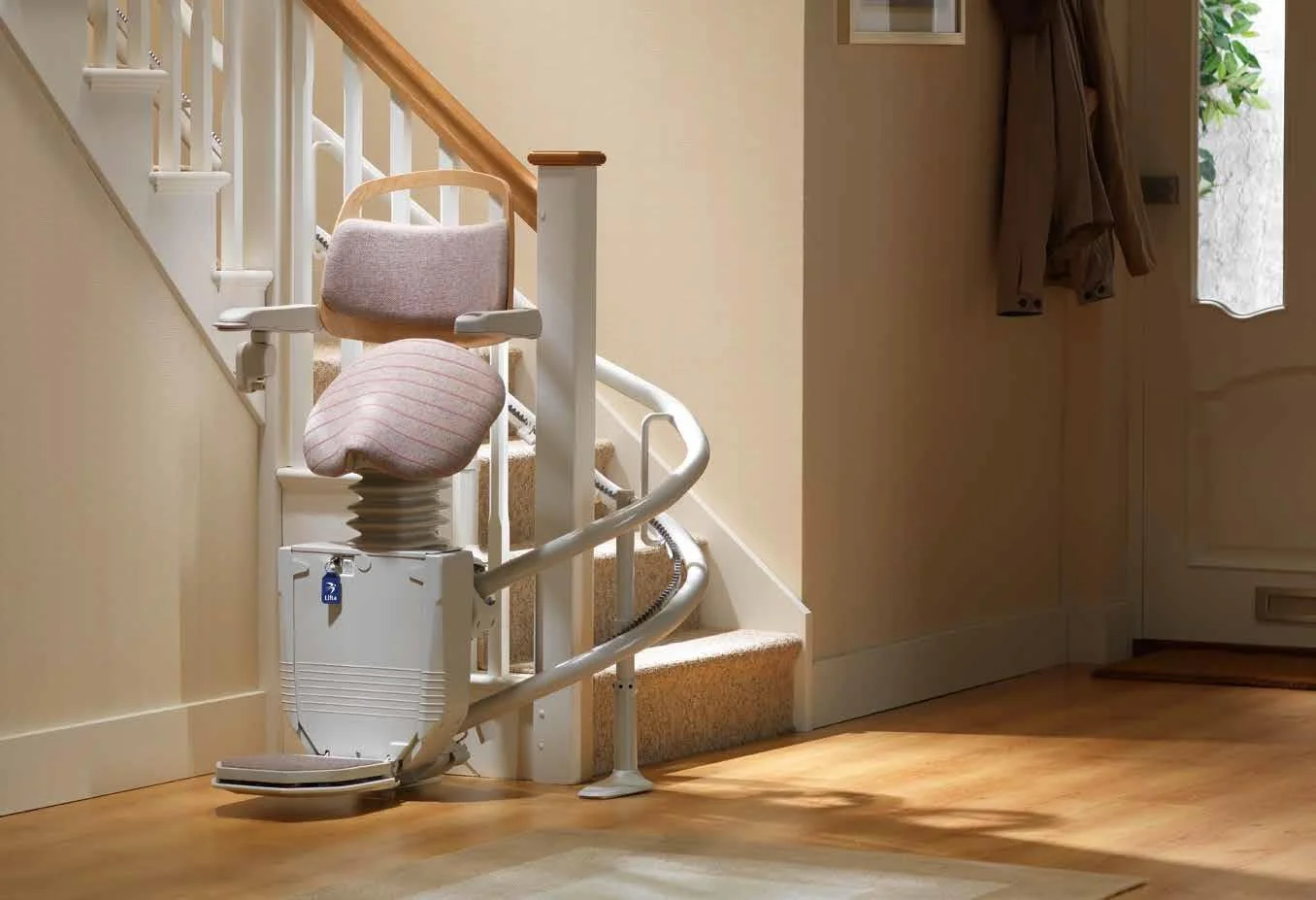
Stairs that turn, wrap around a landing or split partway up need a curved lift. That rail is built to the exact shape of your stairs, so it takes careful measuring and a longer wait.
Steps up to a porch, deck or side door call for an outdoor model with weather-resistant parts. If the person uses a wheelchair and cannot transfer to a seat, a platform lift is usually the better answer.
About 15.2 percent of Idahoans are 65 or older, and 67.4 percent of households own their home. Owners can bolt a rail to their own stairs without asking anyone, which makes a stair lift a practical way to stay put.
Renters can still get a lift, but the landlord has to agree first. We can explain to the owner how the rail attaches to the stair treads rather than the wall.
If that includes you or your parent, the VA program below is worth a call before you pay out of pocket.
Several routes exist, and some can be combined. The Idaho Medicaid Aged & Disabled (A&D) Waiver funds home access modifications for people who qualify, and the amount follows an approved plan rather than a fixed cap.
Veterans can ask VA Prosthetics about the lift itself when it is medically prescribed. If none of that applies, the Idaho Assistive Technology Project offers low-interest loans of up to $60,000 for stairlifts and home access equipment.
The Idaho Property Tax Reduction (Circuit Breaker) does not pay for a lift, but a tax cut of up to $1,500 a year can leave more room in the budget. Details and phone numbers for each are listed below.
We keep a separate page for every county we list, including Ada County, Canyon County, Kootenai County, Bannock County, Bonneville County, Twin Falls County, Nez Perce County, Latah County, Madison County and Blaine County.
Smaller counties have pages too, from Adams County and Camas County to Clark County, Custer County, Lemhi County and Owyhee County. Open your county page to see the towns we cover there.
A Medicaid home and community-based waiver that funds home access modifications, including stair lifts, for eligible Idahoans, with no fixed cap and the amount set by your approved plan. Call (877) 456-1233.
Low-interest loans of up to $60,000 for stairlifts and other home access equipment. Call (800) 432-8324.
VA Prosthetics (PSAS) can cover a medically prescribed stairlift with no set dollar cap, while the HISA grant ($6,800 service-connected, $2,000 non-service-connected) covers ramps and structural changes, not the lift. Call (877) 222-8387.
A property-tax reduction of up to $1,500 a year; it does not pay for a stair lift directly but can free up household money for one. Call (208) 334-7736.
It can through the Idaho Medicaid Aged & Disabled (A&D) Waiver, which funds home access modifications for eligible Idahoans. There is no fixed cap; the amount follows your approved plan. Call (877) 456-1233 to ask about eligibility.
No. HISA covers ramps and structural changes, up to $6,800 for service-connected or $2,000 for non-service-connected needs. The stairlift itself comes through VA Prosthetics (PSAS) when it is medically prescribed. Call (877) 222-8387.
Yes. The Idaho Assistive Technology Project offers low-interest loans of up to $60,000 for stairlifts and home access equipment. Call (800) 432-8324.
Only indirectly. The Idaho Property Tax Reduction (Circuit Breaker) lowers property tax by up to $1,500 a year, which can free up money, but it does not pay for the lift. Call (208) 334-7736.
Yes. A curved stair lift uses a rail made to the shape of your stairs. It takes exact measurements and a longer build time than a straight lift.
We have pages for 195 Idaho towns across counties from Boundary County to Franklin County. Find your county page to see the towns listed there.
Tell us about the stairs in your home and we will explain which lift fits, what it costs and how installation works.
