Stair lifts in Boundary County
Boundary County sits at the top of Idaho's panhandle, about 1,278 square miles of mountains, forest and river valley that run right up to British Columbia. Most people live in or around Bonners Ferry, the county seat on the Kootenai River, or up the road in Moyie Springs, with plenty of homes tucked along US Highway 2, US Highway 95 and Idaho State Highway 1.
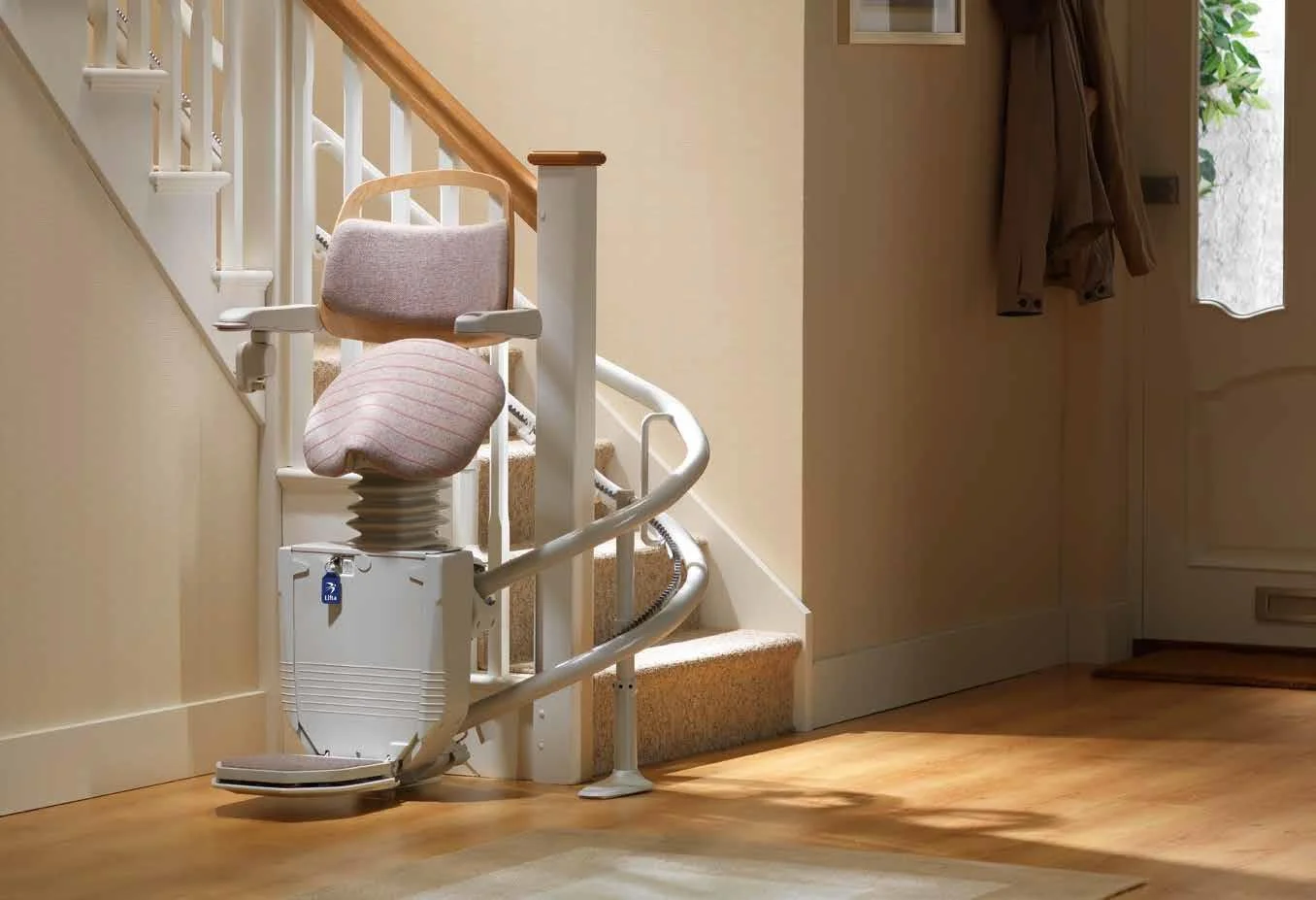
Pick your town on the map or in the list for local stair lift details.
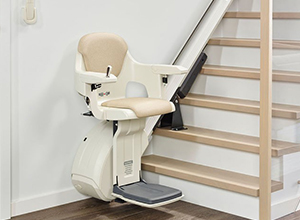
For a single straight flight. The quickest to install and the most affordable option.
Configure yours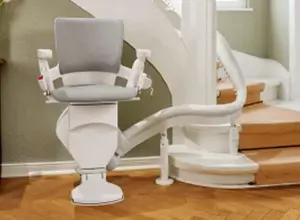
A rail built to your staircase for landings, turns and spiral stairs.
Configure yours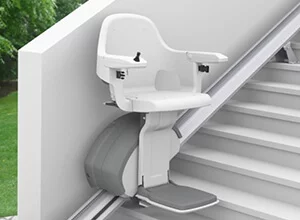
Weather-sealed lifts for porch, deck and entry steps.
Configure yours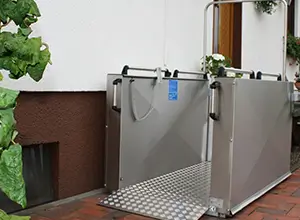
For wheelchair users who need to stay in their chair on the stairs.
Configure yoursHouses here were often built to fit sloped ground. That means multi-level layouts, split-level floor plans and exterior stairs up to the front door. Those stairs become a daily problem when knees, hips or balance start to give out. This page walks through what kind of stair lift fits these homes and where Boundary County families can look for help paying for one.
The housing stock in Boundary County is mostly single-family homes and detached houses, with a good number of split-level homes and ranch-style homes, plus some low-rise buildings. Each one calls for a different approach.
A split-level home usually has two or three short flights instead of one long staircase. Short, straight flights are often the simplest to fit with a straight stair lift, though you may need one lift per flight if the stairs turn at a landing.
Ranch-style homes often have no interior stairs at all, but on hillside lots they can still have steps down to a basement or up to the entry. Once you add a turn or a landing into the run, a curved stair lift built to that exact staircase is usually the answer.
Many properties in the county have outside steps to reach the main living level or the front entrance, because the ground slopes. For those, an outdoor stair lift designed for weather exposure is the usual fit. It rides along the existing steps, so the stairs stay usable for everyone else.
Where a wheelchair is involved, a seat on a rail won't solve the problem. A platform lift may make more sense in that case, since the person stays in the chair. We look at the slope, the number of steps and the landing space at the top and bottom before recommending either one.
Boundary County's low-density, mountainous geography can lengthen travel times for contractors and mobility-equipment installers serving rural homes. If you live well off the main highways, it helps to plan ahead rather than wait until stairs become impossible.
A home visit lets us measure the stairs, check the power supply and note anything that affects the install, like a tight turn or an exposed outdoor run. Having those details sorted early avoids a second trip down a long road.
The first local stop is the Boundary County Veterans Service Office at 6566 Main Street in Bonners Ferry, (208) 255-8882. It helps veterans and surviving dependents file VA claims at no cost.
Health care for county veterans runs through VA Spokane Health Care's Bonner County VA Clinic at 130 McGhee Road, Suite 101, Kootenai, ID, under Mann-Grandstaff VA Medical Center. A provider there would be the one to write any prescription a VA home-modification grant requires.
The local economy has long leaned on timber, ranching and mining, and many retirees here are paying for accessibility work on a fixed budget. That makes state and federal programs more important than they might be elsewhere.
Be aware that none of the programs below promise to pay for a stair lift by name, and the VA HISA grant specifically excludes stair glides. Some do cover broader home repairs or accessibility work, so it is worth asking each one directly how your request would be handled.
The USDA Section 504 program is often the most practical fit for rural homeowners on a low income, since Boundary County is fully rural and qualifies. For general guidance, the Area Agency on Aging of North Idaho can point you to other options at (208) 667-3179.
For a veteran, VA Prosthetics may pay for a prescribed stair lift, and Idaho Medicaid's A&D Waiver may fund one through an approved care plan. Other homeowners can look at the Idaho Assistive Technology Project's low-interest loan, which names stair lifts.
| Program | Pays for a stair lift? | Who it's for | Up to | Contact |
|---|---|---|---|---|
| VA SAH / SHA Grant A grant for veterans with severe service-connected disabilities, with FY2026 limits of up to $126,526 (SAH) or $25,350 (SHA) for a permanent home, and the veteran or a family member must own the home. The VA describes structural changes like ramps and wider doorways but does not mention stair lifts, so ask before planning on it. | Not named | Veterans with severe service-connected disabilities who own home | $126,526 SAH; $25,350 SHA | Official page |
| Boundary County Veterans Service Office A county office at 6566 Main Street in Bonners Ferry that helps veterans and surviving dependents file for VA benefits at no cost. It does not fund modifications or mention stair lifts, but it is the local starting point for HISA or SAH/SHA applications; call (208) 255-8882. | Not named | Boundary County veterans and surviving dependents | – | (208) 255-8882 Official page |
| USDA Section 504 Repair Loans and Grants Offers very-low-income rural homeowners a loan of up to $40,000 at 1% interest, a grant of up to $10,000 for those 62 or older who cannot repay a loan, or up to $50,000 combined. Ramps and other accessibility improvements are named as examples, but stair lifts are not listed; apply through a USDA Rural Development field office found at www.rd.usda.gov/id. | Not named | Very-low-income rural homeowners; grant needs age 62+ | $10,000 grant; $40,000 loan | Official page |
| Area Agency on Aging of North Idaho Serves adults 60 and older in ten northern Idaho counties, including Boundary County, with meals, homemaker help, caregiver respite, transportation and information and referral. Home modifications and stair lifts are not among its listed services, so use it mainly for referrals; call (208) 667-3179. | Not named | Adults 60+ in northern Idaho, including Boundary County | – | (208) 667-3179 Official page |
| Program | Pays for a stair lift? | Who it's for | Up to | Contact |
|---|---|---|---|---|
| Idaho Assistive Technology Project Loan | Yes | Not stated in source | $60,000 low-interest loan | (800) 432-8324 Official page |
| VA HISA and Prosthetics | Yes | Veterans with a medical prescription; lift via Prosthetics | HISA $6,800; lift no cap | (877) 222-8387 Official page |
| Idaho Medicaid A&D Waiver | Case by case | Idaho Medicaid members needing nursing-home level care | No fixed cap, per plan | (877) 456-1233 Official page |
| Idaho Property Tax Reduction | No | Not stated in source | $1,500 yearly tax reduction | (208) 334-7736 Official page |
Stair lifts can count as a medical expense on your federal taxes. Every program here is checked against its official page.
Older adults
2120 Lakewood Drive, Suite B, Coeur d'Alene, 83814
Veterans
6566 Main Street, Bonners Ferry, 83805
Not through the HISA grant. The VA states that stair glides, porch lifts and portable ramps are not covered under HISA. The SAH/SHA grant does not mention stair lifts either way, so a veteran with a qualifying severe service-connected disability should ask the Boundary County Veterans Service Office at (208) 255-8882 to check.
On location, yes. Boundary County is fully rural and qualifies for USDA Section 504. You also need to own and live in the home, be very-low-income and be unable to get affordable credit elsewhere. The grant portion requires you to be 62 or older.
The Area Agency on Aging of North Idaho serves adults 60 and older in Boundary County. It does not list home modifications among its services, but its information and referral line at (208) 667-3179 can point you toward other programs.
Yes. Many Boundary County homes have exterior stairs because of sloped lots, and outdoor stair lifts are built for that. If the person uses a wheelchair, a platform lift may be the better choice.
Sometimes. Split-level homes often have short separate flights between levels. A straight lift on each flight is common, while a single curved lift can run past a turn or landing if the stairs connect.
The Aged and Disabled Waiver does not list stair lifts or home modifications among its services. It does say other services may be approved when they help someone stay out of a nursing facility, so ask your Medicaid case manager about your situation.
Tell us about the stairs in your home and we will explain which lift fits, what it costs and how installation works.