Idaho County covers 8,503 square miles, the largest county by area in Idaho, and the Salmon River splits it across two time zones. From Grangeville on the Camas Prairie to Cottonwood, Kooskia, Elk City and Riggins, homes sit far apart, and getting a contractor to the door can take real planning.
Much of the housing here is older single-family stock built before modern accessibility standards, and the county's median age is 51.4. That combination means a lot of households are living with stairs that were never designed for aging in place. This page covers which kind of stair lift fits local homes and where to look for help paying for one.
Most homes in Idaho County are single-family or detached houses, with some townhouses, walk-up apartments and low-rise buildings in town. Local records point to an older, largely unmodified housing stock, so many staircases have no built-in accessibility features.
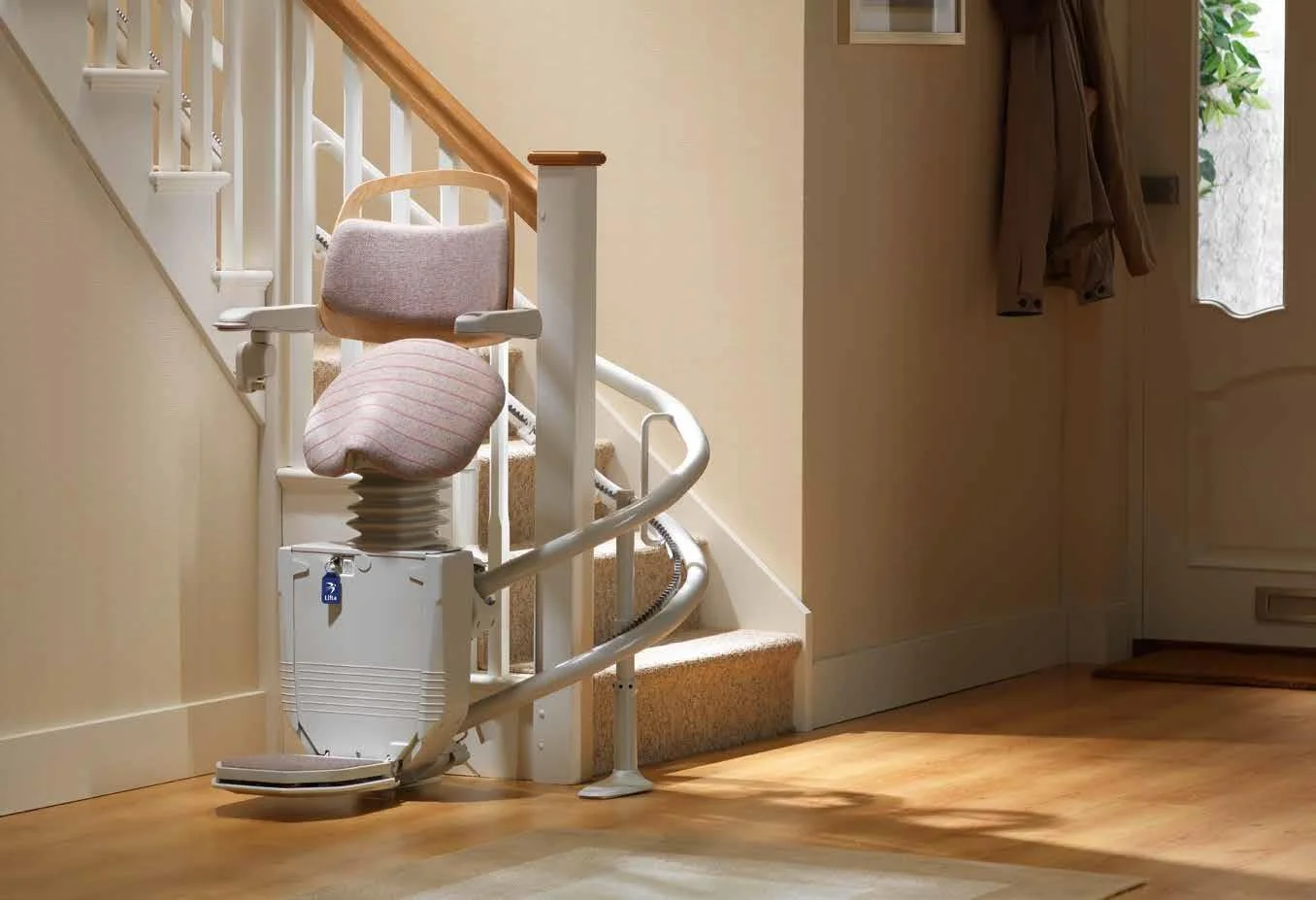
A straight staircase between two floors is the simplest case and usually takes a straight stair lift on a rail mounted to the stair treads. Stairs that turn at a landing or curve need a curved rail built to fit that staircase. In townhouses and walk-up apartments, it is worth checking stair width and who owns the stairwell before anything is ordered.
Grangeville sits at 3,399 feet, averages 38.7 inches of snowfall a year and has recorded winter lows near -25 degF. Snow and ice on porch and entry steps add fall risk that an indoor lift does not solve.
For homes where the trouble is getting from the driveway or yard into the house, an outdoor stair lift built for weather exposure is one option. Where a wheelchair user needs to get up a few entry steps, a platform lift may fit better than a seat. We look at both during an assessment.
The county is mountainous and heavily forested, with over 4.4 million acres of national forest and the Nez Perce National Forest rising south of Grangeville. Small communities are spread far apart, which makes trips to medical appointments and access to home-repair contractors harder for seniors.
Because of that, it helps to gather stair measurements, photos of the staircase and any funding paperwork before the first visit. Fewer return trips means the job gets done sooner.
About 19% of county residents live below the poverty line, so many families look to grants and loans rather than paying out of pocket. None of the programs below names stair lifts as a covered item, and the VA HISA grant specifically excludes stair glides. Several do fund home modifications in general, so call and ask how a stair lift would be treated in your case.
Idaho County Veterans Services is at 318 E. Main St in Grangeville and can be reached at (208) 507-2035. For aging services, the Idaho Aging Commission Area II office in Lewiston answers at (208) 743-5580.
Statewide options also include the Idaho Assistive Technology Project's Low-Interest Financial Loan Program and the Idaho Property Tax Reduction (Circuit Breaker) program.
This Medicaid waiver for Idahoans aged 65+ or disabled who need nursing facility level of care funds home modifications such as ramps, grab bars and widened doorways, but stair lifts are not named in its covered services. The 2026 income limit is $3,002/month for an individual with a $2,000 asset limit; call (877) 456-1233.
AAANI serves older adults, people with disabilities and vulnerable adults aged 18+ in ten northern Idaho counties, including Idaho County. Its materials do not mention stair lift funding; call (208) 667-3179 or 800-786-5536 to ask what help is available.
HISA offers a $6,800 lifetime benefit for service-connected disabilities or $2,000 for other qualifying disabilities, with a VA physician's prescription and VA Form 10-0103. Stair glides are specifically listed as not covered.
SAH provides up to $126,526 for FY2026 to veterans who own or will own their home and have a qualifying severe service-connected disability. The VA page gives ramps and widened doorways as examples and does not mention stair lifts.
SHA provides up to $25,350 for FY2026 to veterans with qualifying disabilities such as loss of use of both hands, severe burns or a severe breathing injury. Stair lifts are not mentioned in the program description.
Very-low-income rural homeowners can borrow up to $40,000 at 1% fixed interest, and those aged 62+ who cannot repay a loan may get grants up to $10,000, with accessibility improvements like ramps and walk-in tubs covered. Stair lifts are not named, and Idaho County qualifies as a USDA-eligible rural area.
This center for independent living serves people with disabilities in Lewiston, Orofino, Grangeville and surrounding areas. Its listing does not mention stair lift funding; call (208) 746-9033 or 800-475-0070 toll-free.
Older adults
1424 Main St., Suite 6, Lewiston, 83501
Veterans
318 E. Main St, Grangeville, 83530
The Idaho Aged and Disabled (A&D) Medicaid HCBS Waiver covers home modifications, but stair lifts are not named in its list of services. Call (877) 456-1233 to ask whether a stair lift could be included in your plan of care.
The HISA grant does not cover stair glides. The SAH and SHA grants fund home adaptations for qualifying service-connected disabilities but do not mention stair lifts, so talk with Idaho County Veterans Services in Grangeville at (208) 507-2035.
The USDA Section 504 program offers grants up to $10,000 for very-low-income homeowners aged 62+ who cannot repay a loan, plus loans up to $40,000 at 1%. Stair lifts are not named, but accessibility improvements are covered.
It depends on where the stairs are. Grangeville averages 38.7 inches of snowfall a year, so if icy entry steps are the problem, an outdoor stair lift or platform lift is worth discussing during the assessment.
The Idaho Aging Commission Area II office in Lewiston answers at (208) 743-5580, and the Area Agency on Aging of North Idaho, which serves Idaho County, is at (208) 667-3179.
Tell us about the stairs in your home and we will explain which lift fits, what it costs and how installation works.
