Washington County runs long and narrow between Lake Champlain and the Hudson River, with valley farmland in the middle and the Taconic Mountains and Adirondacks on either side. Across its 19 towns, from Kingsbury and Hudson Falls in the south to Whitehall, Dresden and Putnam in the north, the typical home is an older multi-story farmhouse or a village house, not a newer single-level ranch.
That housing pattern is why stairs come up so often when families here talk about staying put. This page walks through what the local homes mean for stair lift choices, which programs may help pay, and which county offices to call first.
The county grew from farm settlement, and much of that housing is still standing. Washington County has 35 registered historic sites, including four covered bridges on the National Register of Historic Places: Buskirk, Eagleville, Rexleigh and Shushan. The houses from that same era were built long before anyone planned for accessibility.
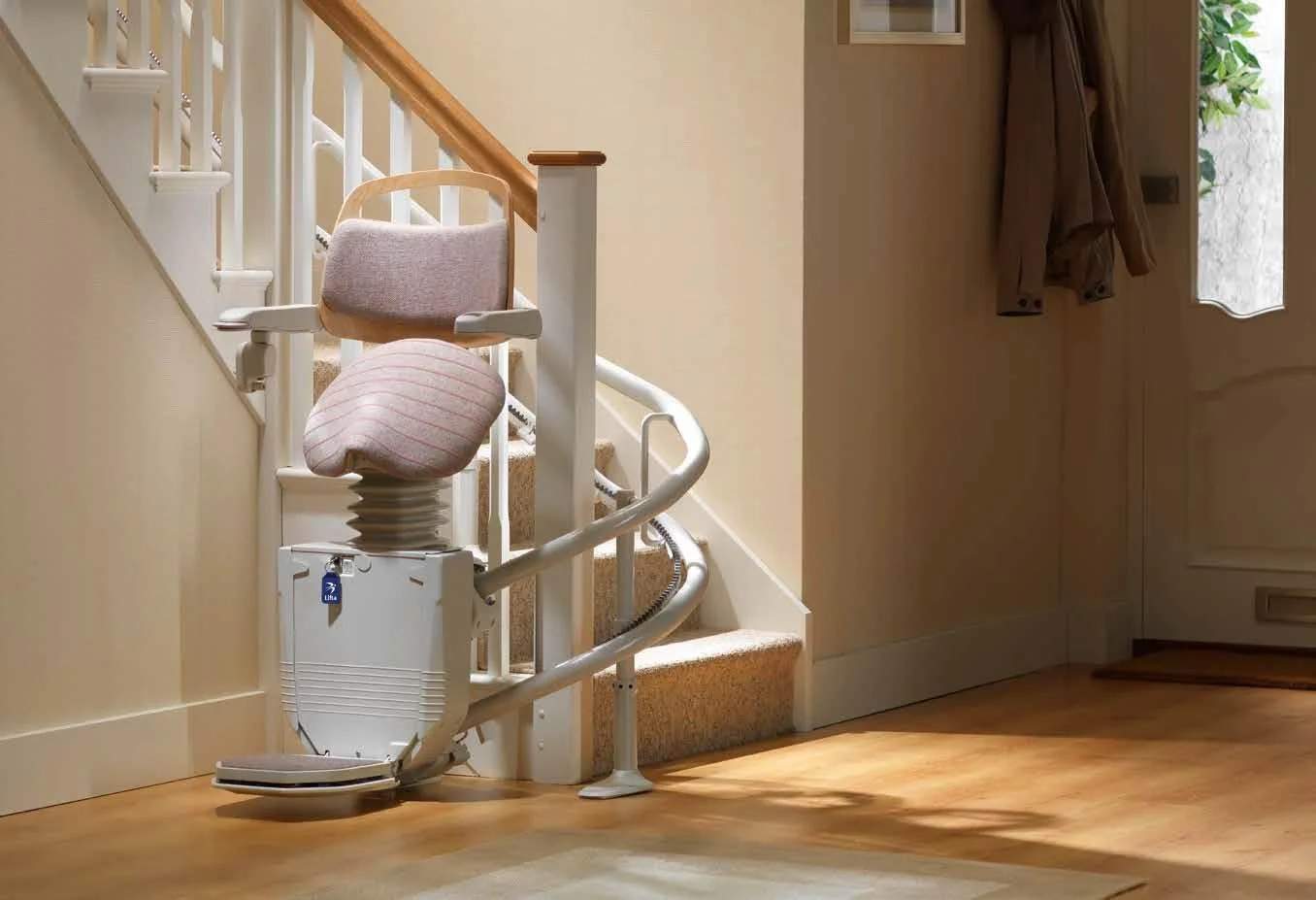
In a farmhouse in Salem, Hebron or Jackson, the only bedroom and full bath are often upstairs. A straight stair lift handles a single, uninterrupted flight. Older homes often have a landing, a turn or narrow winders at the top or bottom, and those call for a curved rail built to fit that staircase.
Not every home here is a farmhouse. Split-level homes have short flights between levels, and each flight may need its own lift. Walk-up apartments and low-rise buildings in villages like Hudson Falls, Fort Edward and Granville usually need the building owner's approval before anything is attached to a shared stair.
Many rural houses also have steps up to the porch or a side door. An outdoor stair lift is built to handle weather, and for someone who uses a wheelchair, a platform lift may make more sense than a seat. We look at the full path from the driveway to the bedroom before recommending one.
About 21.1 percent of county residents are 65 or older, and 75.3 percent of households own their homes. That means a lot of long-time owners are staying in houses they know well, stairs included.
If that includes someone in your family, the VA programs listed below are worth checking before you pay out of pocket, though each has its own rules about what it covers.
Start with the county. The Washington County Office for the Aging and Disability Resource Center at 383 Broadway in Fort Edward handles intake and referral for older adults and people with disabilities. Its source listing does not name stair lifts, but it is the right first call to learn which programs you may qualify for.
The New York Access to Home Program is the one program here whose description covers accessibility modifications, including lifts. It has income limits and you apply through a Local Program Administrator for your region. Veterans should look at the VA SAH and SHA grants, and note that the VA HISA benefit specifically excludes stair glides.
Other statewide programs that come up in these conversations include New York EISEP, the New York RESTORE Program and New York Medicaid Home Modifications (NHTD Waiver & MLTC). Ask the county office which of them apply to your situation.
The county intake and referral point for older adults and people with disabilities, running NY Connects, EISEP, personal care, caregiver respite and weatherization referral; stair lifts are not listed as a covered service. Call (518) 827-7788.
A state program that funds accessibility modifications such as ramps, lifts, handrails and doorway widening, for households at or below 80% of area median income (up to 120% for a certified disabled veteran). You apply through a Local Program Administrator serving your region, not directly to the state.
Repair loans and grants for very-low-income homeowners in eligible rural areas, which includes most of Washington County outside larger villages; grants require the applicant to be 62 or older. The source does not mention stair lifts, so confirm current amounts and uses with your local USDA Rural Development office.
VA grants for veterans with qualifying severe service-connected disabilities to buy, build or modify a home, with FY2026 caps of $126,526 for SAH and $25,350 for SHA. Stair lifts are not named in the VA description, so ask about your specific project.
A lifetime benefit of up to $6,800 or $2,000, depending on disability status, for medically necessary home accessibility improvements. The VA explicitly excludes stair glides and porch lifts from HISA.
Medicaid waiver services for people at risk of nursing home placement or with a qualifying brain injury, administered by SAIL for Washington County; stair lifts and home modifications are not listed in the source. Call (518) 792-3537.
An energy-efficiency and health and safety repair program for income-eligible households, run locally through community action agencies; stair lifts are not listed. The state program line is (518) 474-5700.
Older adults
383 Broadway, Fort Edward, 12828
Veterans
383 Broadway, Room A129, Fort Edward, 12828
Start with the Office for the Aging and Disability Resource Center at (518) 827-7788, or the Washington County Office for the Aging at (518) 746-2420. Both are at 383 Broadway in Fort Edward.
Usually, yes. Stairs with a landing or a turn take a curved rail made to fit that staircase, rather than a straight lift. We measure the stairs in person to see what fits.
Not through HISA, which excludes stair glides. The SAH and SHA grants cover modifying a home for qualifying veterans, though stair lifts are not named, so ask. The county Veterans Service Agency at (518) 746-2470 can help you sort out which benefit applies.
The USDA Section 504 program offers repair grants to homeowners 62 and older with income below 50% of area median income in eligible rural areas, which covers most of the county outside larger villages. The source does not mention stair lifts, so confirm with the local USDA Rural Development office.
The New York Access to Home Program funds accessibility modifications including lifts. Household income must be at or below 80% of area median income, or up to 120% for a certified disabled veteran.
Tell us about the stairs in your home and we will explain which lift fits, what it costs and how installation works.
