Peoria sits on bluffs above the Illinois River, and many of the county's houses were built right into that slope. Drive along Grandview Drive or through the older neighborhoods in the city and you see restored period homes with front steps, interior staircases and basements cut into the hillside.
Out in Chillicothe, Bartonville, Peoria Heights, Elmwood, Princeville and the rest of the county's 18 towns, plenty of families have lived in the same multi-level house for a long time. A stair lift is often what lets someone keep using every floor of that home instead of moving.
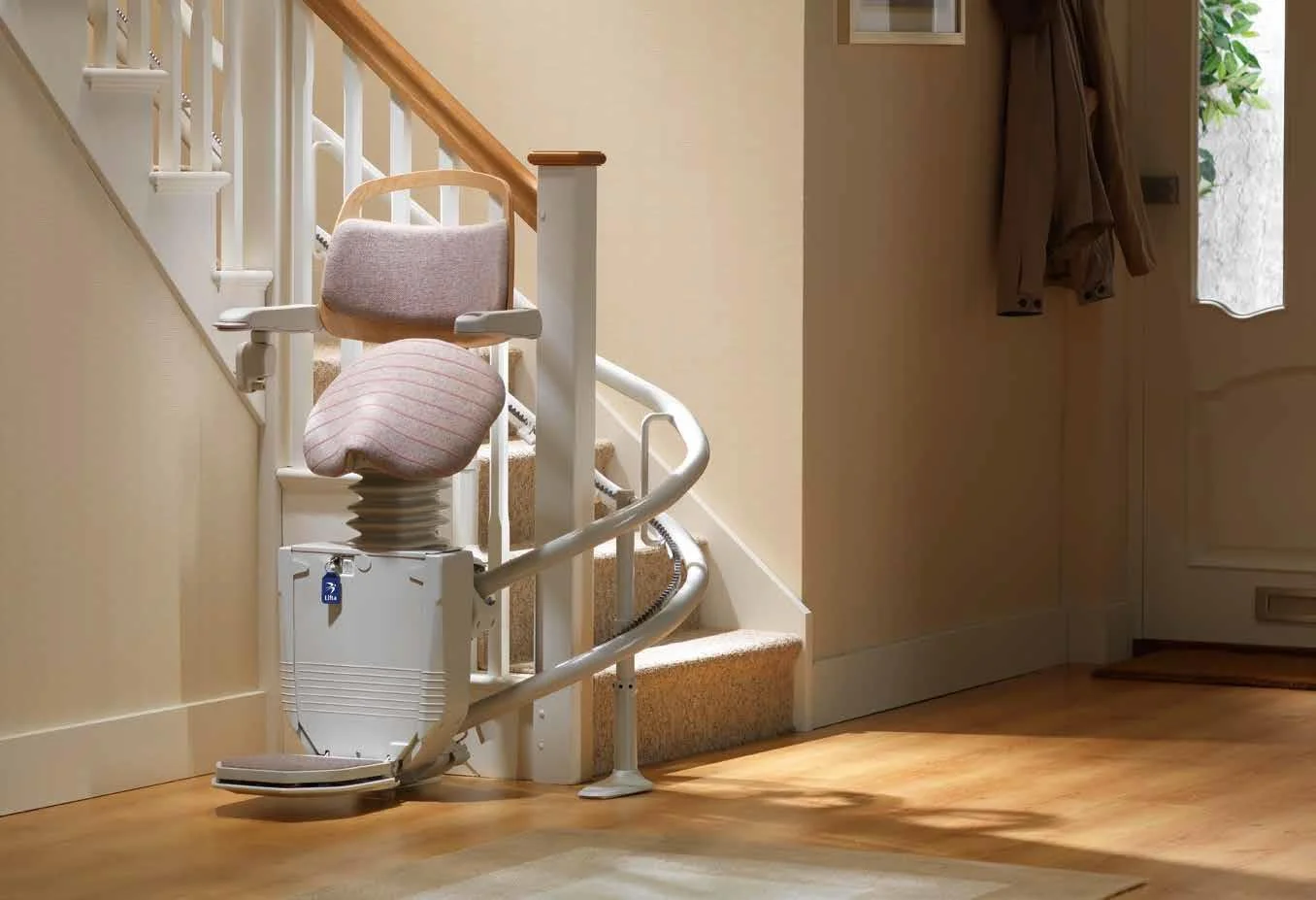
Peoria County is cut by the Illinois River, the Spoon River, Kickapoo Creek, Elbow Creek and Copperas Creek. That river-valley and bluff ground means a lot of homes have stairs in places you would not expect: a long run up from a garage, steps between a hillside entry and the main floor, or a steep flight to a basement.
Peoria's stock of historic housing has drawn new residents and restoration work in the 2020s. Older homes like these tend to have narrower stairways, landings and turns, so we measure each staircase before recommending a lift.
A straight stair lift fits a single, uninterrupted flight. That covers many single-family homes and townhouses, where the stairs run in one line from the main floor to the bedrooms.
Split-level homes are a different job. Short flights between levels, or a turn at a landing, usually call for a curved rail built to that staircase, or sometimes a separate straight lift on each flight.
Where a wheelchair user needs to get up a few steps, a platform lift can make more sense than a seat. In walk-up apartments and low-rise buildings, the stairway is often shared, so the building owner has to approve any installation.
The county has cold, snowy winters and hot, humid summers. Ice on exterior steps is a real hazard, especially on hillside lots where the entry sits well above or below the driveway.
An outdoor stair lift is built to handle weather and can serve porch steps or a slope to the door. For many households, though, the bigger daily risk is the inside staircase, and an indoor lift is the first priority.
About 17.2% of county residents are 65 or older, and 63.8% of households own their homes. Many of those owners plan to stay in the house they already know.
VA rules on stair lifts are specific, so veterans should read the VA entries below before applying.
Few programs pay for stair lifts by name. The IDHS Home Modification and Assistive Technology program is the one in our list whose official page names stair lifts as a covered change. Others cover home modifications or repairs in broader terms, so you need to call and ask.
Age decides where to start. Residents 60 and older usually begin with the Central Illinois Agency on Aging, while people under 60 with a disability can look at the Home Services Program waiver. Veterans can also call the Peoria County Veterans Assistance Commission at (309) 681-2554.
A statewide Illinois Department of Human Services program for residents with a disability, and its page lists stair lifts among covered home changes. Call (800) 843-6154 or your local Center for Independent Living to learn what is offered in Peoria County.
A Medicaid waiver for Illinois residents under 60 at application with a severe disability who are at risk of nursing facility placement. It covers environmental modifications that increase safety at home but does not name stair lifts; call (877) 581-3690.
An information and referral hub for older adults in Peoria, Fulton, Marshall, Stark, Tazewell and Woodford counties, located at 700 Hamilton Boulevard in Peoria. It is not a direct equipment fund and its listing does not mention stair lifts; call (309) 674-2071.
Funds ongoing in-home services such as personal care and emergency response for people 60 and older with non-exempt assets of $17,500 or less. Its page does not mention stair lifts or home modifications; call the Senior HelpLine at (800) 252-8966.
Covers interior home modifications, exterior ramps and other updates for income-qualified households with a person with a documented disability, including renters with landlord approval. Stair lifts are not named, and demand is high; call (217) 525-1308 or the Central Illinois Center for Independent Living in Peoria.
Rehabilitation help up to $60,000 per household for low-to-moderate income owners of single-family homes in communities that hold a current award. Stair lifts are not named; ask your municipality or Peoria County government whether an award is active.
Helps income-qualified homeowners inside City of Peoria limits replace broken water heaters and furnaces or repair roofs. Stair lifts are not mentioned; call (309) 999-4029.
Repair programs from the Peoria Habitat affiliate at 931 N Douglas, including Veteran Repairs. Its page does not list stair lifts or eligibility details, so call (309) 676-6729 to ask.
Repair loans up to $40,000 and grants up to $10,000 for very low income homeowners in USDA-eligible rural areas, with grants limited to applicants 62 or older. Stair lifts are not named, and eligibility depends on your specific address.
A VA benefit for medically necessary home accessibility changes, with lifetime caps of $6,800 or $2,000. It does not cover stair lifts, because stair glides are excluded by name.
Grants of up to $126,526 (SAH) or $25,350 (SHA) for veterans with qualifying severe service-connected disabilities to adapt their homes. The VA describes ramps and wider doorways but does not name stair lifts.
Older adults
700 Hamilton Boulevard, Peoria, 61603
Veterans
4234 N Knoxville Ave, Peoria, 61614
Not through HISA, which excludes stair glides. The SAH and SHA grants cover home adaptations for qualifying service-connected disabilities but do not name stair lifts, so ask directly. The Peoria County Veterans Assistance Commission at 4234 N Knoxville Ave can be reached at (309) 681-2554.
Yes. The Home Services Program waiver is for Illinois residents under 60 at application who have a severe disability and qualify for Medicaid. The IDHS Home Modification and Assistive Technology program, which names stair lifts, has no age limit listed for residents with a disability.
Start with the Central Illinois Agency on Aging at (309) 674-2071. It coordinates senior services for Peoria County and can make referrals, including to the Community Care Program.
No. The City of Peoria Emergency Repair Program and Roof Program serve homeowners within the city only. Homes in smaller towns and unincorporated areas may fall in a USDA-eligible rural area for Section 504 help, but you need to check your exact address.
The INCIL Home Modification Program accepts renters who have landlord approval. In a shared stairway, the building owner will also need to approve the installation itself.
Often, but not always. Short flights between levels may take a straight lift on each flight, while stairs with a turn or landing usually need a curved rail measured for that staircase.
Tell us about the stairs in your home and we will explain which lift fits, what it costs and how installation works.
