South Dakota covers 234 towns and a population of 695,184, spread from Minnehaha County and Lincoln County in the east to Pennington County, Meade County and Fall River County in the west. A family in Brown County and a family in Oglala Lakota County may be hundreds of miles apart, but they usually face the same question: can a parent keep using the whole house?
This page walks through how we match a stair lift to a home, who in South Dakota tends to need one, and the state and federal programs that can help pay for it. Each program below lists its own phone number, so you can call the right office directly.
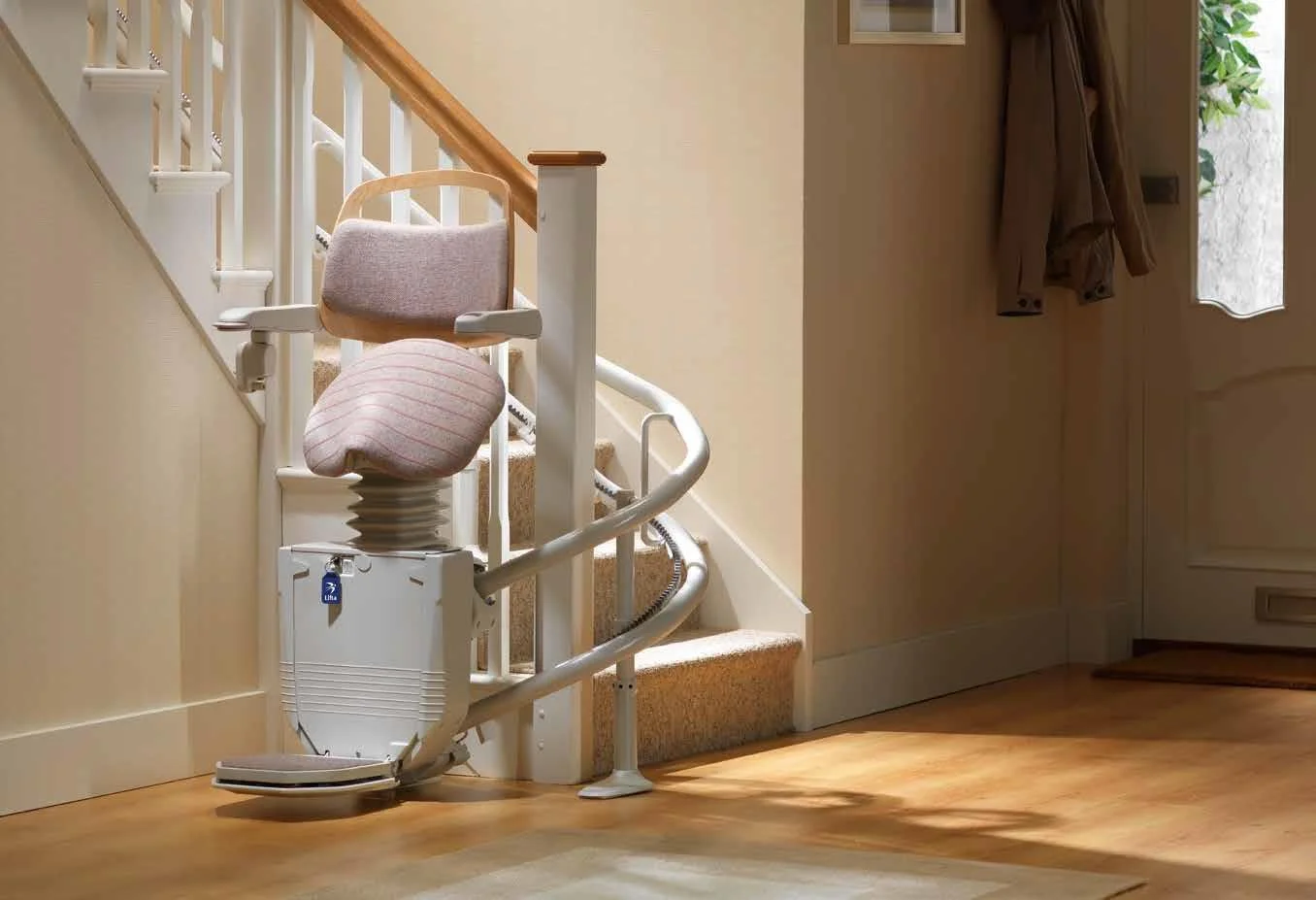
The staircase decides the lift, not the other way around. A straight run with no turns or landings can usually take a straight stair lift, which is the simplest type to fit.
Stairs that turn, wrap around a landing or change direction need a curved lift with a rail built to that exact shape. Steps outside the house, such as a run from the driveway to the door, call for an outdoor model. When a wheelchair has to come along, a platform lift is the option to talk through.
We measure the stairs first and then explain which of these types fits. That way you know what you are pricing before you contact any funding program.
About 16.9 percent of South Dakotans are 65 or older. In many homes, the bedroom or the only full bathroom sits up or down a flight of stairs, and that flight becomes the hardest part of the day.
Roughly 63.6 percent of residents own their homes. Owning makes a stair lift simpler to plan, because the rail attaches to the stairs and the owner can approve the work. Renters should talk with the property owner before anything is installed.
The VA splits home access into two parts, and it helps to know which part pays for what.
The HISA grant handles ramps and structural changes, not the lift itself. The stair lift comes through VA Prosthetics when it is medically prescribed. Details are in the program list below.
Four programs can help, and they work in different ways. The HOPE Medicaid Waiver pays for home access changes under an approved care plan. DakotaLink offers a low-interest loan, and SDHDA has forgivable rehab funds for accessibility upgrades.
For veterans, the VA can cover the lift through Prosthetics and structural work through HISA. Some families combine sources, for example using VA help for the lift and another program for related changes. Call each office to confirm eligibility before work begins.
A Medicaid home and community-based waiver that funds home access changes, including stair lifts, as authorized in an approved care plan with no fixed cap. Call (833) 663-9673.
A state assistive technology loan at a 5% fixed rate, from $500 to $20,000, that covers stairway lifts and home access. Call (800) 645-0673.
A 0% interest, conditionally forgivable loan or grant that can cover a stair lift as an accessibility rehabilitation improvement, with amounts set by the approved scope. Call (605) 773-3181.
VA Prosthetics (PSAS) covers a medically prescribed stair lift with no set dollar cap, while the HISA grant ($6,800 service-connected, $2,000 non-service-connected) covers ramps and structural changes, not the lift. Call (877) 222-8387.
It can through the South Dakota HOPE Medicaid Waiver, which funds home access changes including stair lifts when they are part of an approved care plan. There is no fixed cap. Call (833) 663-9673 to ask about eligibility.
Both can be covered, through different parts of the VA. The stair lift comes through VA Prosthetics when it is medically prescribed, and the HISA grant covers ramps and structural changes. Call (877) 222-8387.
Yes. The DakotaLink Assistive Technology Loan Fund lends $500 to $20,000 at a 5% fixed rate for stairway lifts and home access. Call (800) 645-0673.
The SDHDA HOME Homeowner Rehabilitation Program offers 0% interest, conditionally forgivable funds for rehab work, and it counts accessibility upgrades as a rehabilitation improvement. Call (605) 773-3181.
Both are on our South Dakota county list, along with Minnehaha County, Pennington County and the rest. Individual county pages are still being added, so contact us to get a home measurement started.
It depends on the stairs. Straight runs usually take a straight lift, stairs with turns or landings need a curved rail, outside steps need an outdoor model, and wheelchair users may need a platform lift. We measure first and then recommend one.
Tell us about the stairs in your home and we will explain which lift fits, what it costs and how installation works.
