Millard County covers 6,828 square miles of the Sevier Desert, with homes gathered in Fillmore, Delta, Hinckley, Kanosh and a handful of other small towns, and many more scattered across unincorporated ranch and farm country. Fillmore was founded in 1851, and the settlement pattern from those early decades still shapes where people live today.
With only about 1.97 people per square mile, a trip to a medical provider or a care facility can mean a long drive. Assisted-living options are limited and far apart here, so for many families, making the current house work is more practical than moving. A stair lift is often one piece of that plan.
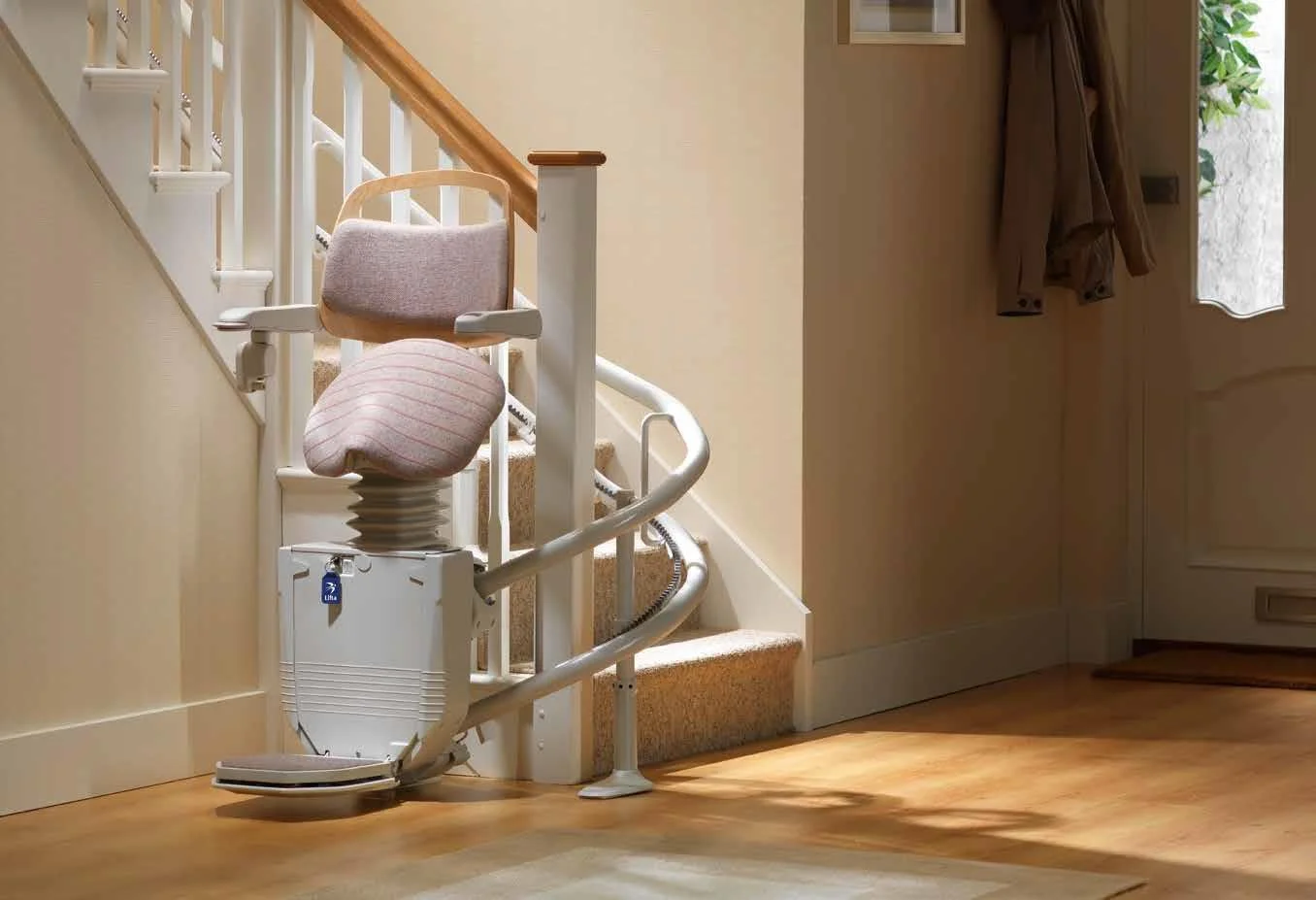
Most homes here are single-family houses, with plenty of ranch-style and split-level designs, plus some low-rise buildings. Each one calls for a different kind of lift, so the layout of the stairs matters more than the age of the house.
A ranch-style home that has a basement often has one straight run of stairs, which is the simplest and usually the quickest lift to fit. Split-level homes are different: they have short flights between levels, and a turn or landing may call for a curved rail built to that staircase.
Low-rise buildings with shared stairways raise their own questions, such as who owns the stairwell and whether there is room for a rail. Those are worth sorting out before anything is measured.
Outside the hubs of Fillmore and Delta, many residences sit on their own out in arid flatland or near the hills of the Pahvant Range. Those homes often have exterior steps up to a porch or entry, and an outdoor stair lift built for weather exposure can handle those steps.
Where a wheelchair is involved, a platform lift may make more sense than a seat-style lift. We look at the steps, the ground around them and how the person gets in and out of the house before suggesting either one.
About 16.1% of Millard County's 10,390 residents are 65 or older, and 77.3% of households own their homes. Owning the home matters, because you can make permanent changes like a rail anchored to the stairs, and several funding programs require ownership.
Incomes in the county are often modest, fixed or tied to agriculture, with a median household income of $63,221. That makes no-cost and low-cost avenues worth checking before paying out of pocket.
None of the program sources below name stair lifts directly, so the honest answer is that you have to ask. The Six-County Area Agency on Aging is the best first call for most older residents, since it handles both the Aging in Place Program and the local side of the Medicaid Aging Waiver.
Veterans should also contact the Utah Department of Veterans and Military Affairs at (801) 326-2372 about the VA grants. Statewide, the Utah Assistive Technology Foundation (UATF) Loan and VA Benefits for Veterans (HISA + Prosthetics) are other names to ask about.
A Medicaid program for people 65 and older who need nursing-facility level care and meet financial rules; its services include Environmental Accessibility Adaptations, but the source does not mention stair lifts. Millard County residents are served through the Six-County Area Agency on Aging, and the state line is (801) 538-3910.
A statewide Medicaid waiver for people 65 and older, or ages 21-64 meeting SSA disability criteria, who need nursing-facility level care and want to live at home instead of a nursing home. The source does not mention stair lifts or home modifications; call (800) 662-9651.
Provides funding, resources and support for home modifications and accessibility improvements for older adults in Juab, Millard, Piute, Sanpete, Sevier and Wayne counties, though the source does not name stair lifts. Call intake at (435) 893-0731.
Helps caregivers of someone 60 or older with services including medical supplies (assistive devices), up to $1,500.00 per year shared across services; stair lifts are not mentioned. Call (435) 893-0731 for a case manager assessment.
Up to $126,526 (FY2026) for veterans with certain service-connected disabilities to build or remodel a home they own or will own for accessibility; the source does not mention stair lifts. Ask the Utah Department of Veterans and Military Affairs at (801) 326-2372 for help applying.
Up to $25,350 (FY2026) for veterans or qualifying family members with conditions such as loss of use of both hands, severe burns or certain respiratory injuries; stair lifts are not mentioned in the source. The Utah Department of Veterans and Military Affairs can be reached at (801) 326-2372.
For a veteran temporarily living in a family member's home, up to $50,961 (FY2026) if SAH-eligible or $9,100 (FY2026) if SHA-eligible; the source does not mention stair lifts. Contact the Utah Department of Veterans and Military Affairs at (801) 326-2372.
The Housing and Community Action Programs department runs several home repair programs, but the source does not say whether accessibility work or stair lifts are included. Call (435) 893-0700 to ask about eligibility and current funding.
Older adults
250 North Main, Room 5, Richfield, 84701
Veterans
550 Foothill Drive, Suite 105, Salt Lake City, 84113
Yes, possibly. The New Choices Waiver covers ages 21-64 who meet SSA disability criteria and need nursing-facility level care, and the Family Caregiver Support Program serves caregivers of someone 60 or older.
Start with the Six-County Area Agency on Aging at (435) 893-0731 and ask about the Aging in Place Program. The R6 Regional Council AAA office in Richfield is at 250 North Main, Room 5, and can be reached at (435) 893-0725.
The Utah Medicaid Aging Waiver includes a service called Environmental Accessibility Adaptations, but the source does not name stair lifts. Coverage depends on the individual care plan, so ask a Six-County case manager directly.
The VA offers the SAH Grant (up to $126,526), the SHA Grant (up to $25,350) and the TRA Grant for adapting a family member's home. None name stair lifts, so call the Utah Department of Veterans and Military Affairs at (801) 326-2372 to ask.
Often it does. With long drives to medical providers and few assisted-living options in the county, a lift can help someone stay in a home they already know, and outdoor lifts can handle porch or entry steps.
The source does not say. Call the Housing and Community Action Programs department at (435) 893-0700 to confirm what work is covered and who qualifies.
Tell us about the stairs in your home and we will explain which lift fits, what it costs and how installation works.
