Honolulu County covers the island of Oʻahu, and its homes climb. Valley and hillside neighborhoods like Mānoa, Pālolo, Mōʻiliʻili and ʻĀlewa Heights hold multi-story houses built into slopes, while the urban core is packed with high-rise and condo living. Out in Kapolei, Mililani Town, Kaneohe, Waianae and the rest of the county's 52 towns, you'll find single-family homes, townhouses and split-level homes.
That mix matters when someone in the family starts having trouble with stairs. A split-level in Pearl City, a hillside house above Kailua and a townhouse in Ewa Gentry each call for a different kind of lift. This page walks through what fits which home and which Oʻahu programs are worth a phone call before you pay out of pocket.
A straight stair lift is the simplest fit. If your staircase runs in one line from bottom to top with no landing or turn, the rail can usually be cut to length and mounted to the stair treads, not the wall.
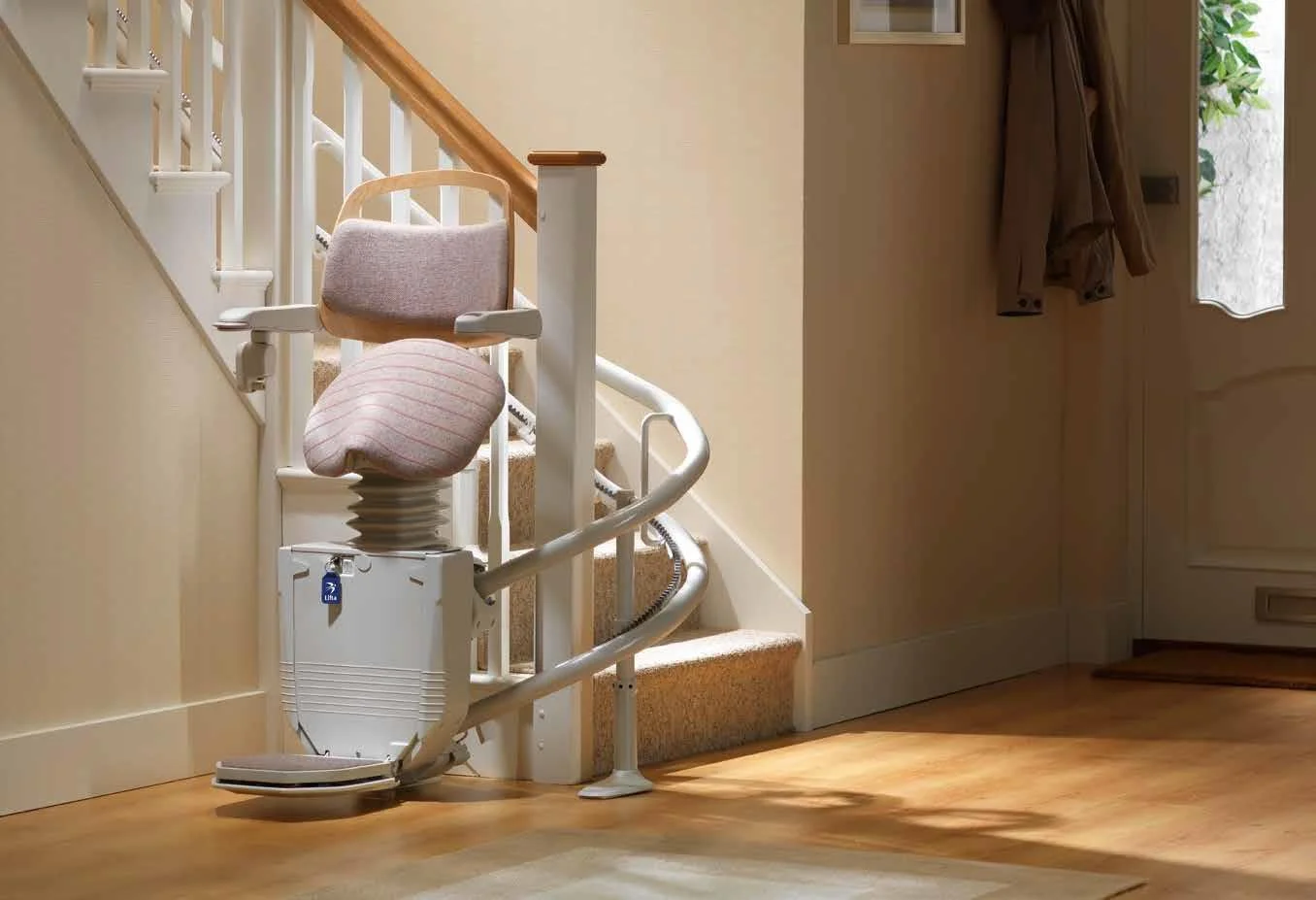
Hillside homes are where curved lifts come in. Multi-story houses in neighborhoods like Pālolo or ʻĀlewa Heights often have stairs that turn at a landing, and a curved rail is built to follow that exact path.
Split-level homes deserve a close look. The short runs between levels can be handled with a straight lift on each section, or with a platform lift when a wheelchair needs to go between floors.
On a sloped lot, the hardest stairs are sometimes outside, between the street or carport and the front door. An outdoor stair lift is built for exterior steps and can solve the problem of getting into the house at all.
Townhouses usually have one straight interior staircase, which keeps the job simple. In condominiums and apartment buildings, the stairs inside a unit may be yours to modify, but common areas are a different matter, so check with the building or association first.
Renters should also talk to the owner before any install. Of the 370,665 housing units in the county, 43.7% are renter-occupied, so this comes up often.
About 19.5% of county residents are 65 or older, and many of them want to stay in the homes they already have. With 98.3% of residents living in urban areas as of the 2020 Census, most of Oʻahu is within reach of equipment providers and contractors rather than spread across a remote service area.
If that includes someone in your family, the VA grants listed below are worth checking before you decide how to pay.
None of the local program sources we reviewed name stair lifts specifically, so the honest answer is: ask. Several of them do cover accessibility work or home adaptations in general, and a case manager can tell you whether a lift counts.
Start with the Honolulu Elderly Affairs Division at (808) 768-7700 if the person is 60 or older. Medicaid members should ask their health plan about Going Home Plus, and income-qualified homeowners can look at the city's no-interest Home Rehabilitation Loan Program.
Statewide, it is also worth asking about the ATRC Assistive Technology Loan Program and VA Benefits for Veterans (HISA + Prosthetics). Veterans can reach the Office of Veterans’ Services - OʻAHU at (808) 433-0420, located at 459 Patterson Road, E-Wing, Room 1-A103, Honolulu 96819.
In-home services such as chore, homemaker, personal care and case management for Oʻahu residents 60 and older, allocated by assessed need. Stair lifts and home modifications are not mentioned in the source; call (808) 768-7700 to ask.
A Med-QUEST waiver for QUEST Integration members who meet nursing-facility level of care, and its covered services include Environmental Accessibility Adaptations and Home Maintenance. Stair lifts are not named in the source, so ask your health plan's Health Coordinator or call (808) 973-6357.
VA grants for veterans with qualifying service-connected disabilities: SAH up to $126,526, SHA up to $25,350, and TRA up to $50,961 or $9,100 (FY2026). The source cites ramps and widened doorways as examples but does not name stair lifts.
A no-interest home repair loan for Oʻahu owner-occupants with household income up to 80% of Area Median Income, and it allows accessibility improvements for family members with disabilities. Stair lifts are not named in the source; call (808) 768-7076.
Older adults
715 S. King St., Suite 200, Honolulu, 96813
Veterans
459 Patterson Road, E-Wing, Room 1-A103, Honolulu, 96819
Yes, that is what a curved stair lift is for. The rail is made to follow your staircase through landings and turns, which is common in multi-story hillside houses in neighborhoods like Mānoa and Pālolo.
Often you can for stairs inside the unit, but check with the building or association first. Common stairways and shared areas usually need their approval, and renters need the owner's permission.
The Honolulu Elderly Affairs Division runs Kūpuna Care for residents 60 and older. Its listed services are things like homemaker and personal care, and stair lifts are not mentioned, so call (808) 768-7700 and ask directly.
Going Home Plus, a Med-QUEST waiver, lists Environmental Accessibility Adaptations among its services, but the source does not say whether stair lifts qualify. Members should ask their health plan's Health Coordinator or call (808) 973-6357.
Interior-only repairs under $75,000 can qualify for expedited processing of up to about 120 days. Otherwise, processing can take more than a year because of federal and county review.
The Office of Veterans’ Services - OʻAHU is at 459 Patterson Road, E-Wing, Room 1-A103, Honolulu 96819, phone (808) 433-0420. They can help with VA housing adaptation grants and other VA benefits.
Tell us about the stairs in your home and we will explain which lift fits, what it costs and how installation works.
