A beach house on pilings in Bethany Beach and a ranch-style home outside Georgetown sit in the same county, but they put very different stairs in front of the people who live in them. Sussex County runs from the Atlantic beach towns of Rehoboth Beach, Dewey Beach, Bethany Beach and Fenwick Island west into farm country around Bridgeville, Greenwood, Seaford and Laurel.
That range shapes what kind of stair lift makes sense. On the coast, the climb often starts outdoors, a full exterior run up to the main living level. Inland, the stairs are more often a split-level half flight, a townhouse staircase or a few steps at the door. This page walks through those differences and the programs that may help with the cost.
Much of the coastal housing in Rehoboth Beach, Dewey Beach, Bethany Beach and Fenwick Island sits inside FEMA Special Flood Hazard Areas. Oceanfront lots in Zone VE must be built on pilings or columns, with the lowest structural member at or above the Base Flood Elevation, which runs 9 to 15 feet above sea level in these areas. Inland floodplain lots in Zone AE must have the lowest floor at or above that elevation too.
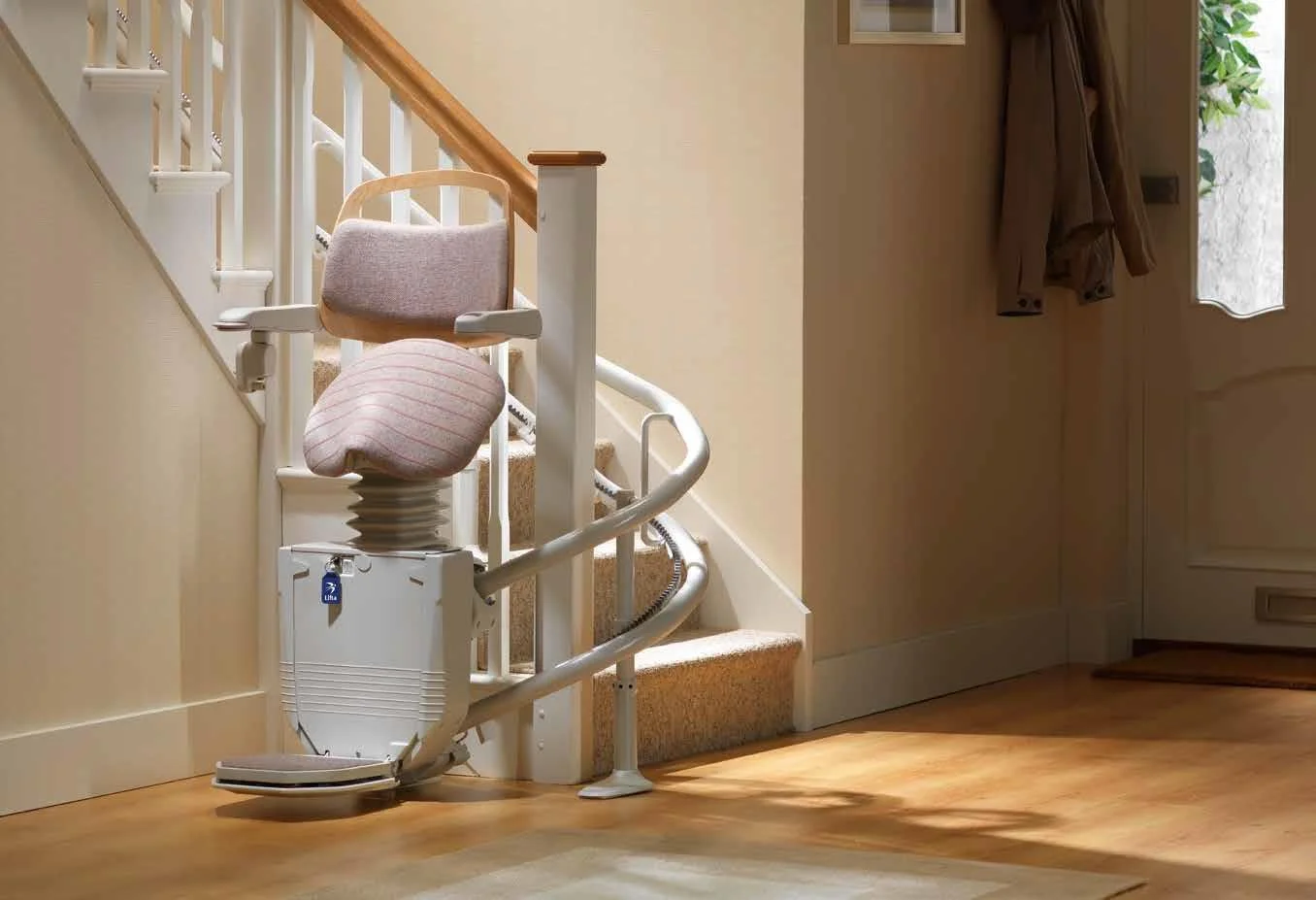
In practice, that means the front door is often a full flight of exterior stairs up from the ground. For these homes we look at an outdoor stair lift built for weather exposure, mounted along the existing exterior run. If the stairs turn at a landing, a curved rail is usually the answer; a single straight run can take a straight rail.
We measure the stair width, the landings at the top and bottom, and the condition of the stair structure before recommending anything. A lift is only as solid as the stairs it bolts to.
Away from the beaches, around towns like Milford, Millsboro, Laurel and Delmar, the housing mix shifts toward single-family homes, ranch-style homes, split-level homes and townhouses. A ranch may have no indoor stairs at all, but a basement stair or a few steps at the entry can still be the hard part of the day.
Split-level homes have short half flights between levels, and some households need a lift on more than one of them. Townhouses usually have one straight staircase, which is the simplest and most common install. Walk-up apartments can work too, though the building owner has to approve the installation first.
Sussex County covers about 1,196 square miles in the southernmost part of Delaware, with farmland, wetlands like the Great Cypress Swamp, and 26 towns spread across it. As of the 2020 Census, about 28.9% of residents were 65 or older, and the county's median age was 50.8.
That older population lives both in the beach-resort towns and in the rural agricultural interior. With 63.9% of residents owning their homes, many families are deciding how to adapt a house they already own rather than move. Distances between towns are real here, so a single in-home visit that covers measurements, options and funding questions saves a lot of driving.
No program listed below names stair lifts outright as a covered item, and the VA HISA grant specifically excludes them. Several do cover home modifications, accessibility work or specialized equipment, so a stair lift request may be approved case by case.
Delaware Medicaid through LTCCS and the DSAAPD Specialized Services Fund are the two most direct places to ask. Rural homeowners with very low incomes can look at USDA Section 504, and local options run through Sussex County Habitat for Humanity and the Statewide Emergency Repair Program. For general guidance, the Division of Services for Aging & Adults w/ Physical Disabilities can be reached at (302) 255-9390.
The VA HISA grant helps with fixed alterations like ramping, entrance access and roll-in showers, but its rules exclude stair glides and porch lifts, so it will not pay for a stair lift.
The Delaware Commission of Veterans Affairs has an office at 26669 Patriots Way in Millsboro and can be reached at (302) 648-3068. They can help a veteran sort out which other benefits apply.
Medicaid long-term-care benefits for Delaware residents at risk of nursing-home placement, including home modifications and specialized medical equipment; stair lifts are not named, so coverage is decided through a DHSS assessment. Single applicants face a $2,000 asset limit and $2,485/month income limit for 2026; call (800) 223-9074.
A fund of last resort for home modification, assistive technology and transportation, with a $10,000 maximum lifetime per person or residence. Stair lifts are not named, so DSAAPD must approve a request as reasonable and cost-effective; call (302) 424-7310.
A lifetime VA grant of up to $6,800 or $2,000, depending on disability status, for medically necessary fixed alterations. It does not cover stair lifts; the program explicitly excludes stair glides and porch lifts.
Loans up to $40,000 at 1% over 20 years, and grants up to $10,000 lifetime for homeowners 62+, for very-low-income households in USDA-eligible rural areas. Accessibility work like ramps and grab bars is listed, but stair lifts are not named.
Emergency repair help, administered by Milford Housing Development Corporation, for homeowners at or below 80% of area median income facing a health-and-safety emergency, including accessibility barriers. It funds bars and ramps; stair lifts are not named. Call (302) 491-4010.
Nonprofit home repair help for floors, decks, ramps, electrical, plumbing and more, reviewed case by case around health and safety. Stair lifts are not mentioned; call (302) 855-1153.
A HUD-funded aging-in-place program for low-income homeowners age 60+ in the 19973 ZIP code around Seaford, covering ramps, grab bars, railings and step repairs. Stair lifts are not named among the listed modifications; call (302) 855-1153.
Older adults
1901 N. DuPont Highway, New Castle, 19720
Veterans
26669 Patriots Way, Millsboro, 19966
Often, yes. Many homes in Zone VE areas like Bethany Beach and Fenwick Island are reached by a full exterior stair run, and an outdoor stair lift mounts along those stairs. We check the stair structure, width and landings first.
No. HISA rules exclude removable equipment such as stair glides and porch lifts. Veterans can call the Delaware Commission of Veterans Affairs in Millsboro at (302) 648-3068 to talk through other options.
LTCCS benefits include home modifications and specialized medical equipment, but stair lifts are not named. Whether one is covered depends on the DHSS assessment and care plan. Call (800) 223-9074 to start.
The Older Adults Home Modification Program serves low-income homeowners age 60+ in the 19973 ZIP code. Its listed work includes ramps, grab bars, railings and step repairs; stair lifts are not listed. Call Sussex County Habitat for Humanity at (302) 855-1153.
The Specialized Services Fund has a $10,000 maximum lifetime per person or residence, and it is used only when no other funding is available or sufficient. Call (302) 424-7310.
Possibly. Split-level homes have separate short flights between levels, and each flight needs its own lift. We look at which levels the person actually needs to reach day to day.
Tell us about the stairs in your home and we will explain which lift fits, what it costs and how installation works.
