From Cobleskill and Middleburgh in the north to Gilboa, Conesville and Blenheim up in the Catskill Mountains, Schoharie County covers 626 square miles and 17 towns with no large cities. Many homes here are farmhouses, split-level homes and older multi-story houses, and a lot of them were built with interior stairs as the only way to reach the bedrooms.
That layout works fine until the stairs stop working for someone in the house. This page walks through what Schoharie County homes tend to mean for a stair lift, where installation gets more involved, and which programs may help with the cost.
Schoharie County has documented 19th and early 20th century multi-story residences, such as the Dr. Christopher S. Best House and Office and the Lansing Manor House. Homes from that era were built with interior staircases between floors, and that is the exact barrier a stair lift is meant to solve.
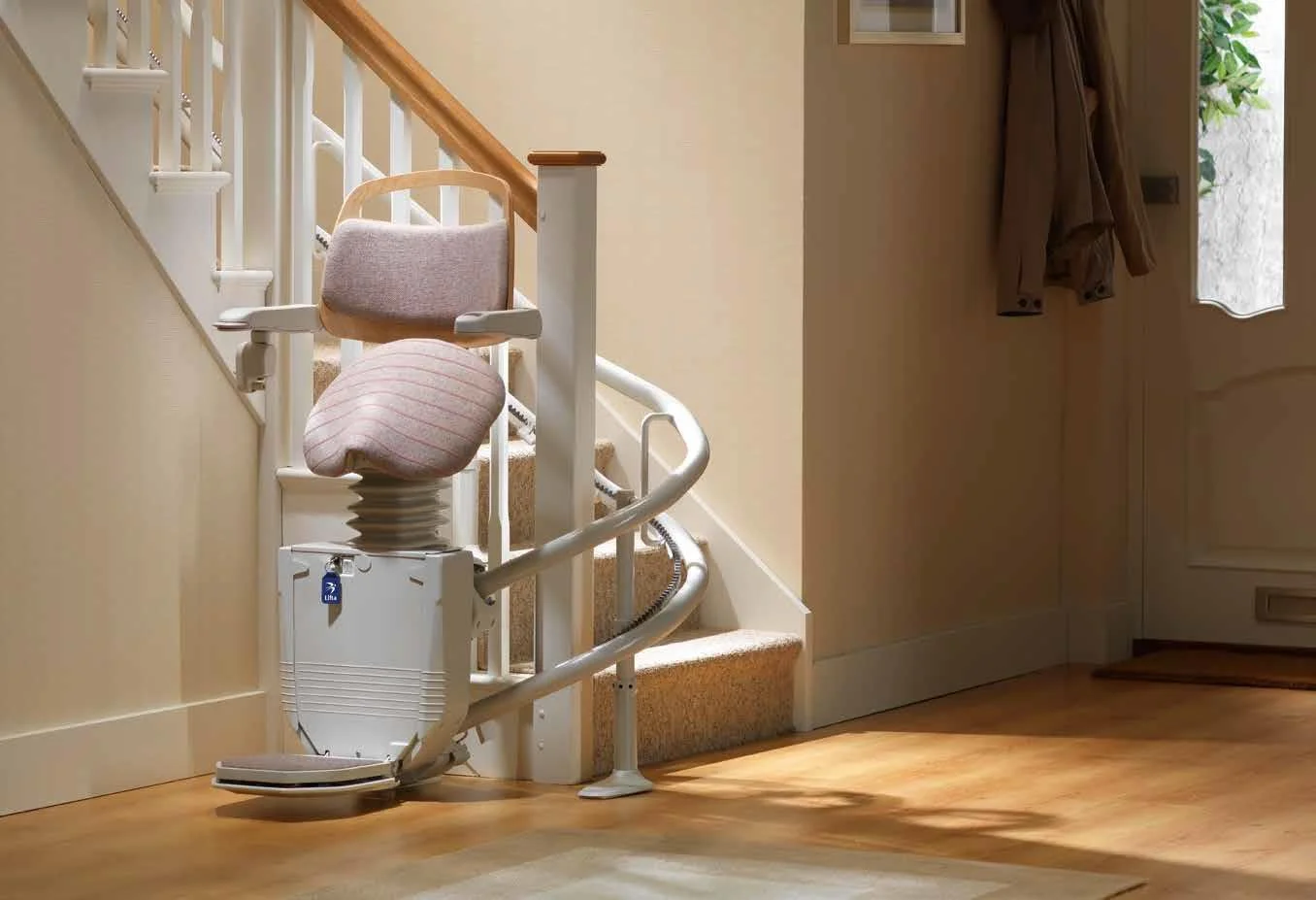
In an older house we look at stair width, the condition of the treads and whether the staircase runs straight or turns. A straight run usually takes a standard rail. A staircase with a turn or landing needs a curved rail built to that specific stair, which takes more measuring and more lead time.
Farmhouses often have a main staircase plus steps at the entry, so we check both the inside stairs and how a person gets into the house. Some families need a lift inside and a different solution at the door.
Split-level homes have short flights between levels. Each flight may need its own lift, so it helps to decide which levels the person really has to reach every day. In walk-up apartments, the stairs may be shared, so the building owner has to be part of the plan before anything is installed.
More than 75% of the county's population lives in the north, closer to the Mohawk River, while the southern towns sit in the Catskill Mountains with real elevation change. Homes on hillsides can have steep entry steps or exterior stairs, which is where an outdoor lift or a vertical platform lift may come up.
The county is entirely rural and low-density, and that affects how long it can take to line up assessments, contractors and service visits. Planning ahead, before a fall or a hospital discharge forces the issue, gives you more choices.
About 22.9% of Schoharie County residents are 65 or older, and 75.9% of households own their homes. Many of those owners plan to stay put, which is why a stair lift is often a more practical step than moving.
Veterans should know up front which VA grants do and do not pay for stair lifts, since one of the most common VA home grants specifically excludes them.
The one program in our list that states stair glides may be covered is the NHTD Medicaid waiver, and even there approval is case-by-case after an assessment. The VA HISA grant excludes stair glides by name, so veterans should not count on it for a lift.
Other programs, including USDA Section 504, NY Access to Home and the county's EISEP services, cover home modifications or repairs in general but do not name stair lifts. It is worth asking each one directly. Statewide options to ask about also include the New York RESTORE Program and New York Medicaid Home Modifications (NHTD Waiver & MLTC).
A New York Medicaid waiver for people who are nursing-home eligible but living in the community; stair glides or vertical platform lifts may be covered if an assessment finds them necessary for health, welfare and safety. Coverage is case-by-case, and the number listed is (718) 922-9200.
A lifetime VA grant of up to $6,800 or $2,000 for medically necessary alterations, but it specifically excludes stair glides and porch lifts. Call (800) 827-1000 for other VA options.
VA grants of up to $126,526 (SAH) or $25,350 (SHA) for FY2026 for veterans with specific severe service-connected disabilities to build, buy or adapt a home. The source does not mention stair lifts; call (800) 827-1000 to ask.
Rural very-low-income homeowners can get a 1% loan up to $40,000, and those 62 and older a grant up to $10,000, for repairs and hazard removal; stair lifts are not named among the examples. The USDA Service Center in Schoharie is at (518) 295-8600.
A state grant for low- and moderate-income people with disabilities that funds modifications such as ramps and lifts, though stair lifts are not named and you must apply through a local administrator. The Schoharie County Community Action Program at (518) 234-7604 is an HCR-affiliated local provider; ask whether it currently handles Access to Home.
Case-managed in-home services for people 60 and older, which may include home repairs and assistive devices on a cost-share basis; stair lifts are not named. Call (518) 462-7040 or NY Connects at 1-800-342-9871.
A local non-profit home repair program for low- to moderate-income households outside Gilboa, Conesville and Jefferson; its pages do not mention stair lifts, and the program was listed as fully assigned at last check. Call (518) 234-7604 to ask about current status.
Older adults
113 Park Place Suite 3, Schoharie, 12157
Veterans
284 Main Street, 3rd Floor, Schoharie, 12157
Possibly, through the NHTD Medicaid waiver, which states that stair glides or vertical platform lifts may be covered. You need to be Medicaid eligible and nursing-home eligible, and the lift must be approved through an assessment and service plan.
No. The HISA grant lists stair glides as an excluded item. Veterans can contact the Schoharie County Veterans' Service Office at (518) 295-2053 or the VA at (800) 827-1000 to talk through other options.
The county's EISEP program serves people 60 and older who need help with daily activities, and it may cover home repairs or assistive devices. Call (518) 462-7040 or NY Connects at 1-800-342-9871.
Schoharie County is USDA-eligible county-wide, but you should still confirm your address with USDA's Property Eligibility Tool. Income must be at or below 50% of area median income, and the grant is only for homeowners 62 and older.
Yes, a staircase with a turn or landing usually needs a curved rail made for that stair. It takes more measuring than a straight run, so an in-home visit is the first step.
No. That program covers Schoharie County except Gilboa, Conesville and Jefferson, and it was listed as fully assigned at last check. Other programs on this page are not limited by town.
Tell us about the stairs in your home and we will explain which lift fits, what it costs and how installation works.
