Hawaii County is the whole Big Island, about 4,028 square miles of land running from sea-level towns like Hilo and Kapaau up onto volcanic slopes around Waimea and Holualoa. Across 49 towns, from Hawaiian Paradise Park and Pahoa to Captain Cook and Hawaiian Ocean View, homes sit on ground that is rarely flat.
That shapes how a stair lift fits. Some homes need help with an inside staircase, while many others have a run of entry steps outside, built up off sloped or wet ground. This page walks through what the local homes and weather mean for each lift type and where to look for help paying for one.
Housing on the island is mostly single-family. The 2020 Census counted 88,691 housing units, with 69.5% owner-occupied. You will also find walk-up apartments, low-rise buildings and townhouses, mostly in and around the larger towns.
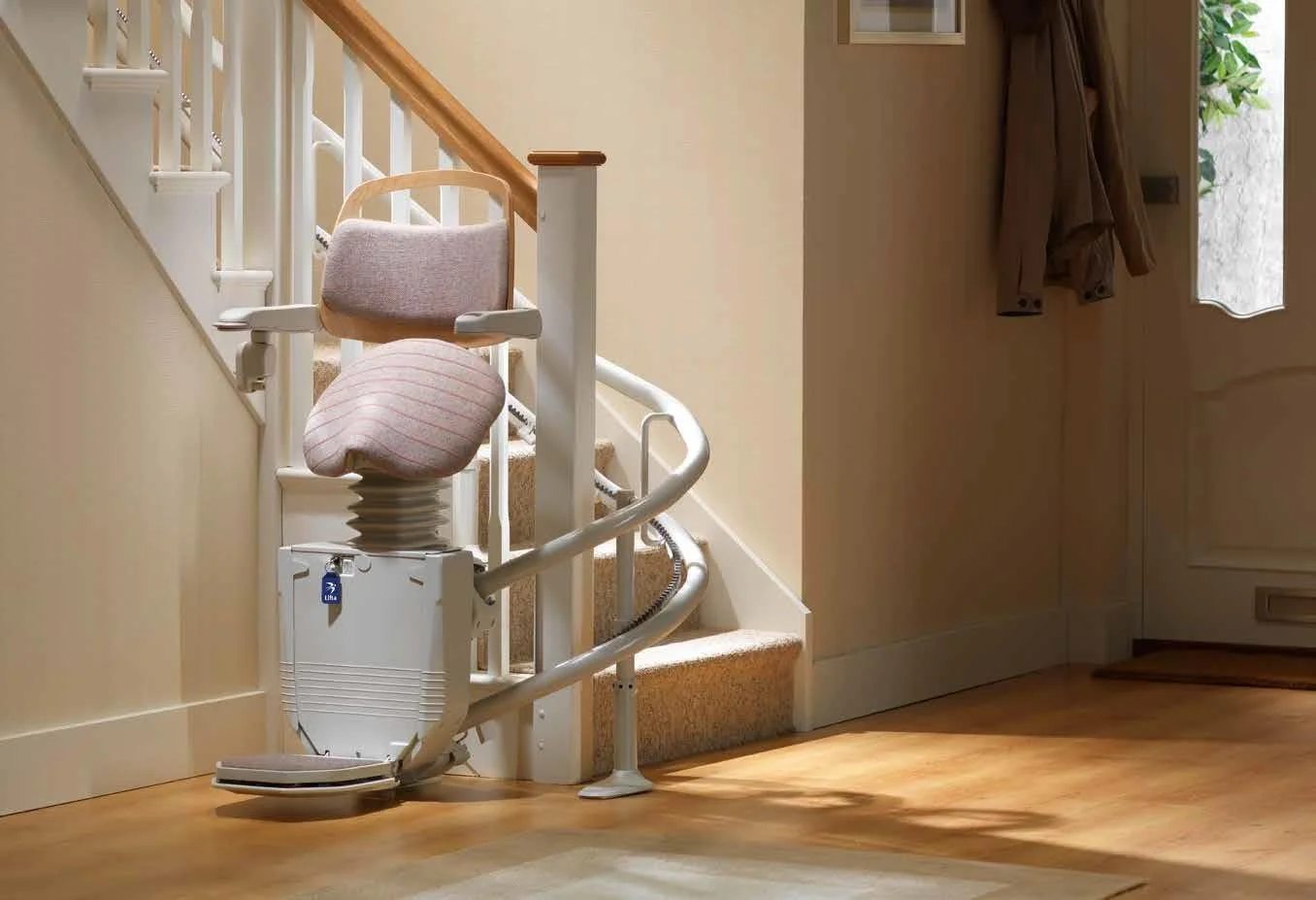
A single straight flight inside a house or townhouse is usually the simplest job, using a straight stair lift on a rail fixed to the steps. Stairs that turn at a landing or wrap around a corner need a curved rail built to that staircase. In walk-up apartments and low-rise buildings, the stairs are often shared, so talk with the building owner before planning anything.
The county's steep volcanic terrain affects how homes are sited and drained, and that often means a set of steps up to the front door. For many households, those outside steps are the real barrier, not anything indoors.
An outdoor stair lift is built for exterior steps. On the windward side this matters a lot: Hilo averages roughly 127 inches of rain a year, among the wettest cities in the US. Wet steps are a fall risk, and any outdoor lift here has to stand up to steady rain. Where someone uses a wheelchair and cannot transfer to a seat, a platform lift is the option to look at instead.
About 59.5% of county residents live in rural areas, so many older adults are spread out, far from centralized services. In places like Pahala, Honokaa or Hawi, getting help with daily tasks can take planning.
The 2020 Census found 22.7% of residents were 65 or older, with a median age of 44.3. For a family supporting a parent at a distance, a lift that lets that parent keep using the whole house can make staying at home more workable.
None of the programs listed below name stair lifts in their source pages, so ask each one directly before counting on funding.
For local guidance, the Hawaii County Office of Aging AAA is at 1055 Kinoole St., Suite 101, Hilo 96720, phone (808) 961-8600. Veterans can reach the Office of Veterans’ Services – Hawaiʻi (Hilo) at 1304 Kekuanaoa St. #L-102, Hilo 96720, phone (808) 369-3538. Statewide, it is also worth asking about the ATRC Assistive Technology Loan Program and VA Benefits for Veterans (HISA + Prosthetics).
A federal grant of up to $126,526 (FY2026 maximum) for veterans and service members with qualifying severe service-connected disabilities who own or will own the home being adapted. The source mentions ramps and wider doorways but does not list stair lifts.
A federal grant of up to $25,350 (FY2026 maximum) for veterans and service members with qualifying service-connected disabilities, in a home they or a family member owns. Stair lifts are not listed in the source.
Helps Hawaii QUEST Integration (Medicaid) members move from a hospital, nursing facility or ICF/ID facility back into the community, on all islands including Hawaii Island. Stair lifts and home modifications are not listed; call (808) 973-6357.
Hawaii's plan for making sure home and community-based settings such as adult day care, assisted living and foster homes meet federal rules for QUEST Integration members. It does not list home modifications or stair lifts.
The county's starting point for older adults and caregivers seeking information, case management and referrals, with housing assistance among its services. Stair lift funding is not listed; call (808) 961-8626.
Offers services for older adults on Hawaii Island, including housing counseling and affordable shared housing for seniors 62+. Stair lifts are not listed; call (808) 961-7050.
A statewide advocacy organization for Hawaii residents with disabilities, covering areas such as housing and community integration. It does not list stair lift funding; call (808) 949-2922.
Older adults
1055 Kinoole St., Suite 101, Hilo, 96720
Veterans
1304 Kekuanaoa St. #L-102, Hilo, 96720
Outdoor stair lifts are made for exterior steps, and in Hilo, which averages roughly 127 inches of rain a year, that is the type to ask about for entry steps. An indoor model should not be used outside.
For exterior steps, an outdoor stair lift is the usual choice. If the person uses a wheelchair and cannot move to a seat, a platform lift is the option to consider.
The SAH grant (up to $126,526) and SHA grant (up to $25,350) fund home adaptations for qualifying service-connected disabilities, but their source pages do not name stair lifts. Ask the Office of Veterans’ Services – Hawaiʻi (Hilo) at (808) 369-3538.
The Med-QUEST pages listed here do not mention stair lifts or home modifications. If a family member is leaving a hospital or nursing facility, call Going Home Plus at (808) 973-6357 and ask.
The Hawaii County Office of Aging AAA in Hilo at (808) 961-8600 is a good first call. The Kahi Malama resource center at (808) 961-8626 can also help with referrals.
Shared stairs in walk-up apartments and low-rise buildings belong to the building, so the owner has to agree before anything is installed. Bring that up with them early.
Tell us about the stairs in your home and we will explain which lift fits, what it costs and how installation works.
