St. Marys grew up as a river port on the Ohio, and many of the older houses near the river bottoms were built tall, with interior staircases that climb two or more floors. Away from those narrow flats, homes around Belmont and along Middle Island Creek, French Creek, Cow Creek and Bull Creek often sit on sloped lots with entries and living space on more than one level.
That mix shapes what kind of stair lift makes sense. A straight staircase in a multi-story home near the river is a different job from a split-level on a hillside or a set of outside steps up from the driveway. This page walks through those differences and the programs that can help a Pleasants County family pay for the work.
Pleasants County's housing reflects its 19th-century start. James Pleasants Creel established St. Marys in 1849, and the county seat still holds the courthouse site on land he donated. Homes built in that era and the decades after often have one long interior staircase to the bedrooms.
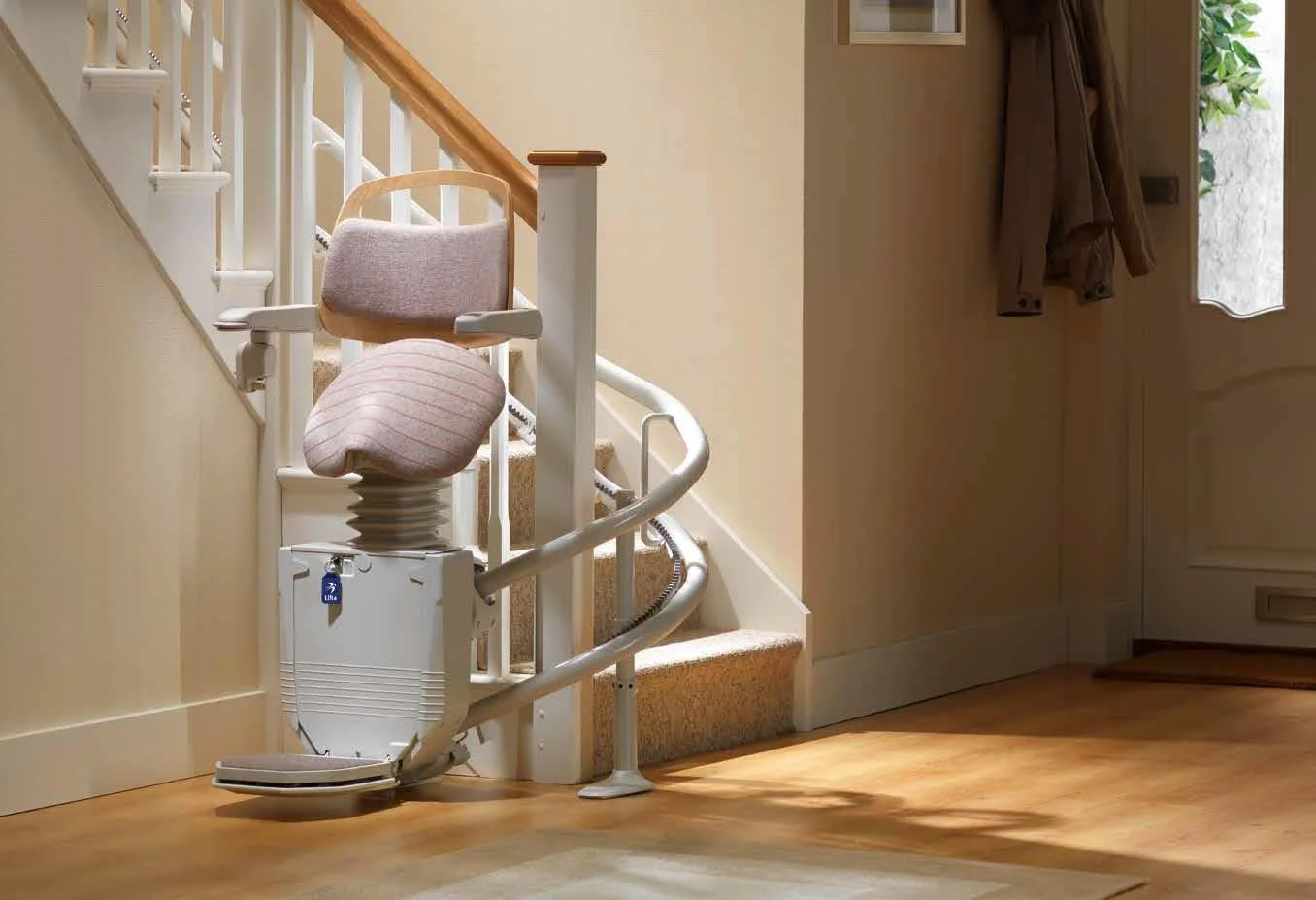
A single straight run is usually the simplest fit for a straight stair lift. The rail mounts to the stair treads, not the wall, so older plaster stays untouched. If the stairs turn at a landing or wind near the top, a curved lift with a custom-bent rail is the usual answer, and it takes longer to build.
Split-level homes and townhouses tend to have shorter flights between floors. Some families need a lift on only the flight that leads to the bedroom and bathroom. Ranch-style homes may only have a few steps at an entry, which points more toward an outdoor lift or a platform lift than an indoor chair.
The county covers 134.6 square miles, and outside the river-bottom flats the land rises along its tributary streams. That terrain is why so many homes have steps up from the road or a porch set well above the yard.
An outdoor stair lift is built with weather-resistant parts and a cover for the seat, and it can follow steps from a driveway to a front door. When someone uses a wheelchair and cannot transfer to a seat, a platform lift carries the chair itself. We measure the rise, the slope and the footing before suggesting either one.
Pleasants County is home to 3,031 people, and 22.3% are 65 or older. Many families want a parent to keep living in the house they know rather than move away from St. Marys or Belmont.
Most people here own their homes, at 84.8%, which matters because a homeowner can approve a permanent rail without asking a landlord. Renters in walk-up apartments should get written permission from the owner before any install.
Two programs on the list below name home modifications as covered: the West Virginia Aged and Disabled Waiver (ADW) and the WV Aging and Disability Resource Center (ADRC) Home Modification & Accessibility Assistance Program. Neither names stair lifts by name, but both use the home modifications term that stair lifts usually fall under.
Veterans should know that the VA HISA grant specifically excludes stair glides and porch lifts. For VA questions, the West Virginia Department of Veterans Assistance - Parkersburg Benefits Office is at 1824 Murdoch Avenue Suite F101 in Parkersburg, (304) 420-4982.
For aging services, the regional office listed for this area is Region III - WVDA Southern AAA at 1900 Kanawha Blvd. East in Charleston, (304) 340-3501. Central West Virginia Aging Services in Parkersburg also serves Pleasants County. Calling before you buy keeps you from paying for something a program would have covered.
A Medicaid waiver for people 65 and older, or 18-64 and disabled, who meet nursing-facility level of care; it covers home modifications as a self-directed benefit with no stated dollar cap within an approved plan of care. Call (866) 767-1575.
A lifetime VA grant of up to $6,800 or up to $2,000 depending on disability status, for medically necessary home improvements. It does not cover stair lifts; stair glides and porch lifts are listed as excluded removable equipment.
VA grants for veterans with qualifying severe service-connected disabilities, with SAH up to $126,526 and SHA up to $25,350 for FY2026. The source does not mention stair lifts either way.
Loans up to $40,000 at 1% and grants up to $10,000 for homeowners 62 and older with very low income in rural areas, and Pleasants County qualifies as rural. Ramps and other accessibility improvements are listed as eligible, but stair lifts are not named.
Funds for West Virginians 60 and older who can show a need for home modifications or accessibility devices, which covers stair lifts under that term. The ADRC helps with screening and the mail-in application at (866) 981-2372.
The Parkersburg office at 1222 Market Street serves Pleasants County with case management, homemaker services and RN assessments. It does not list a home modification or stair lift program; call (304) 865-5420.
Serves people with disabilities in a 16-county area that includes Pleasants County, providing assistive devices, home modifications and wheelchair ramps. Stair lifts are not named specifically; call (304) 965-0376.
Older adults
1900 Kanawha Blvd. East, Charleston, 25305
Veterans
1824 Murdoch Avenue Suite F101, Parkersburg, 26101
The West Virginia Aged and Disabled Waiver (ADW) covers home modifications for people who meet nursing-facility level of care and Medicaid financial limits. For 2026 the income limit is $2,982 a month and the asset limit is $2,000 for a single person or $3,000 for a couple. Call (866) 767-1575 to start.
Yes. The ADRC Home Modification & Accessibility Assistance Program accepts applicants 60 and older who can show a need, at (866) 981-2372. The ADW also covers adults 18-64 who are disabled under an SSA determination.
The HISA grant does not; it lists stair glides as excluded. The SAH and SHA grants do not mention stair lifts either way, so ask the Parkersburg Benefits Office at (304) 420-4982 about your situation.
The program lists ramps and other accessibility improvements as eligible repairs but does not name stair lifts. Pleasants County counts as rural, and grants are limited to homeowners 62 and older with very low income.
Often, yes. Outdoor stair lifts are built for weather and can run along exterior steps, and a platform lift is an option for someone who stays in a wheelchair. We look at the slope and footing first.
Yes, that calls for a curved stair lift with a rail bent to fit your stairs. Straight runs, common in older multi-story homes near the river, can use a simpler straight lift.
Tell us about the stairs in your home and we will explain which lift fits, what it costs and how installation works.
