Northampton County covers the southern 35 miles of Virginia's Eastern Shore, with the Atlantic barrier islands on the Seaside and the Chesapeake Bay on the Bayside. Towns like Eastville, Cheriton and Cape Charles hold buildings spanning more than 350 years of American architecture, and many family homes here were built long before modern accessibility codes existed.
That history shows up on the staircase. Original multi-story layouts are common in long-time homes from Exmore down to Cape Charles, including in Nassawadox and Willis Wharf. This page walks through how those homes affect the kind of stair lift that fits, and which programs residents can call about the cost.
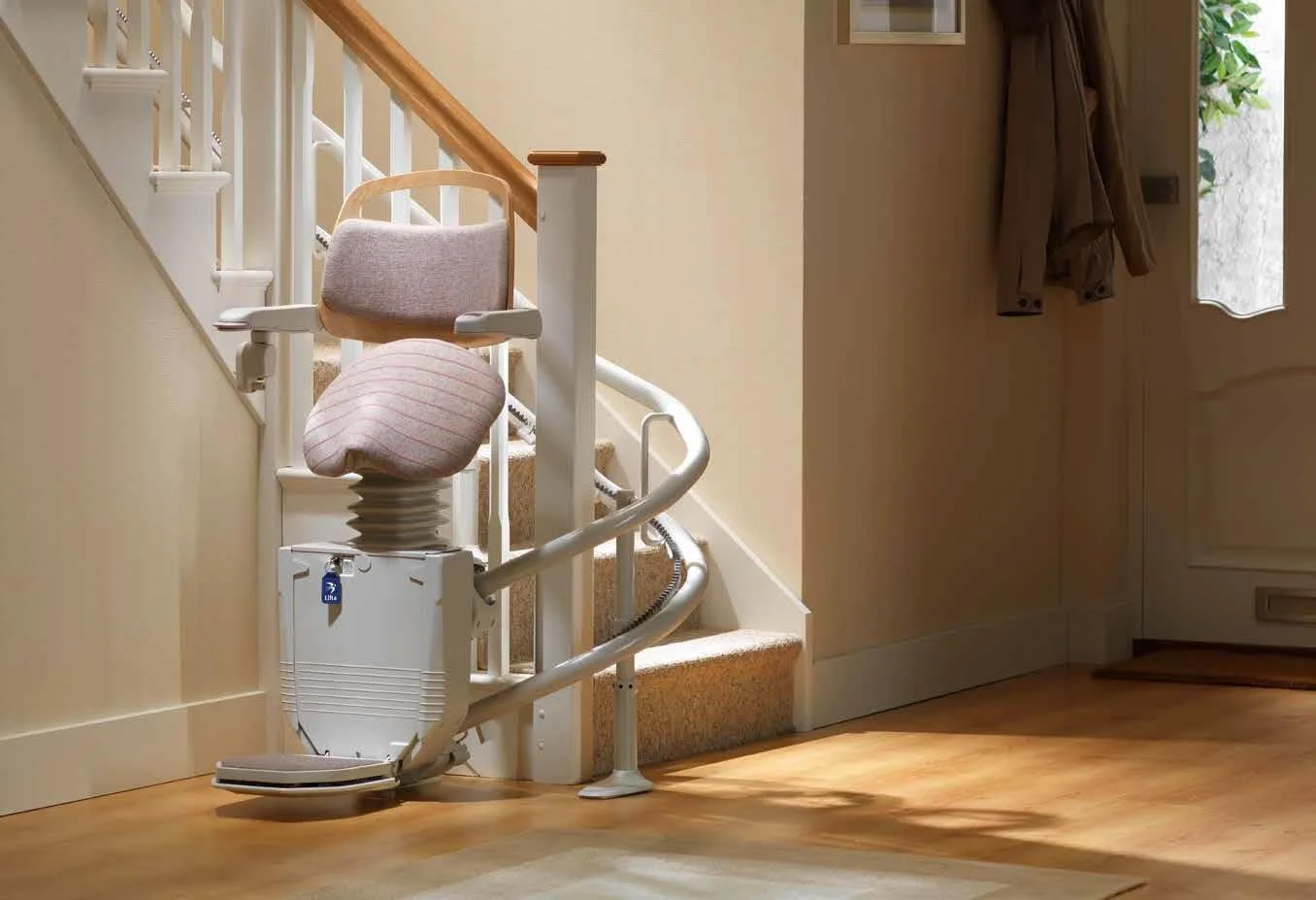
Homes in the county's historic towns often keep their original staircases. These were built for the way people lived at the time, not for a rail and a seat. Some run straight from bottom to top, which usually suits a straight stair lift, the simplest kind to fit.
Others turn at a landing or wind as they climb. Those stairs need a curved stair lift with a rail shaped to that exact staircase. We measure every step and turn in the home before recommending one or the other.
Housing here includes single-family homes, detached houses, townhouses and walk-up apartments. A detached house gives the owner full say over what gets installed. Townhouses tend to have one narrow inside staircase, so seat size and folding matter.
In a walk-up apartment, the stairs may be shared or owned by someone else. About 53.5% of residents own their homes, so many others rent. Renters should talk with the property owner before planning any installation.
Life on the Eastern Shore often means steps up to a porch or entry as well as stairs inside. An outdoor stair lift is built to handle weather and can carry a person up exterior steps. For someone who uses a wheelchair, a platform lift may be the better fit, since the person rides up without leaving the chair.
The county is rural and relatively isolated, so it helps to plan the whole route from the driveway to the bedroom in one visit rather than solving one staircase at a time.
About 25.5% of residents are 65 or older, so many households are already thinking about getting safely upstairs. Adult children often start the conversation after noticing a parent avoiding the second floor.
Veterans can reach the Virginia Department of Veterans Services Accomac Office at 23365 Front Street, Suite B, in Accomac, phone (757) 787-5862, to ask about benefits.
The local economy has long centered on farming and fishing, with aquaculture, viticulture and tourism now in the mix. Paying privately for home changes is not easy for every household, so state and federal programs matter here. Most sources below do not name stair lifts specifically, which means you need to ask each one directly.
A good first call is the Eastern Shore AAA-Community Action Agency at 5432 Bayside Road in Exmore, (757) 442-9652. Statewide, residents can also look into the Virginia Livable Home Tax Credit (LHTC). The VA HISA grant does not fund stair lifts.
Virginia's Medicaid managed-care waiver includes Environmental Modifications and Assistive Technology, each with its own $5,000 per calendar year cap; stair lifts are not listed in the source, so ask your care coordinator. Call (844) 374-9159.
Offers loans up to $40,000 at 1% for 20 years and grants up to $10,000 for very-low-income owners age 62+ in eligible rural areas. The source covers accessibility changes like ramps and walk-in tubs but does not list stair lifts.
Pays for permanent changes such as entrance ramps, roll-in showers and lowered counters for veterans with a VA prescription, up to $6,800 or $2,000 lifetime. Stair glides are explicitly excluded, so HISA does not cover stair lifts.
Grants for veterans with qualifying severe service-connected disabilities, with SAH up to $126,526 and SHA up to $25,350 for a permanent home (FY2026). The source names ramps and doorway widening but does not list stair lifts.
A state authority offering low-interest loans for disability-related equipment and home modifications to Virginia residents and their family members; stair lifts are not itemized on its page. Call (804) 662-9000.
Serves adults 60+ in Northampton and Accomack counties with care coordination, meals, caregiver support and Medicare/Medicaid counseling; no stair lift program is listed. Call (757) 442-9652 to ask about referrals.
Provides peer counseling, skills training, referral and advocacy for people with disabilities in Northampton and Accomack counties; a stair lift program is not listed. Call (757) 414-0100 to ask about equipment or referrals.
Older adults
5432 Bayside Road, Exmore, 23350
Veterans
23365 Front Street, Suite B, PO Box 7, Accomac, 23301
Often yes. Straight staircases usually take a straight lift, while stairs that turn or wind need a curved rail built to fit. We measure the stairs in person before recommending either.
CCC Plus covers home modifications and assistive technology, each up to $5,000 per calendar year, but stair lifts are not named in the source. Ask your care coordinator or call (844) 374-9159.
No. HISA lists stair glides as excluded. Veterans can ask the Accomac office at (757) 787-5862 about SAH, SHA or other benefits.
The Eastern Shore AAA-Community Action Agency in Exmore serves adults 60+ in Northampton and Accomack counties. Call (757) 442-9652 to ask about referrals to CCC Plus, ATLFA or USDA 504.
USDA Section 504 offers grants up to $10,000 for very-low-income owners 62+ in eligible rural areas to remove health and safety hazards. Stair lifts are not named, so confirm eligibility before applying.
You will need the property owner's approval first, especially if the stairs are shared. Once you have it, we can look at the stairs and talk through options.
Tell us about the stairs in your home and we will explain which lift fits, what it costs and how installation works.
