Taylor County covers about 919.3 square miles of West Texas, with Abilene as the county seat and smaller towns like Merkel, Tye, Tuscola, Buffalo Gap, Lawn, Trent and Potosi spread across the rest of it. Homes here range from single-family houses and split-level homes to townhouses, walk-up apartments and low-rise buildings.
Each of those home types puts stairs in a different place, and that decides which stair lift makes sense. This page walks through how local homes line up with lift types, what the county's numbers say about who is planning for this, and which agencies in Abilene and across West Central Texas can help with the cost.
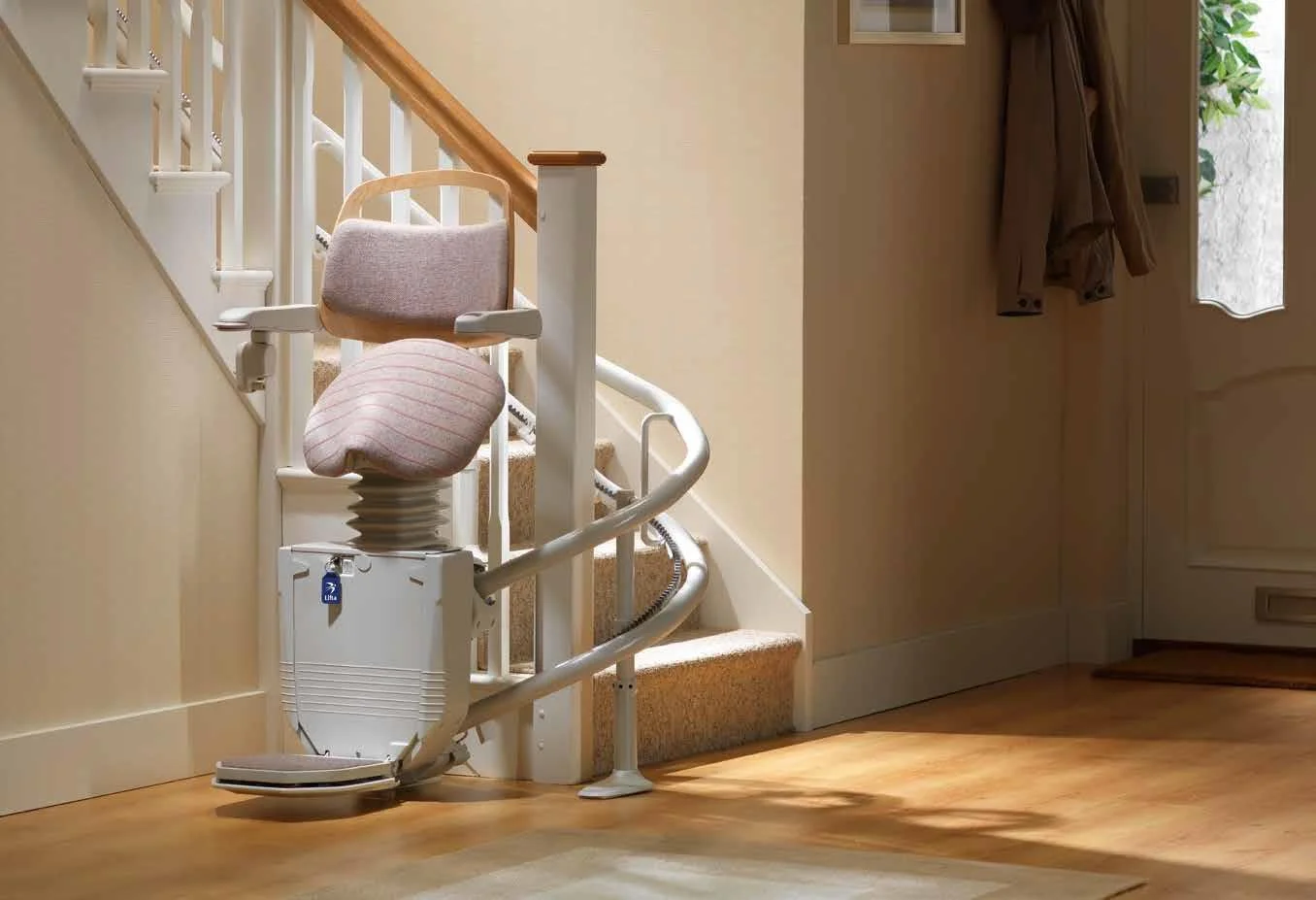
A single-family home with one straight flight to a second floor or basement is usually the simplest job. A straight rail mounts to the stair treads, not the wall, so most staircases can take one without remodeling.
Split-level homes are a different case. They often have several short runs of steps between levels, and a landing or turn between them may call for a curved rail built to fit those exact stairs. Sometimes two short straight lifts are the better answer, and we look at both options during a visit.
Townhouses tend to have narrow, steep stairs, so the folded width of the chair matters. Walk-up apartments and low-rise buildings raise a separate question: who owns the stairway. If the stairs are shared, the building owner has to approve any installation.
Plenty of trouble starts before anyone gets inside. Porch steps, a back entry or a short drop to a carport can be harder to manage than the indoor staircase.
Outdoor stair lifts are built with weather-resistant parts and covers for open-air use. For someone who uses a wheelchair and cannot transfer to a seat, a platform lift that carries the chair itself may be the better fit, and a ramp is another route for a short rise.
Taylor County has 137,322 residents, and 13.9% are 65 or older.
Roughly 57.5% of households own their home, and the median property value is about $198,600 (2024). Owners can generally make permanent changes like a stair lift on their own decision, while renters need a landlord's sign-off first.
No program listed here names stair lifts outright, so it is worth calling before you count on any of them. The Area Agency on Aging of West Central Texas, based in Abilene, funds home repairs and modifications that are essential for an older person's health and safety, and the ADRC can point you to other programs you may qualify for.
Veterans should start with the Taylor County Veterans Service Office at (325) 674-1328, 400 Oak Street Suite 150, Abilene. They can help with the VA Specially Adapted Housing and Special Housing Adaptation grants and with VA Benefits for Veterans (HISA + Prosthetics).
Texas also runs statewide options, including the STAR+PLUS Home and Community-Based Services (HCBS) Waiver, the Amy Young Barrier Removal Program (AYBR) and the Community Living Assistance and Support Services (CLASS) Waiver. The West Central Texas AAA office at 1025 EN 10th St., Abilene, (325) 672-8544, is a good first call to sort out which one fits.
Funds repairs or modifications essential to the health and safety of people 60 and older, family caregivers and Medicare recipients in a 19-county region that includes Taylor County, subject to grant funding. Stair lifts are not named in the program description, so call (325) 793-8417 to ask.
A referral service that helps older adults and people with disabilities in Taylor County and 18 other counties find community resources, including housing assistance. It does not install or fund stair lifts itself; call (855) 937-2372.
A VA grant of up to $126,526 (FY2026) for veterans with qualifying service-connected disabilities to buy, build or change a permanent home, usable up to 6 times. The source gives ramps and wider doorways as examples and does not mention stair lifts.
A VA grant of up to $25,350 (FY2026) for veterans with service-connected disabilities such as loss of use of both hands, severe burns or breathing injuries. It covers buying, building or modifying permanent housing, but stair lifts are not mentioned.
A Medicaid waiver benefit with a $10,000 lifetime limit for people with physical or intellectual disabilities enrolled in CLASS, which starts with joining the interest list. Listed examples include ramps, door widening, roll-in showers and grab bars, and the source does not say whether stair lifts are included.
A volunteer nonprofit that builds wheelchair ramps at no cost for qualifying low-income seniors and people with disabilities. It does not provide stair lifts, but can help with entry steps; call (214) 558-0339.
Older adults
1025 EN 10th St., Abilene, 79601
Veterans
400 Oak Street Suite 150, Abilene, 79602
Often, yes. Split-level homes have short flights between levels, so the answer may be a curved rail or two short straight lifts, depending on how the stairs and landings are laid out.
The Area Agency on Aging of West Central Texas runs a Residential Repair Program for people 60 and older and their caregivers. It does not name stair lifts, so call (325) 793-8417 to ask whether your project fits.
Contact the Taylor County Veterans Service Office at (325) 674-1328, 400 Oak Street Suite 150, Abilene. They can walk you through the VA SAH and SHA grants and other VA benefits.
Only with the building owner's permission, since the stairway is usually shared. In a low-rise building, the owner or management has to approve the installation first.
No. The Abilene / Big Country Chapter builds wheelchair ramps only. A ramp can still solve trouble with entry steps while a stair lift handles the indoor staircase.
The ADRC of West Central Texas at (855) 937-2372 helps residents sort out their needs and connects them to resources. The West Central Texas AAA in Abilene, (325) 672-8544, is another good place to start.
Tell us about the stairs in your home and we will explain which lift fits, what it costs and how installation works.
