Bronx County is the only New York City borough sitting mostly on the mainland, and its housing shows it. Walk-up apartments, row houses and townhouses fill much of the borough, while larger detached houses cluster in northwest neighborhoods like Riverdale and Fieldston. Co-op City, the largest cooperative housing development in the world, is home to a big share of the borough's high-rise senior population.
Because the borough and the county are the same place, every home here is a Bronx home, but no two blocks are built alike. Building ages and stair layouts vary widely, so the right stair lift depends on the exact stairs in front of you. This page walks through what local homes mean for lift choices and where Bronx residents can look for help paying.
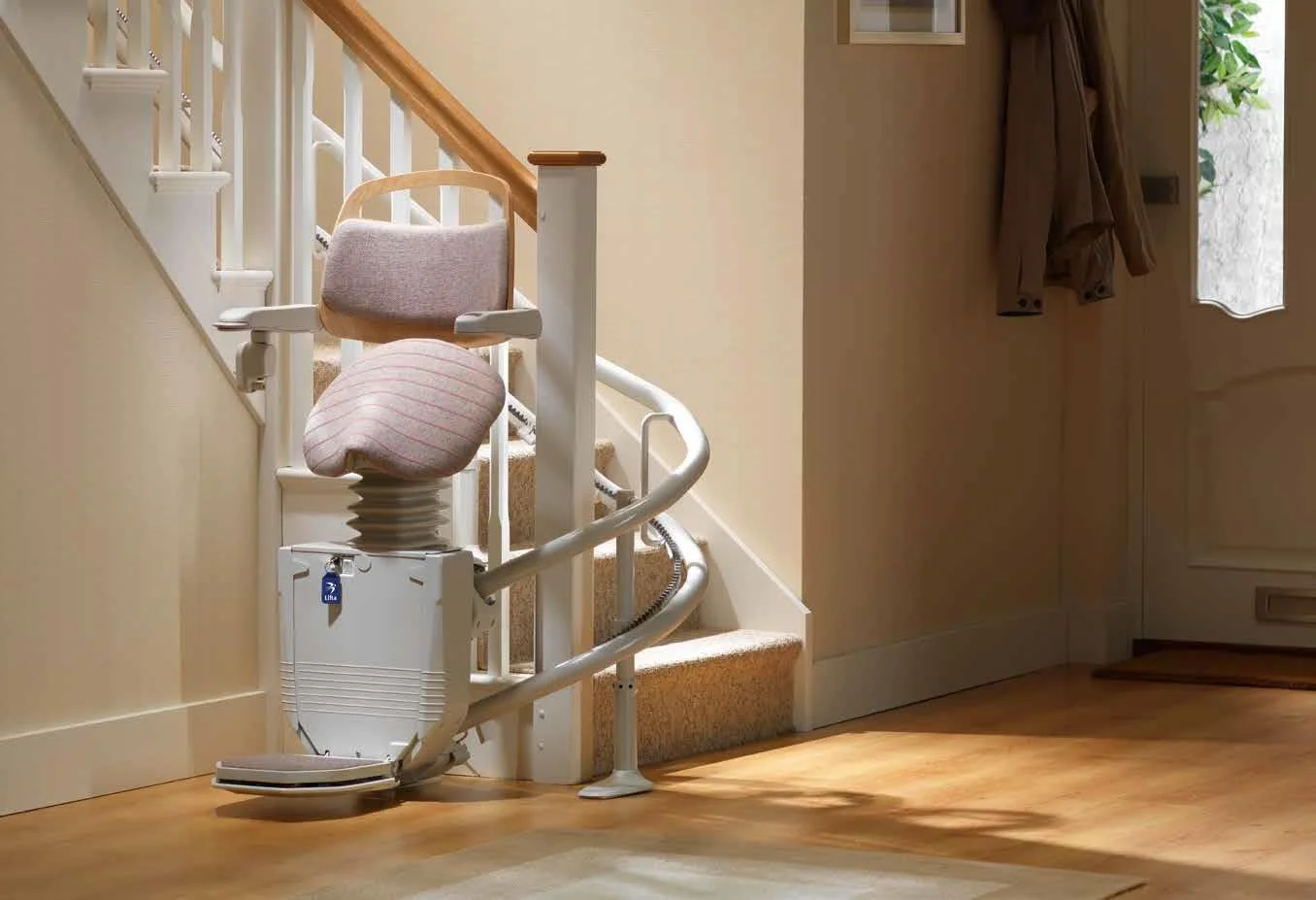
Most Bronx residents live in older multifamily buildings, either walk-ups or elevator buildings. In a walk-up, the stairs between floors are the daily obstacle, and a straight stair lift or a custom multi-flight setup is often the conversation we have.
Row houses and townhouses usually have one long interior flight, which tends to suit a straight rail. Where a stair turns at a landing or winds partway up, a curved lift built to that staircase is the usual answer.
The detached houses in Riverdale and Fieldston can have more varied layouts, including multiple floors and split stairs. More than 33,000 units were added in the mid-2000s, so newer and older stair designs can sit side by side on the same street.
The Bronx River splits the borough into a hillier western side, rising to near 280 feet in the northwest, and a flatter eastern side along Long Island Sound. The Hudson River forms the western edge.
That hill-and-valley layout means many homes and building entries sit above street grade, reached by exterior stairs. For those steps, an outdoor stair lift built for weather exposure, or a platform lift for someone using a wheelchair, may matter as much as anything inside.
Only 20.1% of Bronx households own their home, compared with 65.2% nationally. Most people asking about a stair lift here are renters or shareholders, not owners.
Renters can still qualify for some help. The state Access to Home program covers rental homes when the landlord consents, so getting the landlord on board early saves time. For homeowners, the VA's larger grants require that the veteran own or will own the home.
The median household income in Bronx County was $48,676 in 2024, and the poverty rate was 27.8%. Cost is a real question for many families, so it helps to know which programs actually mention stair lifts.
The clearest local option is Access to Home through the New York Foundation for Senior Citizens, which lists stair glides among the modifications it funds. Its income limit for a one-person household in NYC is $95,040, which is 80% of area median income.
Other programs, including the NHTD Medicaid waiver, EISEP and the VA housing grants, fund home modifications or related services without naming stair lifts. A good first call is NY Connects at Neighborhood SHOPP, 975 Kelly Street, Suite 301, at (347) 862-5200. The NYC Department for the Aging can be reached at (212) 244-6469.
Veterans should know that the VA HISA grant does not cover stair glides, which the VA treats as removable equipment. HISA can still pay for permanent ramps and accessible bathrooms.
The VA SAH and SHA grants fund larger home adaptations for qualifying service-connected disabilities, and CIDNY runs an Access to Home for Heroes track for veterans with disabilities. The NYC Department of Veterans' Services has a Bronx office at Bronx Borough Hall, 851 Grand Concourse, reachable at (718) 590-3500.
A statewide grant that pays for accessibility modifications through local nonprofits and municipalities, for households at or below 80% of area median income (120% for war-disabled veterans), including renters with landlord consent. The source page lists ramps, lifts and handrails but does not mention stair lifts.
The NYC administrator of Access to Home, serving the Bronx, whose modification list explicitly includes stair glides, for substantially disabled residents at or below $95,040 income for one person. Call (212) 962-7655.
Delivers Access to Home modifications for New Yorkers with disabilities, with a separate track for disabled veterans; its page does not mention stair lifts. Call (212) 674-2300.
A Medicaid waiver that covers environmental modifications for people 65+ or 18-64 with a physical disability who need nursing-facility level of care; stair lifts are not mentioned and enrollment can involve a waitlist. Call (718) 838-3838.
An in-home services program for people 60+ who need help with daily activities, which may require cost-sharing based on income; stair lifts and home modifications are not mentioned. Call (800) 342-9871.
A Bronx information and referral office at 975 Kelly Street, Suite 301, that connects residents of any age to home care, caregiver supports and other services; it does not fund stair lifts directly but is a good first call. Call (347) 862-5200.
A VA grant of up to $6,800 or $2,000 lifetime, depending on disability status, for medically necessary home changes; it does not cover stair lifts, which the VA calls removable equipment.
A VA grant of up to $126,526 for major home adaptations for veterans with severe qualifying service-connected disabilities who own or will own the home; stair lifts are not mentioned.
A smaller VA grant of up to $25,350 for adapting a home owned by a veteran with a qualifying service-connected disability; stair lifts are not mentioned.
Older adults
2 Lafayette St. 7th Floor, New York, 10007
Veterans
Bronx Borough Hall, 851 Grand Concourse, Bronx, 10451
Yes. Access to Home through the New York Foundation for Senior Citizens lists stair glides among the modifications it funds for substantially disabled, low and moderate income NYC residents. Call (212) 962-7655.
Access to Home covers rental homes that are your primary residence, as long as your landlord consents. Talk to your landlord before applying.
The New York Foundation for Senior Citizens lists $95,040 for a one-person household in NYC, which is 80% of area median income. War-disabled veterans can qualify at up to 120% of area median income under the state program.
Not through HISA, which excludes stair glides as removable equipment. The SAH and SHA grants fund home adaptations but do not name stair lifts, so ask the NYC Department of Veterans' Services Bronx office at (718) 590-3500.
Yes. NY Connects serves Bronx residents of all ages with any disability, and the NHTD waiver covers people 18-64 with a verified physical disability who meet its other rules.
Many Bronx homes sit above street grade on exterior stairs because of the hilly terrain. An outdoor stair lift or a platform lift may fit, depending on the steps and who needs to use them.
Tell us about the stairs in your home and we will explain which lift fits, what it costs and how installation works.
