From Pine City and Rock Creek in the south to Sturgeon Lake and Willow River up north, most Pine County homes are stand-alone houses on rural lots or small-town streets. Many are older farmhouses and two-story homes where every bedroom sits upstairs, and that is usually the moment a family starts asking about a stair lift.
The county stretches across about 1,411 square miles of land, with low rolling hills, woods and farm fields running east to the St. Croix River and the Wisconsin line. Services are spread thin across that distance, so it helps to know what kind of lift your stairs need and which local offices can help before anyone schedules a visit.
Ranch-style homes in Hinckley or Askov often have one straight flight down to a basement. A straight stair lift is the simplest fit there: the rail mounts to the stair treads, not the wall, and the stairs stay usable for everyone else.
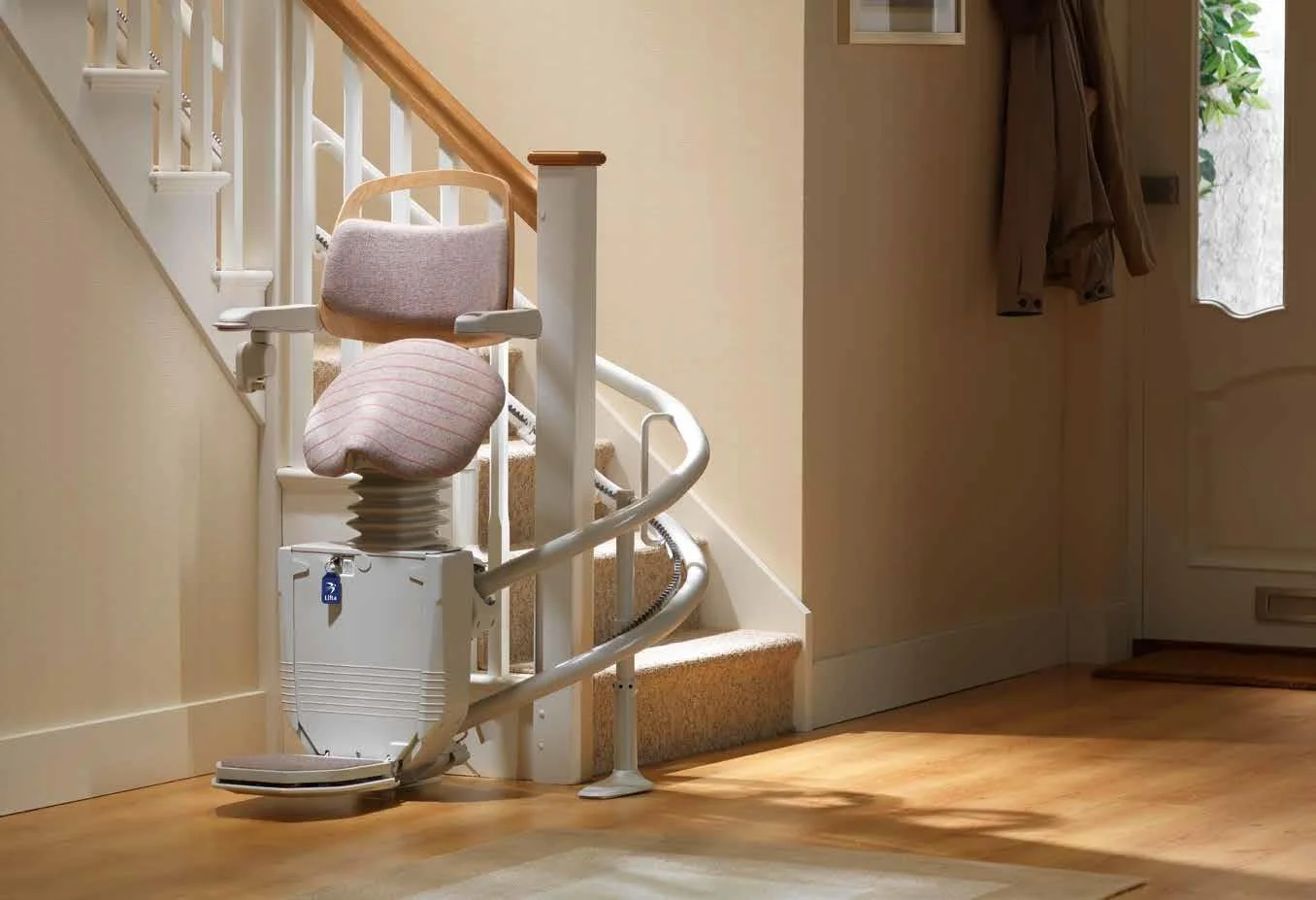
Older farmhouses and two-story homes are a different story. Their stairs may turn at a landing or wind near the top, and those need a curved rail built to the exact shape of the staircase. We measure every turn before anything is ordered.
Split-level homes bring short half-flights between levels. Sometimes one lift covers the trip that matters most, like the climb to the bedrooms, and the other short run is handled with a rail or a ramp.
On rolling country lots, the front or back entry often has steps of its own. An outdoor stair lift is built to handle weather, and for a wheelchair user a vertical platform lift can carry the chair and rider up to the porch level.
Walk-up apartments and low-rise buildings in towns like Sandstone and Pine City have shared stairways. A lift there needs the building owner's permission and enough stair width for others to pass, so talk with the landlord first.
Pine County's median age is 45.9, notably higher than Minnesota's statewide figure. More households are dealing with stairs at the same time that in-home services have long drives between towns.
Getting measured early gives you time to line up funding, which can involve assessments and waitlists.
The one program here whose source names stair lifts directly is Minnesota's Elderly Waiver, through its Environmental Accessibility Adaptations benefit. It is for people 65 and older on Medical Assistance who need a nursing facility level of care, and it has limited slots.
Other options fund home repairs or accessibility work in general terms without listing stair lifts by name. These include the Lakes and Pines forgivable loan, USDA Section 504 loans and grants, and VA housing grants. Call the office and ask whether a stair lift would qualify before you count on it.
If you are not sure where to start, Minnesota Aging Pathways at (800) 333-2433 can walk you through the options for anyone 60 and older and their family members.
A Medicaid waiver benefit that covers home modifications, and its source lists stair lifts and grab bars as eligible. For adults 65+ on Medical Assistance who need a nursing facility level of care; apply through Pine County's Long-Term Care Consultation / Public Health & Human Services office or call (800) 333-2433.
A free statewide information, assessment and referral service for Minnesotans 60+ and their caregivers. It does not list a stair lift benefit itself but can point you to programs; call (800) 333-2433.
The area agency on aging for a 14-county region that includes Pine County, offering referrals to housing resources, home services and caregiver supports. Stair lifts are not listed; call (320) 253-9349.
A 0% interest forgivable loan for income-qualified homeowners that can include handicap accessibility improvements, though stair lifts are not named. Call (320) 679-1800 to check eligibility.
In-home support and caregiver consulting for older adults and families in Pine County. It does not describe a stair lift or home modification benefit; call (320) 364-1133.
Loans up to $40,000 at 1% and grants up to $10,000 for homeowners 62+ in eligible rural areas who cannot repay a loan; the source mentions accessibility work like ramps but does not name stair lifts. Call (651) 602-7800.
VA grants for veterans with qualifying severe service-connected disabilities, up to $126,526 (SAH) or $25,350 (SHA) for FY2026. Ramps and doorway widening are given as examples, and stair lifts are not specifically named; call (800) 827-1000.
The county office in Sandstone that helps veterans and dependents file claims for VA benefits that may fund home modifications. It does not list a stair lift benefit of its own; call (320) 216-4250.
Serves people with disabilities in a 10-county area that includes Pine County, with a Ramp Project and housing and home modification services on a sliding fee scale. Stair lifts are not named; call (800) 390-3681.
Older adults
600 25th Ave. South, Suite 108, St. Cloud, 56301
Veterans
1602 Highway 23 North, Sandstone, 55072
Its source lists stair lifts among eligible modifications under Environmental Accessibility Adaptations. You must be 65+, on Medical Assistance and need a nursing facility level of care, and slots are limited, so ask about the current limit and any waitlist when you call (800) 333-2433.
Minnesota Aging Pathways serves residents 60 and older and their caregivers. USDA Section 504 grants start at 62, and Lakes and Pines and Access North base eligibility on income or disability rather than age.
Yes, that calls for a curved stair lift with a rail built to your staircase. We measure the stairs in person because each turn has to be matched exactly.
Start with the Pine County Veterans Service Office at 1602 Highway 23 North in Sandstone, (320) 216-4250. They can help with VA claims such as SAH and SHA grants, which cover home adaptations, though stair lifts are not named on the VA page.
It follows Minnesota Housing limits, from $27,700 for a one-person household up to $64,700 for a 12-person household, effective June 2, 2025. Call (320) 679-1800 to confirm whether a stair lift counts as accessibility work.
Tell us about the stairs in your home and we will explain which lift fits, what it costs and how installation works.
