Richland County is a mostly flat, rural stretch of southeastern Illinois with five towns: Olney, Noble, Dundas, Parkersburg and Calhoun. Of the county's 7,364 housing units, 73.2% are owner-occupied, and the homeowner vacancy rate is a low 1.5%. In practice, that means many people here are staying in the houses they have lived in for years.
Those houses run from two-story frame and brick homes near the older downtown in Olney to ranch-style and split-level homes around the county. Each one puts the stairs in a different spot, and that shapes which stair lift fits. This page walks through the local homes, the lift types that suit them, and the programs that may help with the cost.
Olney, the county seat, keeps a historic downtown core, including the former CNB Bank building on S. Whittle Street. The homes around a downtown like this are often two-story frame and brick houses typical of southeastern Illinois county seats.
In these homes the interior stairs are usually original to the house, not added in a later remodel. Original stairways can be narrow or have a turn or landing, so we measure the full run before recommending a straight or curved rail.
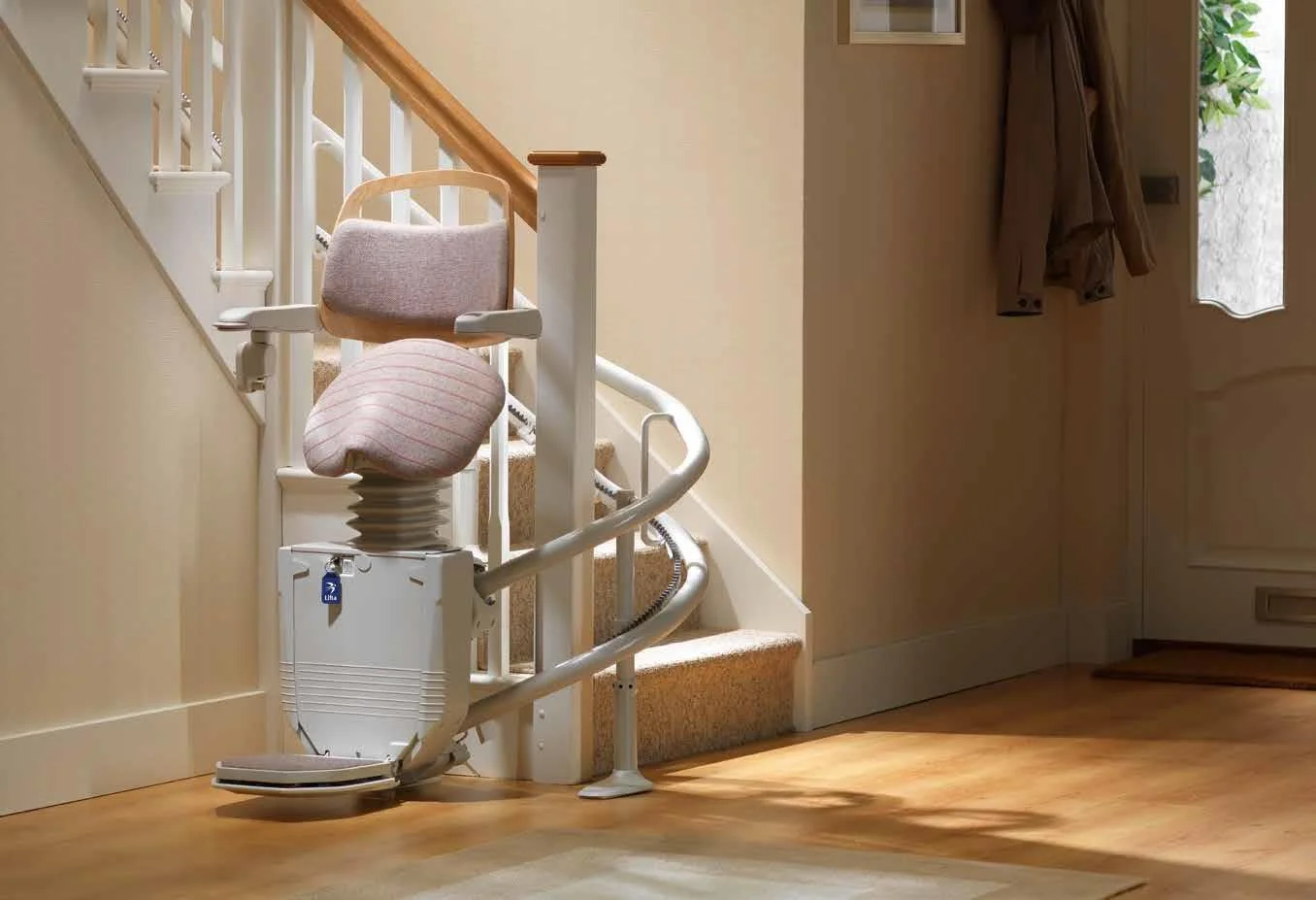
A straight stair lift works when the stairs run in one line from bottom to top. If the stairs turn at a landing, a curved lift with a custom rail is usually the answer, since it follows the stairway without a transfer halfway up.
Much of the county's housing is single-family, including ranch-style and split-level homes. A split-level has short flights between levels, and a short straight lift can cover one of those flights so the main living floors stay reachable.
Ranch-style homes keep most living space on one floor, but steps at the entry can still be a barrier. For those, an outdoor stair lift built for weather or a vertical platform lift can make getting in and out of the house manageable.
With so many longtime owners aging in place, the usual question is not whether to move but how to keep the current house working.
The county covers 362 square miles and is split nearly evenly between urban and rural residents. US Route 50 and Illinois Routes 130 and 250 run through it, so most homes needing a stair lift install are reachable by state highway rather than remote back roads.
The median household income in the county is $62,455 and the median home value is $112,000. For many local homeowners, mid-range stair lift financing or a payment plan is within reach.
Some programs may also help. The IDHS Home Modification and Assistive Technology Program is the one that names stair lifts outright. Others cover home modifications in general without naming stair lifts, and one VA grant excludes them, so it pays to ask before applying. The program list below gives the details and phone numbers.
Statewide options worth asking about include the Illinois Community Care Program (CCP), the IATP ATLOAN$ Program and the Senior Citizens Assessment Freeze Homestead Exemption. Veterans can reach the Illinois Department of Veterans’ Affairs at 308 Main St., Olney, at (618) 395-3223.
A state program for Illinois residents with a disability that explicitly lists stair lifts among eligible modifications, along with ramps and widened doorways. Intake goes through your local Center for Independent Living; call (800) 843-6154.
A Medicaid waiver for Medicaid-eligible Illinois residents with a severe disability who are under age 60 at application; it covers environmental accessibility adaptations to the home, but stair lifts are not named. Confirm with a caseworker at (877) 581-3690.
Very-low-income rural homeowners can borrow up to $40,000 at 1% fixed interest, and those 62+ may get a grant up to $10,000; Richland County is an eligible area, though stair lifts are not named among covered work. Call (217) 403-6200.
A VA grant for permanent structural changes such as ramps and roll-in showers, capped at $6,800 or $2,000 depending on the disability. It explicitly excludes stair glides, so it will not pay for a stair lift.
VA grants for veterans with qualifying severe service-connected disabilities, up to $126,526 for SAH and $25,350 for SHA. Examples given are ramps and widened doorways; stair lifts are not named.
A state-funded program for Illinois homeowners, or renters with landlord approval, with a documented disability in the household who meet income limits; it funds ramps and interior modifications, but stair lifts are not named. The page notes an 800+ person waiting list; call (217) 525-1308.
The area agency on aging for Richland County, serving adults 60+ and adults with disabilities with information, referral and case coordination rather than direct grants. Call (217) 262-0678 to ask what home-modification help is available.
A disability services office at 5042 North IL-130 in Olney, though its directory listing names only Crawford, Hamilton, Wayne and White counties as its service area. Call (618) 320-2028 to confirm whether it serves Richland County residents.
Older adults
602 E. 5th Street, Mt. Carmel, 62863
Veterans
308 Main St., Olney, 62450
Yes. The IDHS Home Modification and Assistive Technology Program lists stair lifts among its eligible modifications for Illinois residents with a disability. Call (800) 843-6154 to start.
The HISA grant explicitly excludes stair glides. The SAH, SHA and TRA grants cover home adaptations but do not name stair lifts, so ask the VA directly. Locally, the Illinois Department of Veterans’ Affairs office in Olney is at (618) 395-3223.
The Illinois Persons with Disabilities Waiver is for people under age 60 at application who are Medicaid-eligible and have a severe disability. It covers home adaptations, but stair lifts are not named, so confirm with a caseworker at (877) 581-3690.
Richland County is an eligible rural area for USDA Section 504 loans and grants. The grant requires the applicant to be 62+ and income at or below 50% of the county median, and stair lifts are not named among covered work.
Usually, yes. Straight stairs take a straight lift, and stairs with a turn or landing take a curved lift on a custom rail. We measure the stairway first to see which fits.
The Southeastern Illinois Agency on Aging covers Richland County and can point you to local help. Their number is (217) 262-0678.
Tell us about the stairs in your home and we will explain which lift fits, what it costs and how installation works.
