Yuma County sits on the High Plains of northeastern Colorado, about 2,369 square miles of flat to gently rolling farm and ranch country. Most people live in or around Yuma and the county seat of Wray, with smaller communities like Eckley, Idalia, Kirk and Vernon spread across the rest of the map.
A lot of homes here are single-story ranch houses, which sounds like stairs should not be a problem. But the older houses near the historic cores of Yuma and Wray often have entry steps up to the main floor or a staircase down to the basement, and split-level and manufactured homes bring their own steps. This page walks through what those homes mean for a stair lift and where county residents can look for help with the cost.
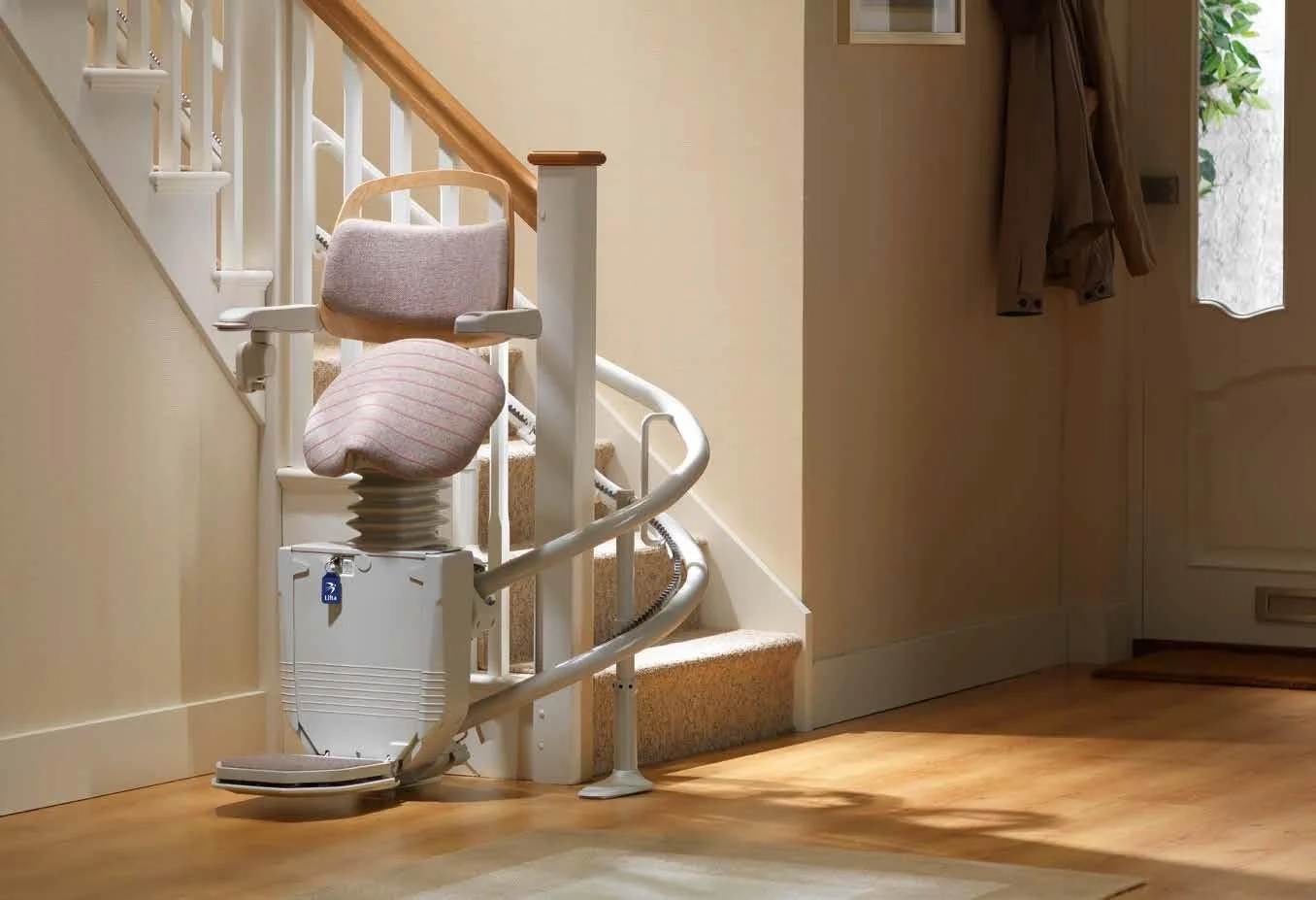
In a ranch-style home, the stairs that matter are usually the basement stairs, where the laundry, freezer or storage often ends up. Those runs are commonly straight, and a straight-rail lift is the simplest and least costly type to fit.
Split-level homes have short flights between levels. Each flight may need its own lift, or the layout may call for a curved rail if the stairs turn at a landing. We measure every run before suggesting either one.
Older in-town houses in Yuma and Wray can have narrow or steep basement stairs. We check the width, the headroom at the bottom and where the rail can end so the lift does not block a doorway.
Plenty of trouble starts before you get in the door. Detached houses with raised main floors and manufactured homes both tend to have exterior steps up to the entry.
For those steps, an outdoor-rated stair lift built for weather exposure is one option. Where someone uses a wheelchair, a vertical platform lift at the porch or deck is often a better fit than a seat. Flat ground around most Yuma County homes makes it easier to set a platform lift on a level pad.
About 16.3 percent of Yuma County residents are 65 or older, and roughly 62.4 percent of households own their home. Owning matters, because a lift is attached to the stairs and several aid programs require you to own and live in the house.
If someone in your family served, the county's Veteran’s Officer at 720 E Ave in Yuma, (719) 691-5445, is a good first call before you apply for any VA housing grant.
Agriculture is the county's largest employer, and with a median household income of $60,545, many families look for outside help before paying out of pocket. None of the programs below spell out stair lifts as a guaranteed covered item, so it pays to ask directly and get answers in writing.
The whole county was classified as 100 percent rural in the 2020 census. That puts every home here in territory that can qualify for USDA Rural Development programs like the Section 504 repair loans and grants.
Statewide, Colorado also offers the Assistive Technology Act Program of Colorado (AT Partners) and the Colorado Senior Property Tax Exemption (Senior Homestead Exemption). The programs listed below are the ones with confirmed details for Yuma County.
This Medicaid waiver includes a home modification benefit for safety and accessibility for people 65 and older (or 18 to 64 with a qualifying disability) who need nursing-facility level of care, but the source does not mention stair lifts specifically. Yuma County residents apply through the regional Single Entry Point in Northeast Colorado; call (800) 221-3943.
NECALG is the Area Agency on Aging for Yuma and five neighboring counties; it does not give cash grants but connects older adults to the EBD waiver's home modification benefit and other local resources. Stair lifts are not listed as a specific benefit; call (844) 265-2372.
This nonprofit offers free information and referral, advocacy, housing services and a Veterans Independence Program for people with disabilities in Yuma County and nearby counties. Stair lifts and home modification funding are not listed; call (970) 352-8682.
Homeowners with income at or below 50 percent of area median income can borrow up to $20,000 at 1 percent for 20 years, and those 62 or older who cannot repay a loan may get a grant of up to $7,500, with combined help up to $27,500. The program covers repairs that remove a health or safety hazard and does not name stair lifts specifically.
HISA pays up to $6,800 for a service-connected disability or up to $2,000 for other non-service-connected disabilities for medically necessary home changes. Stair glides are on the VA's excluded equipment list, so HISA does not cover a stair lift; call (800) 827-1000.
For homeowners with qualifying severe service-connected disabilities, SAH pays up to $126,526 and SHA up to $25,350 for FY2026 to build, buy or remodel a home for accessibility. The VA's examples do not name stair lifts; call (800) 827-1000.
Older adults
231 Main St., Suite 211, Fort Morgan, 80701
Veterans
720 E Ave, Yuma, 80759
The Colorado EBD waiver has a home modification benefit for safety and accessibility, but the source we have does not name stair lifts as a covered item. Eligibility requires needing help with at least 2 of 6 daily activities, income around $2,982 a month or less and assets of $2,000 or less for a single applicant. Call (800) 221-3943 to ask.
No. The VA lists stair glides and porch lifts as excluded removable equipment under HISA. The SAH and SHA grants can be used to remodel a home for accessibility, and the county's Veteran’s Officer at (719) 691-5445 can help you see whether you qualify.
Yes on location. All of Yuma County was counted as 100 percent rural in the 2020 census. You still need to own and live in the home and have household income at or below 50 percent of area median income, and the grant part is only for homeowners 62 or older.
For many people it is, since laundry and storage often sit in the basement. Basement stairs in ranch homes are often straight, which suits a straight-rail lift. We check width and headroom at the bottom before recommending one.
NECALG, the Region 1 Area Agency on Aging, serves Yuma County and can connect you to the EBD waiver and other local resources. Their line is (844) 265-2372. For people with disabilities, Connections for Independent Living at (970) 352-8682 offers free referral and advocacy.
Tell us about the stairs in your home and we will explain which lift fits, what it costs and how installation works.
