Alamosa sits at about 7,543 feet on the floor of the San Luis Valley, with Sangre de Cristo peaks over 14,000 feet within 23 miles. Across Alamosa and Alamosa East, the county's 11,251 residents live in a mix of single-family homes, split-level homes, townhouses, walk-up apartments and low-rise buildings.
Each of those home styles puts stairs in a different place, and the valley's long freezing season makes every step, inside or out, matter more. This page walks through which kind of stair lift tends to fit which home here, and which local, state and VA programs are worth a call before you pay out of pocket.
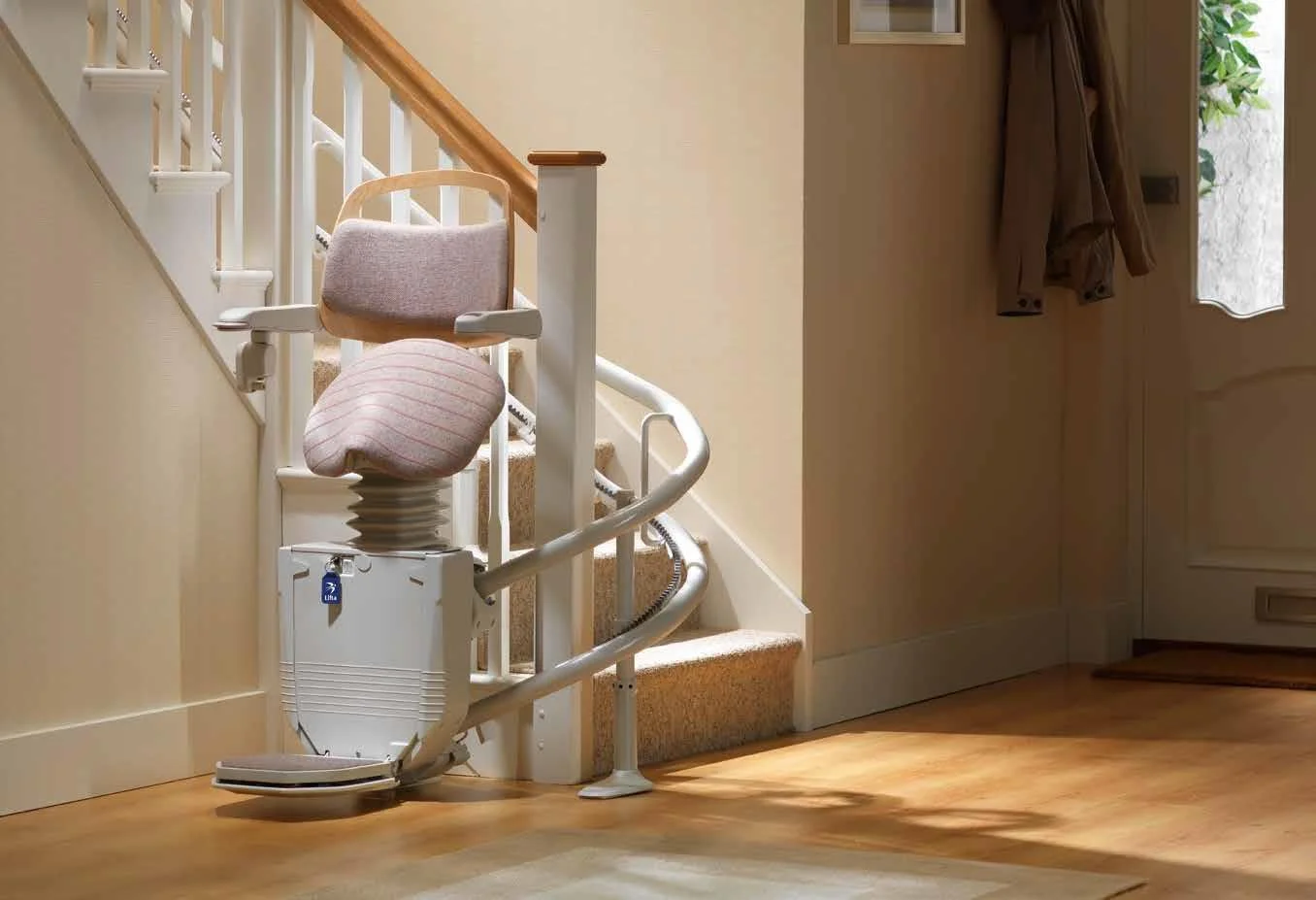
A single-family home with one straight run of stairs is usually the simplest job. A straight stair lift mounts to the treads, not the wall, and runs from the bottom step to the top landing.
Split-level homes are different. They often have two or three short flights, sometimes with a turn or a landing in between. A short straight lift can work for one flight, but if the stairs change direction, a curved lift built to that staircase is usually needed.
Townhouses tend to have narrow, steep stairs between floors. Before anything is ordered, we measure stair width and check that the folded seat leaves room for others to pass.
Alamosa averages a January low of -1.1°F and about 227 days a year with freezing temperatures. Seasonal snowfall runs around 27.6 inches, even though total precipitation is only about 7.31 inches, so snow and ice can linger on steps and walkways.
For a porch, deck or entry with several steps, an outdoor-rated stair lift or a vertical platform lift can take the place of icy steps. Those units are built for weather, and we talk through where snow tends to pile up and how the track and seat will be cleared.
About 46.9% of county households own their homes, which means many residents rent. In a walk-up apartment or low-rise building, a stair lift usually needs the owner's written approval, and shared stairways may need a model that folds out of the way.
One VA grant described below, HISA, can apply to a rented primary residence as well as an owned one, so renting does not rule out help.
About 12.0% of the county is 65 or older. Several of the programs below set age lines at 62 or 65, so it helps to know which applies before you call.
Budgets are tight for many households here. The county's 2024 median household income was $55,397, and the poverty rate was 17.2%, compared with 12.5% nationally.
None of the programs listed below name stair lifts in their published rules. Several do fund home modifications for safety or accessibility, so ask each one directly whether a stair lift counts before you commit to a purchase.
A good first call is the San Luis Valley AAA at 610 State Ave., Suite 200, Alamosa, (719) 589-4511. Veterans can start with the Alamosa County Veterans Service Office at 8900 Independence Way, (719) 589-1109. Statewide resources worth asking about include the Assistive Technology Act Program of Colorado (AT Partners) and the Colorado Senior Property Tax Exemption (Senior Homestead Exemption).
A state Medicaid waiver for residents 65+ with a functional impairment, or adults 18-64 with a physical disability, who need a nursing-facility level of care; home modifications for safety and accessibility are a listed benefit, but stair lifts are not named. The 2026 income limit is $2,982 per month for an individual; call (800) 221-3943 or apply through Colorado PEAK or the county DHS office.
Very-low-income rural homeowners can borrow up to $40,000 at 1% fixed interest, and homeowners 62+ who cannot repay a loan may get grants up to $10,000 lifetime. Grants can go toward accessibility items such as ramps and walk-in tubs; stair lifts are not named.
Low-interest loans up to $35,500 at 0%-2% fixed for income-qualified homeowners in Alamosa and nearby valley counties who have a health or safety issue in the home; stair lifts are not named. Call (719) 587-9807.
A lifetime grant of up to $6,800 for veterans with a qualifying service-connected disability, or up to $2,000 in certain other cases, for owned or rented homes; ramps and doorway widening are named, stair lifts are not. Call (719) 587-6800.
Grants of up to $126,526 (SAH) or $25,350 (SHA) in FY2026 for veterans with specific severe, permanent service-connected disabilities to adapt a home they own or will own; stair lifts are not named. Call (719) 587-6800.
The regional Area Agency on Aging for the six San Luis Valley counties, offering information, referral and support services; it does not list a stair lift or home modification grant, and funding is case-by-case. Call (719) 589-4511.
Older adults
610 State Ave., Suite 200, Alamosa, 81101
Veterans
8900 Independence Way, Alamosa, 81101
Often, yes. A short straight lift can serve one flight, and stairs that turn or have a landing usually need a curved lift made for that staircase.
Outdoor-rated stair lifts and vertical platform lifts are built for weather. With about 227 freezing days a year here, we plan the placement around snow and ice on the steps.
The EBD Waiver lists home modifications for safety and accessibility, but its published rules do not name stair lifts. Ask your Case Management Agency, or call (800) 221-3943.
You will need the property owner's written approval. Veterans should know the VA HISA grant can apply to a rented primary residence.
The EBD Waiver covers adults 18-64 with a physical disability who meet its other rules, and USDA Section 504 grants start at age 62. Loans through USDA and the San Luis Valley Housing Coalition have no age line in the listed rules.
The Alamosa County Veterans Service Office at (719) 589-1109 can help with HISA and SAH/SHA applications. The VA line listed for those grants is (719) 587-6800.
Tell us about the stairs in your home and we will explain which lift fits, what it costs and how installation works.
