Drive through older parts of Mobile and you see a lot of Gulf Coast Cottage-style homes sitting up on raised brick-pier foundations. The Collins–Marston House, built in 1832, is a textbook case: a 1+1/2-story wood-frame house on a raised brick foundation. That style was built to keep living space off damp ground, and it means many homes need steps just to get from the yard to the front door.
We install stair lifts across all 17 towns in Mobile County, from Mobile, Prichard and Chickasaw to Citronelle, Grand Bay, Bayou La Batre and Dauphin Island. This page walks through which kind of lift tends to fit local homes and which programs may help cover the cost.
In a raised Gulf Coast Cottage, the hardest stairs are often the ones outside. If those front or back steps are what keeps someone from leaving the house, an outdoor stair lift is usually the first thing we look at. It is built for weather exposure and runs along the exterior steps to the main living level.
When the outside stairs are short but steep, or when a wheelchair user needs to get up to the porch, a platform lift can make more sense than a seat. We measure the rise, the landing at the top and the ground at the bottom before recommending either one.
A 1+1/2-story house like these often has a second set of stairs inside, up to the half story. That can mean two lifts, one outdoors and one indoors, so it helps to decide which floor matters most for daily life.
Housing in the county runs from single-family homes to townhouses, row houses, walk-up apartments and low-rise buildings. Townhouses and row houses often have one straight run of stairs, which is the simplest and quickest kind of lift to install.
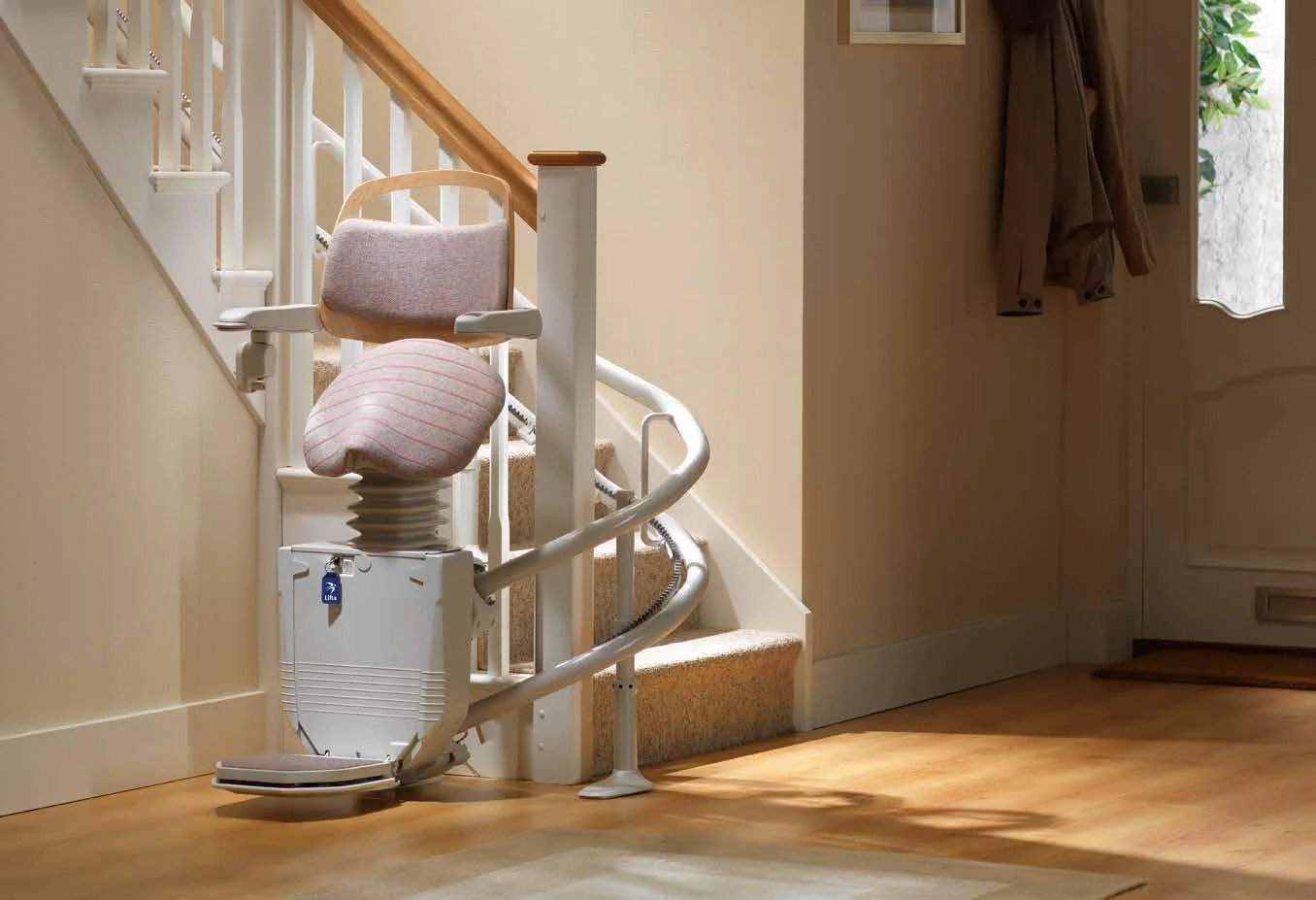
Stairs that turn at a landing or wind around a corner need a curved lift with a rail made to fit that exact staircase. In walk-up apartments and low-rise buildings, the stairway may be shared, so the building owner usually has to approve the installation first. In Mobile County, 57.2 percent of households own their home, so a good number of renters will need that conversation with a landlord.
About 17.6 percent of county residents are 65 or older. Many of them live in the homes they have owned for decades and would rather stay put than move to a one-level house.
The local Veterans Affairs office is at 1150 Government Street, Mobile, AL 36604, phone (251) 574-8578.
Two programs on our list name stair lifts as covered: the Alabama Medicaid home modification services under the Community, ID and LAH waivers, and the VA Specially Adapted Housing grant. Both depend on eligibility and an approved plan, so start the paperwork early.
Other programs below do not mention stair lifts in their published materials, but they can still point you to help, cover related repairs, or guide you to assistive technology funding. The VA HISA grant specifically excludes stair glides, so do not count on it for this purpose.
Statewide, it is also worth asking about the Alabama Medicaid Elderly & Disabled (E&D) Waiver, the State of Alabama Independent Living (SAIL) Waiver, the Alabama Community Transition (ACT) Waiver, the Alabama Ability Loan Program (STAR / Southern Disability Foundation) and the Alabama Senior / Disabled Homestead Exemption (H-2 / H-3). The South Alabama Regional Planning Commission/AAA office at 110 Beauregard Street, Suite 207, Mobile, AL 36602 can be reached at (251) 433-6541.
These state Medicaid waivers list stair lifts, transfer equipment and handrails as covered home modifications, approved case by case within a member's care plan. Call (800) 243-5463.
Very-low-income homeowners in USDA-eligible rural areas of Mobile County can get repair loans up to $40,000 at 1% fixed interest, and those 62 or older may qualify for grants up to $10,000; the source does not mention stair lifts. Call (251) 937-3297.
This VA grant pays up to $6,800 or $2,000 for medically necessary home changes, but it explicitly excludes porch lifts and stair glides. Call (800) 827-1000.
Veterans with certain permanent, service-connected disabilities can receive up to $109,986, and stair lifts between floors are a covered adaptation. Call (800) 827-1000.
This Aging & Disability Resource Center serves people 60 and older, caregivers and people with disabilities in Mobile, Baldwin and Escambia counties; it does not list stair lifts but coordinates access to waiver in-home services. Call (251) 706-4680.
A grant program for homeowners inside Mobile city limits that focuses on roof repair and replacement, with special consideration for elderly, disabled or extremely low-income owners; stair lifts are not mentioned. Call (251) 208-6294.
This non-profit provides free repairs such as accessibility ramps and grab bars to income-qualified homeowners in the Mobile area; stair lifts are not mentioned. Call (251) 289-1684.
A Center for Independent Living offering referrals, advocacy, peer support and skills training for Alabama residents with disabilities; it does not list home modification or stair lift services. Call (251) 460-0301.
A free statewide service that gives information, referrals and funding-source guidance for assistive technology to Alabama residents of any age; stair lifts are not named among covered items. Call (800) 782-7656.
Older adults
110 Beauregard Street, Suite 207, Mobile, 36602
Veterans
1150 Government Street, Mobile, 36604
Usually, yes. Raised Gulf Coast Cottage-style homes often need an outdoor stair lift on the exterior steps, or a platform lift if a wheelchair has to get up to the main level. We look at the steps, the top landing and the ground before recommending one.
The home modification services under the Community, ID and LAH waivers list stair lifts as a covered item, approved case by case in the member's care plan. Call (800) 243-5463 to ask about eligibility.
The Specially Adapted Housing grant covers stair lifts between floors for veterans with qualifying permanent, service-connected disabilities, up to $109,986. The HISA grant does not cover stair glides. Both can be reached at (800) 827-1000.
The Area Agency on Aging serves people 60 and older, but it also serves people with disabilities. STAR helps Alabama residents of any age, and ILC Mobile serves Alabama residents with disabilities.
No. The City of Mobile Critical Repair Program is only for owner-occupied homes inside Mobile city limits, and it focuses on roofs. Homeowners in USDA-eligible rural areas of the county can look into the USDA Section 504 program at (251) 937-3297.
Townhouses and row houses often have a straight staircase that suits a standard lift. In walk-up apartments and low-rise buildings, the stairs may be shared, so the owner usually has to approve it first.
Tell us about the stairs in your home and we will explain which lift fits, what it costs and how installation works.
