Fairmont, the Marion County seat, sits where the Tygart Valley River and West Fork River join to form the Monongahela River. In the early 20th century the city was a leading center of West Virginia's coal trade, employing an estimated 10,000 workers at its peak, and much of the older housing around it went up during that boom.
Those houses, along with newer homes in Pleasant Valley, Barrackville, White Hall and the smaller towns out toward Mannington, Farmington and Fairview, shape what kind of stair lift will work. This page walks through the home styles we see across the county's 11 towns, what each means for a lift, and where local families can look for help paying for one.
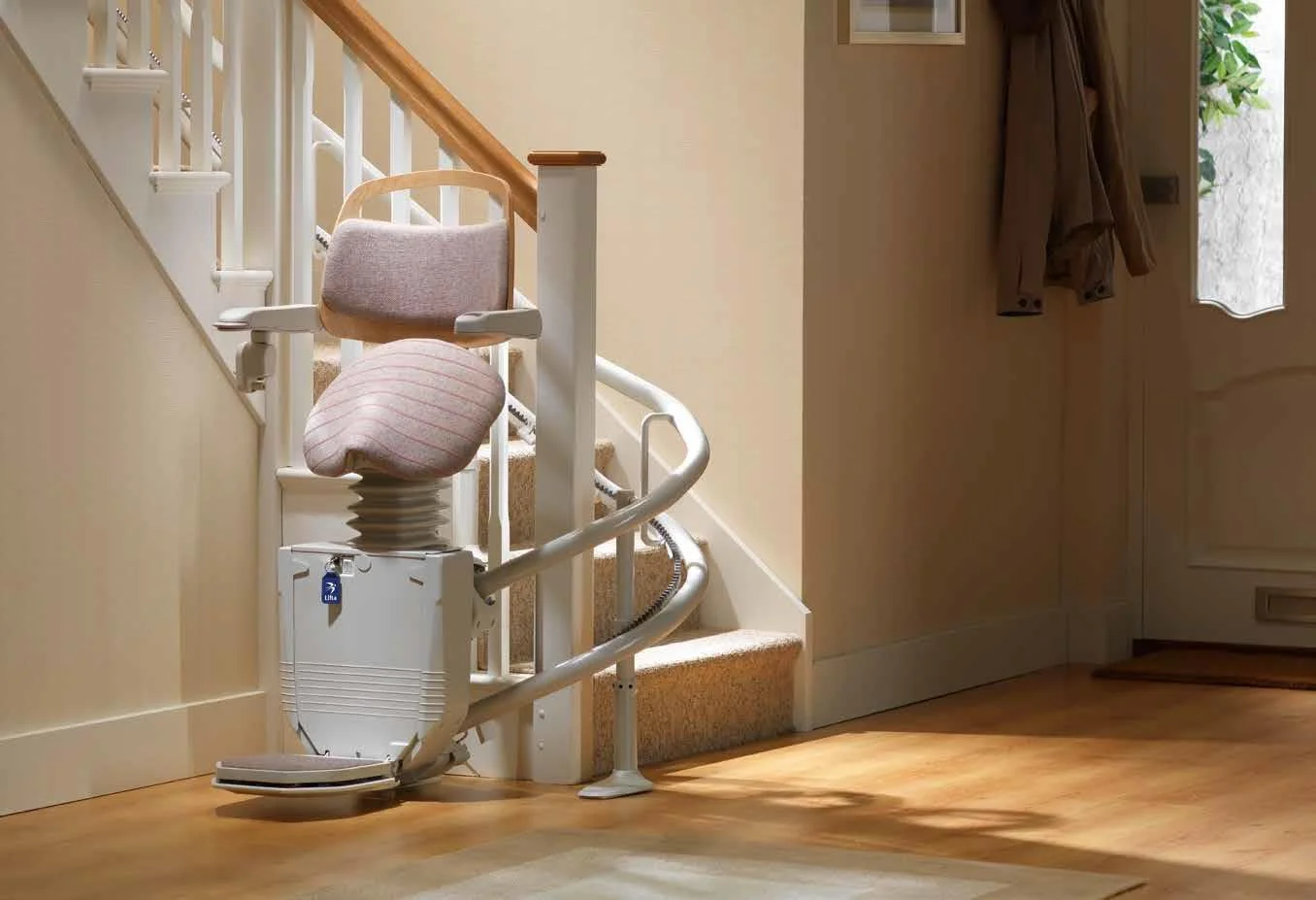
A lot of the housing stock in Fairmont, Monongah, Rivesville and Grant Town dates from the coal boom years. When we measure older single-family homes, the first question is whether the staircase runs straight from bottom to top or turns at a landing.
A straight run usually takes a straight stair lift, which is the simplest and quickest to install. Stairs that turn, wind or have a landing partway up need a curved lift built to fit that exact staircase, so the visit to measure matters more.
Split-level homes are common here, and they bring their own puzzle: several short flights instead of one long one. Sometimes the right answer is a lift on the flight used most, such as the one to the bedrooms, rather than every set of steps.
Townhouses tend to have narrow, straight stairs, which often suit a straight lift that folds out of the way. In walk-up apartments and low-rise buildings, the stairs may be shared, so the owner or building manager has to approve any install before we can plan one.
Getting inside the house can be as hard as getting upstairs. For porch or entry steps, an outdoor stair lift built to handle weather is one option, and for someone who uses a wheelchair, a platform lift may make more sense than a seat.
We look at the inside and outside stairs on the same visit so the plan covers the whole path from the driveway to the bedroom.
About 18.4% of county residents are 65 or older, and the median age is 40.3. Roughly 67.3% of residents own their homes, which matters because most stair lift funding programs and installs assume the person owns the house or has the owner's approval.
If that includes someone in your family, the VA programs below are worth a call, though they treat stair lifts differently from ramps and other permanent changes.
Median household income in the county is about $67,370 and the poverty rate is about 13.6%, so some families pay privately while others need a waiver, VA benefit or nonprofit help. None of the programs below names stair lifts outright as a covered item, and the VA HISA grant specifically excludes stair glides, so ask each one directly before counting on it.
Good first calls are the West Virginia Aged and Disabled Waiver helpline at (866) 767-1575, Marion County Senior Citizens, Inc. at (304) 366-8779, and the Region II - WVDA North Central AAA in Morgantown at (304) 296-0061. Veterans can reach the State of West Virginia Department of Veterans Assistance office in Clarksburg at (304) 627-2175. The West Virginia Technology-Related Assistance Revolving Loan Fund is another statewide name to ask about.
West Virginia's main Medicaid waiver for people 65+ who need nursing-facility level of care, or adults 18-64 who are disabled under SSA rules, with a 2026 income limit of $2,982 a month for a single applicant. It lists Home Modifications as a covered service but does not name stair lifts; call (866) 767-1575.
The designated Area Agency on Aging for Marion County, serving adults 60+ across 16 counties with Older Americans Act services like meals, transportation and in-home care. It does not pay for home modifications directly and stair lifts are not listed, but it works as an intake and referral point.
The local aging-services provider at 105 Maplewood Drive in Fairmont, offering transportation, meals, exercise classes and in-home services. No stair lift or home-modification program is listed; call (304) 366-8779 for referrals.
A West Virginia Center for Independent Living serving people with disabilities in a region that includes Marion County, subject to income guidelines. Stair lift coverage is not listed in the source, so call the Morgantown office at (304) 296-6091 to ask.
Loans up to $40,000 at 1% for 20 years and grants up to $10,000 for homeowners 62+ with income at or below 50% of area median, in USDA-eligible rural areas. Ramps, grab bars and walk-in tubs are named, stair lifts are not, and addresses inside Fairmont city limits may not qualify.
A VA grant of up to $6,800 or $2,000 lifetime, depending on disability status, for medically necessary permanent changes like entrance ramps and roll-in showers. It does not cover stair lifts; the VA explicitly excludes stair glides and porch lifts.
Grants up to $126,526 (SAH) or $25,350 (SHA) for FY2026 for veterans who own their home and have qualifying severe service-connected disabilities. Stair modifications are listed among access changes but stair lifts are not named; call (800) 827-1000.
Older adults
1948 Industrial Blvd., Suite 400, Morgantown, 26505
Veterans
153 W Main StreetnSuite C, Clarksburg, 26301
The Area Agency on Aging serves adults 60 and older, but the West Virginia Aged and Disabled Waiver also covers adults 18-64 who are disabled under SSA criteria. LiveAbility serves people with disabilities who meet its income guidelines.
The HISA grant will not; the VA excludes stair glides from it. The SAH and SHA grants list stair modifications but do not name stair lifts, so call (800) 827-1000 or the Department of Veterans Assistance in Clarksburg at (304) 627-2175 to ask about your case.
Usually yes, though split-levels have several short flights. We often put a lift on the flight used most, and each flight needs its own lift if more than one is needed.
Maybe not. The USDA program is for eligible rural areas, and incorporated city cores are often excluded, so check your exact address on the USDA eligibility map. Outlying areas of the county are more likely to qualify.
Yes. For 2026 the monthly income limit is $2,982 for a single applicant, the asset limit is $2,000 single or $3,000 married, and the home equity limit is $752,000. Statewide enrollment is capped at roughly 8,750 slots a year.
Marion County Senior Citizens, Inc. in Fairmont at (304) 366-8779 is a close local starting point. The Region II - WVDA North Central AAA in Morgantown at (304) 296-0061 can also point you toward programs.
Tell us about the stairs in your home and we will explain which lift fits, what it costs and how installation works.
