Stafford County sits between the Rappahannock and the Potomac, with Aquia Creek cutting through to tidal water. Homes here range from Ferry Farm, George Washington's boyhood home, and Aquia Church, built in 1757, to the suburban streets of Aquia Harbour, Stafford Courthouse, Falmouth, Southern Gateway and Camp Barrett.
That spread matters when you are measuring a staircase. Much of the county's housing went up after 2000, while a scattering of much older structures still stand. A newer multi-story house and an older two-story home with a narrow, steep staircase call for different stair lift plans, and this page walks through both along with the programs that can help pay.
As of 2020 the county had 52,793 housing units. Most are single-family homes, townhouses, split-level homes, ranch-style homes and walk-up apartments, and each layout points toward a different kind of lift.
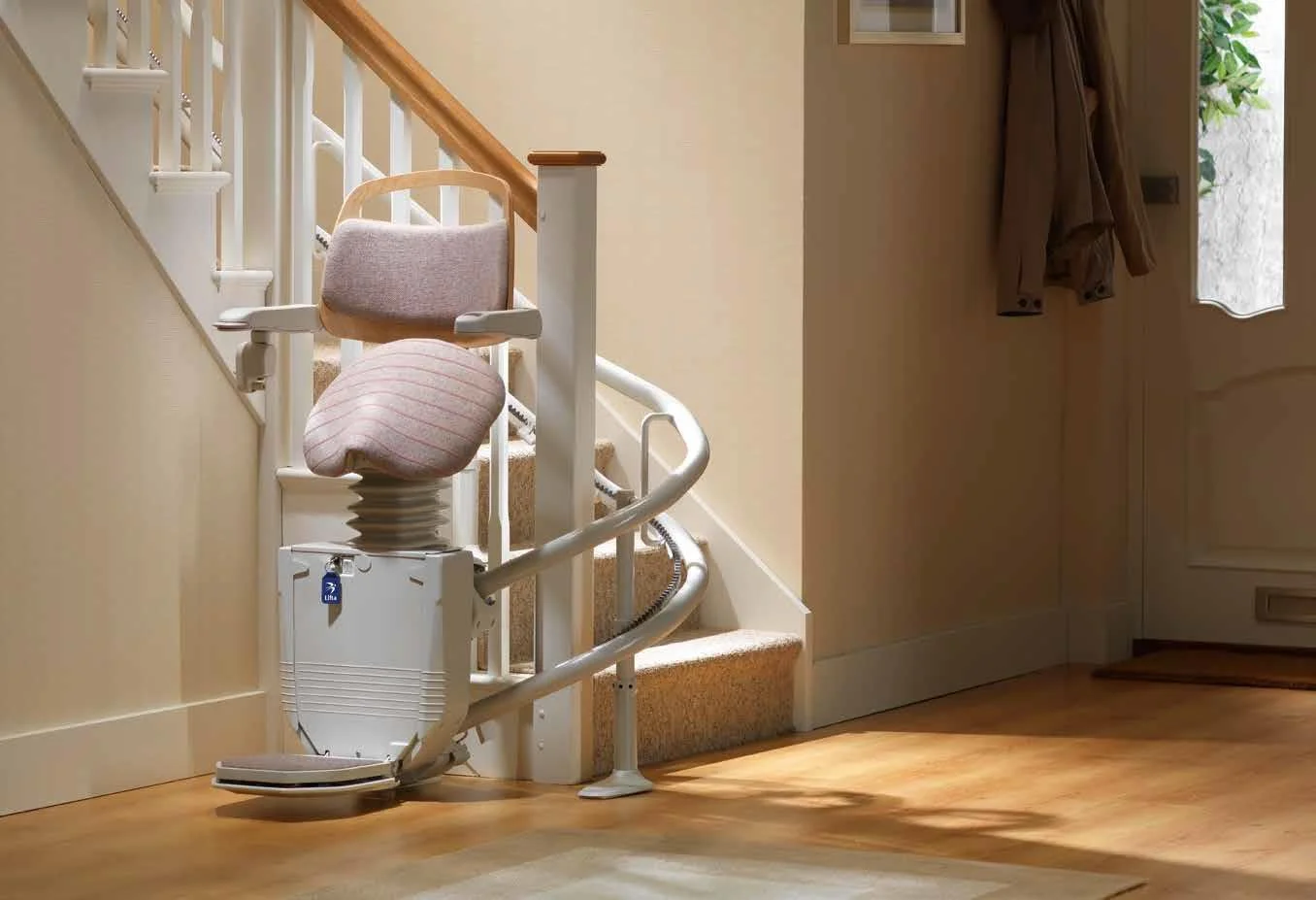
A single straight flight in a newer single-family home or townhouse is usually the simplest job, handled with a straight rail. Split-level homes often have short flights that turn or break at a landing, which can mean a curved rail or more than one lift.
Older two-story homes tend to have narrower, steeper stairs. Those need careful measuring for width and clearance at the top and bottom before anyone picks a model.
The county covers 280 square miles at the edge where the Piedmont meets the tidal Coastal Plain. That varied ground means many houses have raised entries, porch steps or sloped yards between the driveway and the door.
For those spots, an outdoor stair lift or a platform lift can be the better fit than an indoor chair. Older riverside and tidal-area homes in particular can add fall risk at the front steps, not just on the inside staircase.
About 10.8% of residents are 65 or older, and 70.3% are homeowners, so many families are weighing whether to retrofit the house they already own. Owning the home also keeps more grant options open than renting.
Veteran households have their own funding paths, covered below.
Stafford County is one of the highest-income counties in the country, and many seniors here pay for a stair lift themselves. The flip side is that income-capped programs, such as Medicaid waivers, USDA Section 504 and grants tied to area median income (AMI), screen out a large share of residents.
Two state programs name stair lifts or chairlifts directly. Virginia Housing Accessibility Grants pay up to $10,000 with no repayment, and the Virginia Assistive Technology System loan fund offers low-interest loans to Virginians with disabilities of any age.
Locally, the disAbility Resource Center and Healthy Generations Area Agency on Aging can help sort out which programs fit. The full list is below.
The VA's HISA benefit specifically excludes stair glides, so it is not a route to a stair lift. The SHA and SAH grants do not mention stair lifts either way and are limited to severe service-connected disabilities.
The stronger option is Granting Freedom, part of the Virginia Housing Accessibility Grants, for veterans and service members with a service-connected disability and income at or below 80% AMI. The disAbility Resource Center helps veterans apply, and the Virginia Department of Veterans Services - Quantico Office at 3089 Roan Street can be reached at (703) 630-2810.
State grants of up to $10,000 with no repayment, and installing ramps and chairlifts is a listed modification; you apply through a Virginia Housing-approved agent. Call (877) 843-2123.
A state low-interest loan fund for Virginians with disabilities of any age, and its description names stair lifts. Call (804) 662-9990.
A Medicaid waiver that lists environmental modifications and assistive technology as benefits, but stair lifts are not named, so approval is case by case. Call (833) 522-5582.
A VA health-care benefit with a $6,800 or $2,000 lifetime cap for structural home changes. It does not cover stair lifts, since stair glides are specifically excluded.
A VA grant of up to $25,350 (FY2026 maximum) for certain severe service-connected disabilities. The source does not mention stair lifts.
A VA grant of up to $126,526 (FY2026 maximum) for severe service-connected disabilities. The source does not mention stair lifts.
Rural repair loans up to $20,000 at 1% and grants for homeowners 62+ who are very low income; stair lifts are not mentioned. Much of Stafford County may not qualify as rural, so check your address on the USDA eligibility map.
Free or low-cost home safety changes for people 62 and older at or below 80% AMI, starting with an occupational therapist's assessment; stair lifts are not specifically named. Call (540) 369-6155.
Helps veterans with service-connected disabilities access the Granting Freedom grant; the page does not name stair lifts itself. Call (540) 373-2559.
The area agency on aging for Stafford County, offering information, referrals and an emergency services assistance application; no stair lift program is listed. Call (540) 371-3375 or visit 460 Lendall Lane in Fredericksburg.
A volunteer nonprofit that repairs homes for low-income residents, particularly elderly and disabled homeowners, in Stafford County; stair lifts are not named among its services.
Older adults
460 Lendall Lane, Fredericksburg, 22405
Veterans
3089 Roan Street, Marine Corps Base Education Center, Quantico, 22134
Not through HISA, which specifically excludes stair glides. A veteran with a service-connected disability and income at or below 80% AMI may qualify for Granting Freedom, which lists chairlifts, and the disAbility Resource Center at (540) 373-2559 can help with the application.
Yes. The VATS loan fund serves Virginians with disabilities of any age, and the Owner-Occupied Modification grant serves homeowners at or below 60% AMI without an age limit stated.
The CCC Plus Waiver lists environmental modifications and assistive technology, but stair lifts are not named. Coverage would depend on case-by-case approval, so call (833) 522-5582 to ask.
The Rental Unit Accessibility Modification grant, part of the Virginia Housing Accessibility Grants, serves renters with disabilities at or below 60% AMI. Call (877) 843-2123 for details.
Often it can, but older two-story homes in the county tend to have narrower, steeper staircases, so width and top and bottom clearance need to be measured first. That measurement decides which rail and chair will work.
Only in areas USDA counts as rural, and much of the county is suburban. Check your address on the USDA rural eligibility map and confirm the current grant cap with the local USDA office.
Tell us about the stairs in your home and we will explain which lift fits, what it costs and how installation works.
