Kings County and Brooklyn cover the same ground, and a lot of that ground is lined with 19th-century brownstone and brick row houses. In Brooklyn Heights alone, over 600 pre-Civil War row houses were built by 1860. Most are three or four stories tall, with the front door at the top of an exterior stoop above the sidewalk.
That layout means stairs inside and stairs outside before anyone even reaches the kitchen. Add walk-up apartments, low-rise buildings, townhouses and detached houses across a county of 2,736,074 people, and you get a wide mix of staircases. This page walks through which stair lift fits which kind of home here, and where Kings County residents can look for help paying for one.
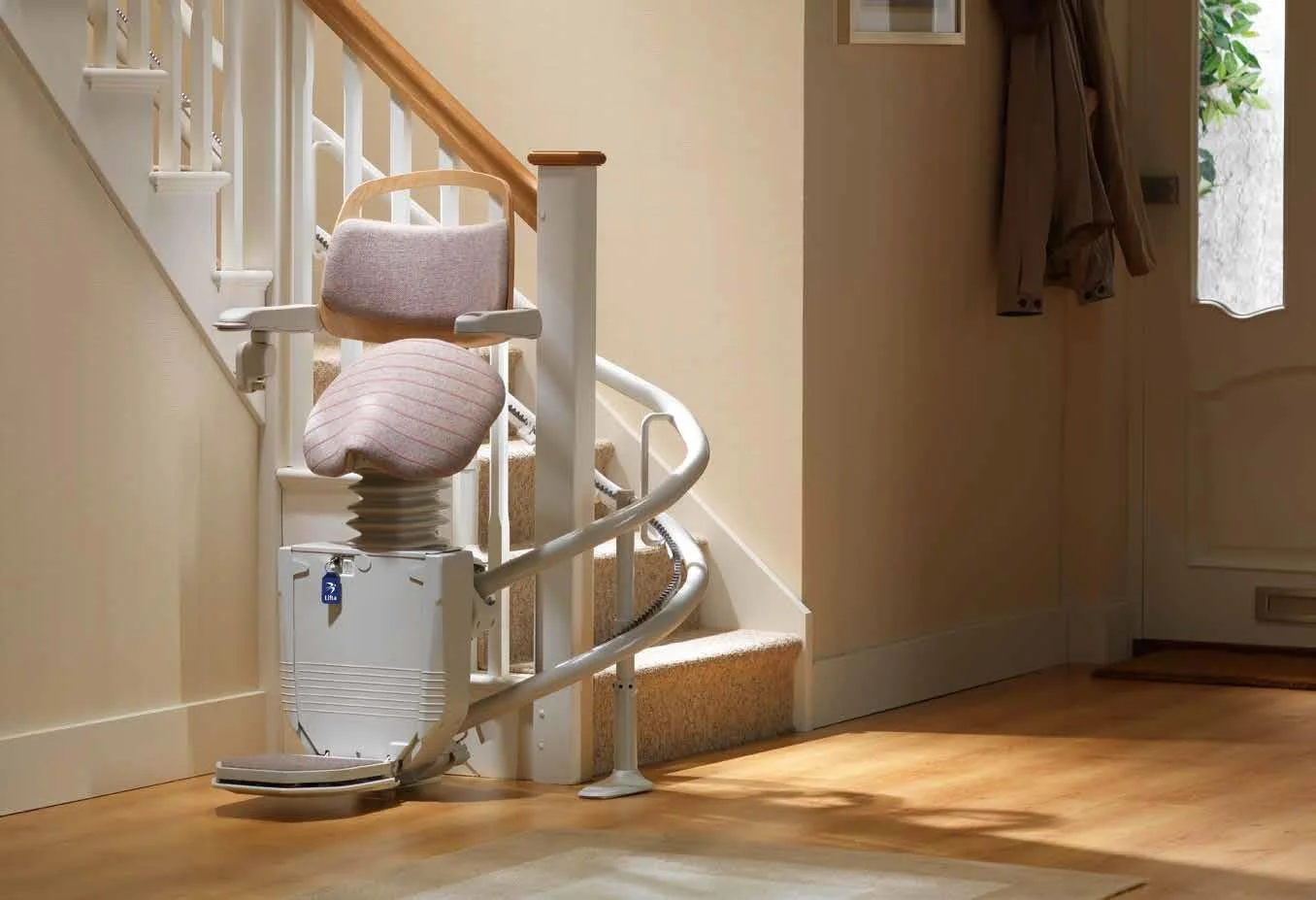
A typical brownstone puts the parlor floor up a stoop, then stacks two or three more floors above it. A straight stair lift works well when a flight runs in one line from bottom to top with no turns. Many older row houses have landings or turns between floors, and those usually call for a curved model built to that exact staircase.
The stoop is its own problem. An outdoor stair lift is made to handle weather on an exterior run of steps, so it can be an option for getting from the sidewalk to the front door.
Brooklyn Heights became New York City's first historic district in 1965, and much of its pre-Civil War housing remains largely unchanged. In practice, that means many homes still have their original narrow, steep stairs, so we measure every flight before recommending anything.
Most people in Kings County rent. The homeownership rate is 29.5%, compared with 65.2% nationally, so many older residents live in walk-up apartments or low-rise buildings they do not own.
Renting does not rule out a stair lift, but the building owner has to be part of the plan. The Access to Home program, for example, accepts renters only with landlord consent. Talk to your landlord early and bring the measurements and model details to that conversation.
Brooklyn sits on the southwestern end of Long Island, bordered by Jamaica Bay, the Atlantic Ocean, the Narrows, Upper New York Bay and the East River. The land is low and mostly flat, with the highest point only about 220 feet.
Many homes sit close to sea level near tidal water. If your stairs start in a basement or at a ground-floor entry in a flood-exposed neighborhood, tell us during the visit so we can factor that into where the track and controls go.
Costs matter here. The median property value is $905,000, yet the poverty rate is 19.1%, well above the 12.5% national average, so plenty of households are house-rich or simply stretched.
The clearest source of help is Access to Home through the New York Foundation for Senior Citizens, which explicitly lists stair glides as an eligible modification for income-qualified New York City residents with a disability. NY Connects Brooklyn is a good first call to sort out the rest, including EISEP for people 60 and older and the NHTD Medicaid waiver.
Veterans should know that the VA HISA grant specifically excludes stair glides. The SAH and SHA grants do not name stair lifts either way, so ask the Brooklyn Vet Center at (718) 836-6600 before counting on them. The programs below have the details and phone numbers.
A state grant program for accessibility home modifications, open to people with a documented disability and household income at or below 80% of area median income (120% for war-disabled veterans). The state's page does not mention stair lifts specifically; in New York City it is delivered by NYFSC and CIDNY, listed below.
The New York City administrator for Access to Home, serving all five boroughs including Brooklyn, and it explicitly lists stair glides among eligible modifications. Homeowners, rental property owners and tenants with landlord approval can apply by calling (212) 962-7655.
CIDNY runs Access to Home from a Brooklyn office, with a separate track for veterans with disabilities. Its page describes accessibility upgrades but does not mention stair lifts specifically; call (212) 674-2300.
A Medicaid waiver for people 18 and older who need nursing-facility level of care, and it covers Environmental Modifications, though stair lifts are not mentioned specifically. Enrollment can involve a waitlist; call (718) 838-3838.
An Office for the Aging program for people 60 and older who need help with daily activities, with an ancillary services category that may include home repairs and assistive devices. Stair lifts are not mentioned specifically, and some people share costs based on income; call (800) 342-9871 or NY Connects Brooklyn.
A free information and referral office for Brooklyn older adults, people with disabilities and caregivers, with no income requirement to use it. It does not fund stair lifts itself but can screen you for EISEP and Medicaid waiver referrals; call (718) 671-6200.
A VA grant of up to $6,800 lifetime for service-connected disabilities, or up to $2,000 for non-service-connected disabilities, with a VA physician's prescription. The VA explicitly excludes stair glides, porch lifts and portable ramps from HISA.
Up to $126,526 (FY2026 maximum) for veterans with the most severe service-connected disabilities who own or will own the home. The VA page does not mention stair lifts specifically.
Up to $25,350 (FY2026 maximum) for adapting a home the veteran owns or will own, for qualifying disabilities less severe than SAH criteria. The VA page does not mention stair lifts specifically.
Older adults
2 Lafayette St. 7th Floor, New York, 10007
Veterans
25 Chapel St, Brooklyn, 11201
Yes, possibly. Access to Home through the New York Foundation for Senior Citizens lists stair glides as eligible and accepts tenants with landlord approval. Call (212) 962-7655 to ask about applying.
Household income must be at or below 80% of area median income, which NYFSC cites as $95,040 for a one-person household in NYC. War-disabled veterans can qualify at up to 120% of area median income.
An outdoor stair lift is built for exterior steps, so a stoop can be a candidate. We would look at the stoop's width, run and railings during an in-home visit.
Not through HISA, which explicitly excludes stair glides. The SAH and SHA grants do not name stair lifts either way, so call the Brooklyn Vet Center at (718) 836-6600 to ask about your situation.
EISEP is for people 60 and older, but the NHTD Medicaid waiver serves adults 18 and up with a verified physical disability, and Access to Home is based on disability and income. Its E-Mods category does not name stair lifts, so ask when you call (718) 838-3838.
NY Connects Brooklyn at (718) 671-6200 is a good starting point. It is free, has no income requirement, and can point you toward current local funding.
Tell us about the stairs in your home and we will explain which lift fits, what it costs and how installation works.
