Walk down a street in the Old Homer Village Historic District or the Tompkins Street Historic District in the city of Cortland and you see the same thing over and over: tall Victorian and Greek Revival-era houses with bedrooms upstairs. Much of Cortland County's housing was built in the 19th and early 20th centuries, long before single-level ranch layouts caught on, so interior stairs are part of daily life in most homes here.
That matters when a parent starts holding the railing with both hands or stops going up to bed. Across the county's 19 towns, from Cortlandville and Virgil to Cincinnatus, Truxton and Taylor, a stair lift is often the simplest way to keep using the whole house. This page explains how local homes affect the kind of lift you need and where to ask about help paying for it.
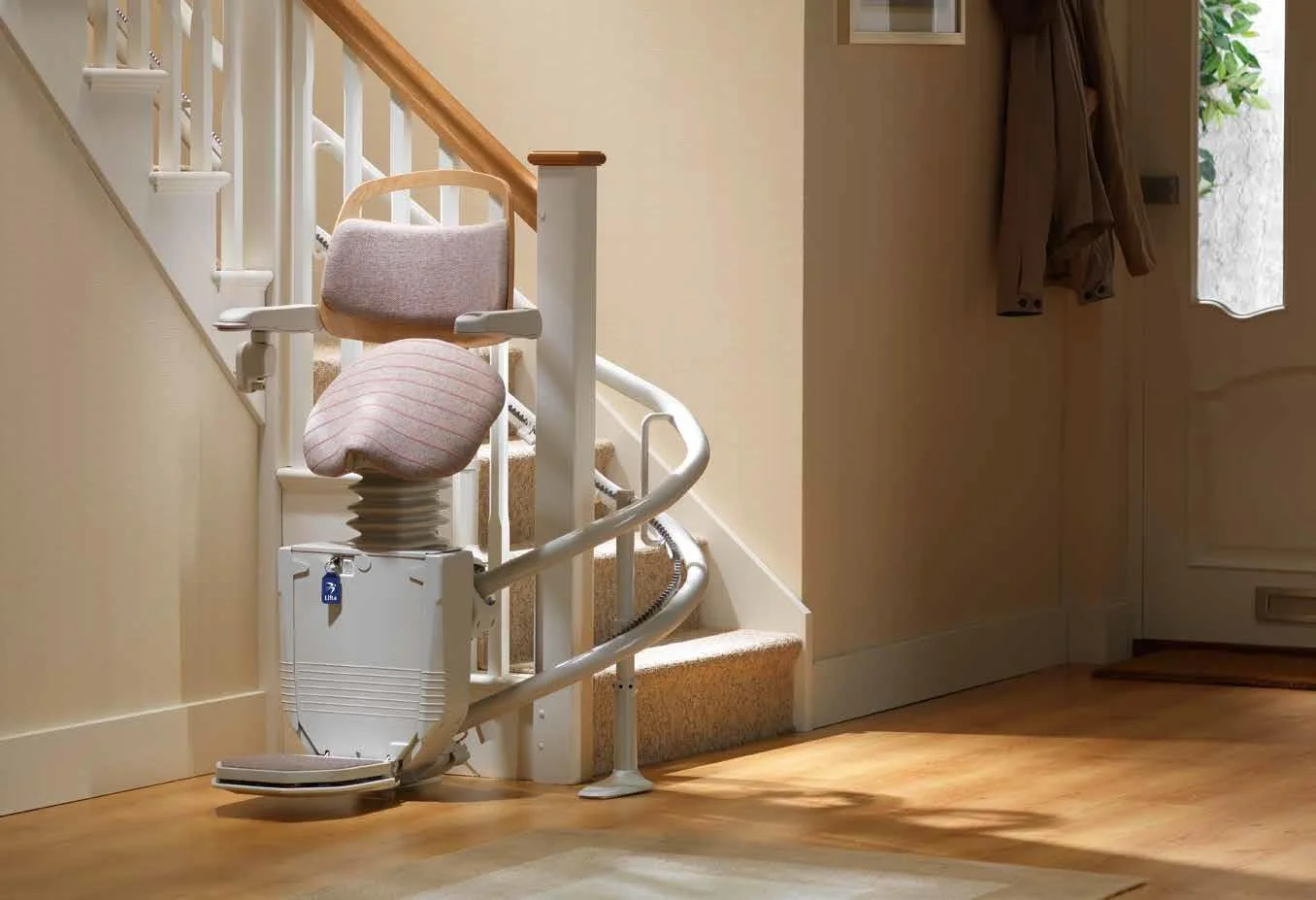
The Main Street historic districts in Cincinnatus and McGraw, like the districts in Homer and Cortland, preserve homes built with full staircases between floors. When that staircase runs in one straight line from bottom to top, a straight stair lift is usually the answer. It mounts to the stair treads, not the wall, so plaster and woodwork stay untouched.
Many older houses have a landing, a turn near the top or winder steps. Those call for a curved lift, which uses a rail bent to follow your exact staircase. We measure every step during the home visit so you know which type your stairs need before anything is ordered.
Cortland County covers about 502 square miles of the glaciated Appalachian Plateau, and outside the city of Cortland it is mostly rural. Homes range from detached farmhouses to split-level homes, townhouses and walk-up apartments. Each one has its own stair layout.
A split-level home often has several short flights rather than one long one. Sometimes a single short lift on the flight used most is enough. Townhouses usually have one straight flight, which keeps things simple.
If the trouble starts outside, at porch or entry steps, an outdoor lift or a platform lift may be the better choice. For a short rise, a ramp can also work, and the county lends ramp systems to residents 60 and older through the Make A Ramp program listed below. Renters in walk-up apartments will need the landlord's permission before any lift goes in.
About 16.7% of Cortland County's 51,163 residents are 65 or older, and 66.4% of households own their home. For an owner in an older two-story house, a stair lift usually costs far less disruption than moving or rebuilding a bedroom on the first floor.
If your parent served, start with the Cortland County Veterans Service Agency at 60 Central Avenue Box 5590 in Cortland, (607) 753-5014, to sort out which VA grants might apply.
Medicare does not show up in the programs we have on file, so plan around the local and state options below. Only one of them, the NHTD Medicaid waiver, names stair lifts as a covered modification. It is for Medicaid members with a physical disability who qualify for nursing facility care, and approval comes before installation.
Several other programs fund home repairs or accessibility work without naming stair lifts. That does not mean no, it means you have to ask. The Cortland County Office for the Aging at 60 Central Avenue in Cortland, (607) 753-5060, runs three of these programs and is a good first call for anyone 60 or older. NY Connects at (607) 756-3485 can point people of any age to other long-term care supports.
Veterans should know that the VA HISA grant specifically excludes porch lifts and stair glides. The larger VA SAH and SHA grants do not mention stair lifts either way, so ask the Veterans Service Agency before counting on them.
Helps income-eligible Cortland County homeowners age 60 and older with minor home repairs and installs safety devices; stair lifts are not named. Call (607) 753-5060.
The county owns modular aluminum ramp systems and loans them to residents 60 and older at no purchase cost. It covers ramps only, not stair lifts; call (607) 753-5060.
A state-funded program for people 60 and older with documented trouble with daily activities, offering case management, non-medical in-home services, respite and ancillary services. Home modifications and stair lifts are not listed; call (607) 753-5060.
A no-cost information and referral service that links residents of any age and their caregivers to long-term services and supports. It does not fund equipment itself and does not list stair lifts; call (607) 756-3485.
Lends medical equipment free for up to three months to anyone who needs it for a short time. Stair lifts and home modifications are not mentioned; call (607) 753-7363.
A statewide Medicaid waiver that lists stair lifts and vertical lifts among its environmental modifications for eligible members with a physical disability who qualify for nursing facility care. Each modification needs an assessment, medical justification and approval before installation.
A state grant for accessibility work for low- to moderate-income homeowners or renters with disabilities, at or below 80% of area median income (120% for veterans with a service-connected disability). Examples include ramps, lifts and handrails, but stair lifts are not named, and funds flow through local municipalities and not-for-profits.
A federal repair loan and grant program for very-low-income owner-occupants in eligible rural areas, with grants limited to homeowners 62 or older who cannot repay a loan. Stair lifts are not named and current amounts could not be confirmed, so call (315) 477-6400 to check terms.
Federal block grant money that eligible New York localities, including Cortland County, can use for home repair grants, with at least 70% benefiting low- and moderate-income people. Accessibility work and stair lifts are not specifically discussed; call (607) 753-0872.
VA grants for veterans with qualifying service-connected disabilities: SAH up to $126,526 and SHA up to $25,350 for FY2026, usable up to 6 times over a lifetime. Stair lifts are not mentioned on the program page.
A lifetime VA benefit of $6,800 or $2,000, depending on the disability, for medically needed home modifications with a VA physician's prescription. It specifically excludes porch lifts and stair glides.
Older adults
60 Central Avenue, Cortland, 13045
Veterans
60 Central Avenue Box 5590, Cortland, 13045
Usually, yes. A straight flight takes a straight lift, and stairs with a landing or turn take a curved lift built to fit. The lift attaches to the treads, so original walls and trim are left alone.
Call the Cortland County Office for the Aging at (607) 753-5060. It runs the Handyman Program, Make A Ramp and EISEP for people 60 and older. None of them names stair lifts, so ask directly what they can do for your situation.
The NHTD Medicaid waiver is the one program in our list that names stair lifts. It is for Medicaid members with a physical disability who qualify for nursing facility care, and the lift must be assessed, medically justified and approved before installation.
No. The HISA grant excludes porch lifts and stair glides. Veterans with serious service-connected disabilities may want to ask about SAH or SHA grants through the Cortland County Veterans Service Agency at (607) 753-5014.
The USDA Section 504 program serves very-low-income homeowners in eligible rural areas, and grants are limited to owners 62 or older. It does not name stair lifts, and current amounts were not confirmed, so call (315) 477-6400 to check.
NY Connects at (607) 756-3485 offers free information and referral on long-term services for residents of any age and their caregivers. It does not pay for equipment, but it can point you to programs that might.
Tell us about the stairs in your home and we will explain which lift fits, what it costs and how installation works.
