De Baca County covers 2,334 square miles of flat High Plains country in east-central New Mexico, and Fort Sumner is the one town on the map. Most homes here are single-family, detached houses, many of them ranch-style, with some split-level homes mixed in. That mix shapes which kind of stair lift, if any, a household needs.
The Census Bureau counts 100% of the county's residents as rural. In practice that means installers, medical equipment suppliers and in-home service providers are based well outside the county and drive a long way to reach a home near Fort Sumner. Planning ahead, and lining up funding before the first visit, saves time for everyone.
A single-story ranch-style home may not need an indoor stair lift at all. The steps that cause trouble are often outside: a few stairs up to the front porch or down from the back door. For those, an outdoor stair lift or a small platform lift can be a better fit than an indoor unit.
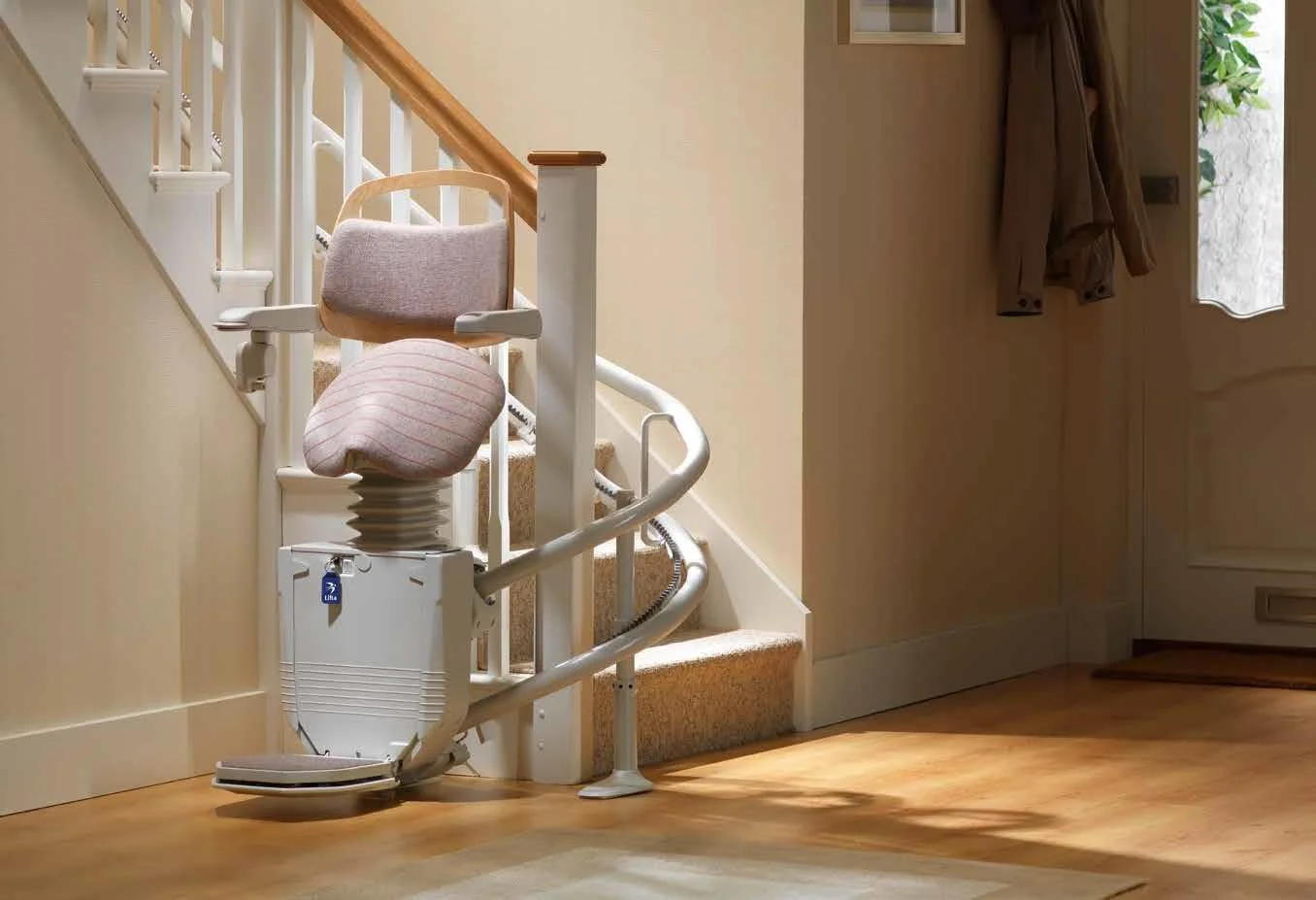
Split-level homes are a different story. They usually have short flights between levels, and some turn or have a landing partway. A straight flight takes a straight stair lift, which is the simplest to install. A flight that turns calls for a curved rail built to the exact shape of the stairs, and some split-level layouts need more than one lift to reach every level.
Because De Baca County is entirely rural, a technician coming out for a measurement, an install or a repair is traveling from outside the county. It helps to have the stairs measured once and carefully, with photos of each landing and any outdoor steps, so the right equipment arrives on the first trip.
Ask any installer how service calls work at your distance and what parts they keep on hand. A straight lift generally uses more standard parts than a curved one, which is worth weighing when the nearest service may be a long drive away.
About 17.6% of De Baca County residents are 65 or older, and 77.4% of households own their home. Ownership matters more than most people expect: many home-modification programs require the applicant to own the home being modified.
If someone in the family served and has a service-connected disability, the VA grants listed below are worth checking before paying out of pocket.
Household incomes in the county run well below state and national averages, with a 2010 median household income of $30,643 and about 21.6% of residents below the poverty line. Many senior homeowners here will look to grant-funded or subsidized help rather than paying the full cost themselves.
A good first call is the NM Aging & Disability Resource Center at (800) 432-2080. They can explain Medicaid waiver options and point you toward local aging services. The Eastern Plains AAA (Region IV) in Clovis is also reachable at (575) 763-9168, and veterans can contact the Southeast Region Office of the New Mexico Department of Veterans Services in Clovis at (575) 537-1445.
None of the programs below name stair lifts specifically in their published material, so ask each one directly whether a stair lift or other accessibility modification can be covered for your home.
A federal grant of up to $126,526 for a permanent home (FY2026) to buy, build or modify a home for veterans with certain severe service-connected disabilities; the veteran must own or plan to own the home. The VA source does not specifically list stair lifts, so ask whether your modification qualifies.
A federal grant of up to $25,350 for a permanent home (FY2026) for veterans with qualifying service-connected disabilities such as loss of use of both hands, and the home may be owned by the veteran or a family member. Structural adaptations are covered generally, but stair lifts are not named on the source page.
A state Medicaid waiver for New Mexicans who qualify for Medicaid and need home-based support to stay in their own home. The source does not list stair lifts or home modifications, so call (800) 432-2080 to ask whether the environmental-modification service could fund one.
Free counseling on long-term services for any New Mexico older adult, person with a disability or caregiver; it is a referral service, not a funding source, and does not specifically mention stair lifts. Call (800) 432-2080 to find which aging network provider serves De Baca County.
A home repair program for low-to-moderate income homeowners that covers repairs to bring a home up to code or accessibility modifications, though stair lifts are not named on the source page. Call (505) 843-6880 to learn which regional provider serves De Baca County and the current income limits.
Older adults
417 Schepps Blvd., Suite 201, Clovis, 88101
Veterans
904 W. 6th Street, Clovis, 88101
Often the indoor floor plan is fine, but entry steps at the porch or back door can still be a barrier. An outdoor stair lift or a platform lift may solve that without changing anything inside.
It depends on the stairs. A straight flight takes a straight lift, while a flight that turns or has a landing needs a curved rail made to fit, and some split-level homes need more than one lift.
Start with the NM Aging & Disability Resource Center at (800) 432-2080. You can also reach the Eastern Plains AAA (Region IV) in Clovis at (575) 763-9168.
Many home-modification programs require it, and the VA SAH grant requires the veteran to own or plan to own the home. The VA SHA grant allows the home to be owned by the veteran or a family member.
The Southeast Region Office of the New Mexico Department of Veterans Services is at 904 W. 6th Street in Clovis, phone (575) 537-1445. They can help with questions about the VA SAH and SHA grants.
The state's published waiver information does not list stair lifts. Call the ADRC at (800) 432-2080 and ask whether the Community Benefit environmental-modification service would cover one for your home.
Tell us about the stairs in your home and we will explain which lift fits, what it costs and how installation works.
