Philipsburg still has houses built during its 1880s to 1920s silver-mining boom, and many of them still have their original interior stairways. The Philipsburg Historic District alone covers 87 acres and 154 contributing buildings, with brick cottages, Queen Anne homes, bungalows and American Four Squares lining its streets. Those staircases were built decades before anyone wrote an accessibility code.
Out past town, Granite County spreads across 1,733 square miles of mountains and forest between Philipsburg and Drummond. When the nearest service provider is a long winter drive away, making the stairs at home safe is often more practical than moving. This page explains which kind of lift suits the homes here and where to look for help paying for one.
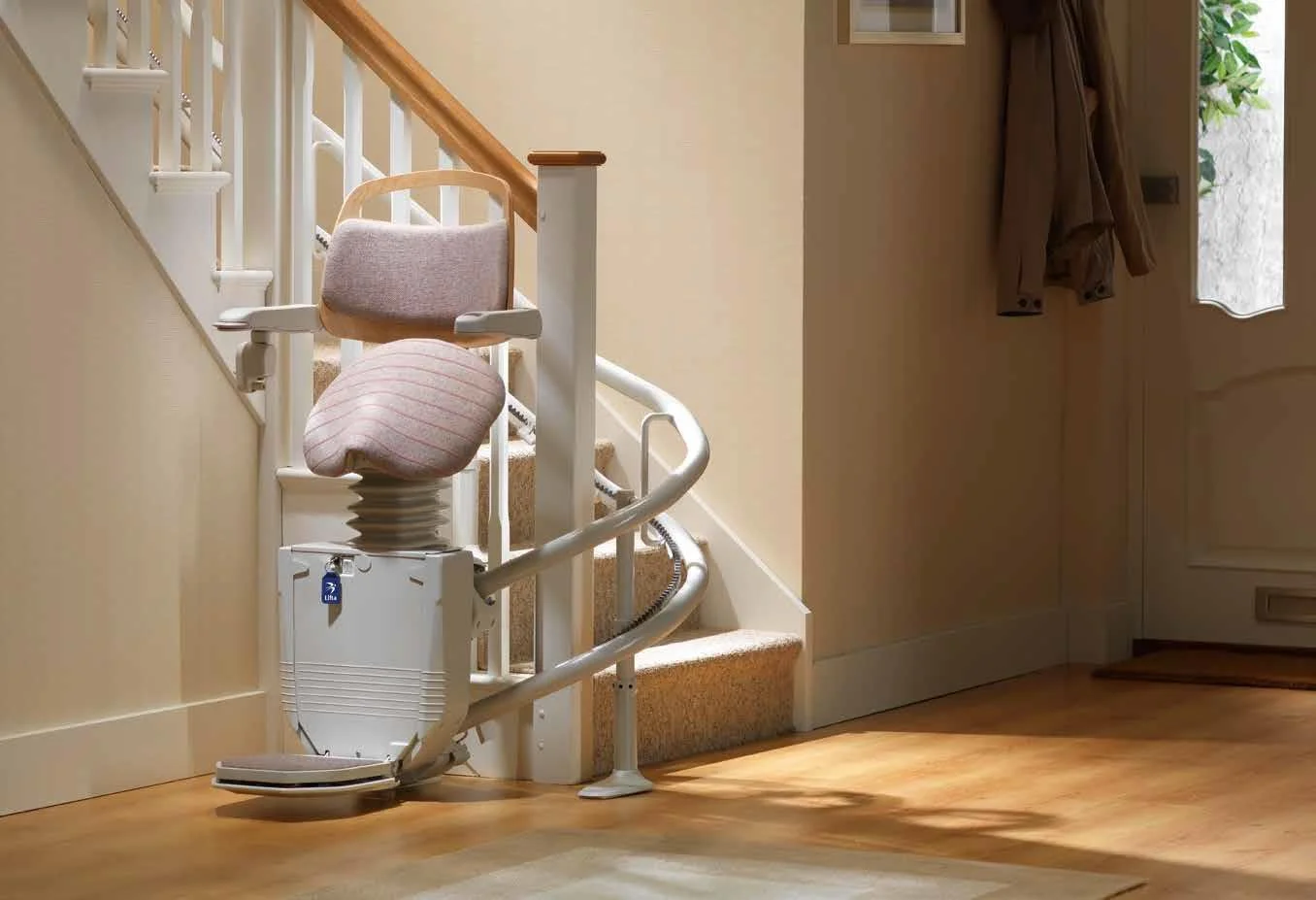
Period homes like Queen Anne houses and American Four Squares were built as multi-story homes with the bedrooms upstairs. Their stairways are often narrower than newer ones, and some turn at a landing. A stair that runs in one line from bottom to top can usually take a straight rail, while a stair with a turn or landing needs a curved rail built to that exact staircase.
Bungalows and brick cottages may have a shorter flight, sometimes only to a basement or a half story. We measure width, rise and any turns before recommending anything, because the original woodwork in these houses rarely matches modern dimensions.
Split-level homes have short flights between floors, and a resident may use more than one of them each day. In that case the question is which flight matters most, or whether each needs its own lift.
Walk-up apartments and low-rise buildings add another step: the building owner has to approve any installation. Outside the house, porch and entry steps face Montana winters, so an outdoor-rated lift or, for a wheelchair user, a platform lift may be the better fit there.
About 29.2% of Granite County residents are 65 or older, and 56.3% of households own their homes. That is a lot of people living in houses they plan to stay in.
The county is one of the more sparsely populated in Montana, with roughly 1.9 people per square mile. Interstate 90, US Highway 12 and Montana Highway 1 connect it to the rest of the state, but distances are long and winter roads can make trips to medical appointments hard. A lift that keeps the upstairs usable can make the difference between staying home and relocating.
None of the programs below names stair lifts outright, so call before you count on any of them. The Montana Medicaid Big Sky Waiver and Montana Money Follows the Person both cover home modifications as a general category, and a case manager can tell you whether a stair lift qualifies. USDA Section 504 offers rural homeowners repair loans up to $40,000 at 1% interest for 20 years, plus grants up to $10,000 for homeowners age 62 or older.
Other statewide options worth asking about include the Montana Assistive Technology Loan (MATL) and the Reverse Annuity Mortgage (RAM). The Montana Veterans Affairs Division – Butte Office can be reached at (406) 533-0910.
A Medicaid waiver for Montanans age 65 or older, or younger with a qualifying physical disability, who need a nursing facility level of care; it covers home modifications such as ramps and grab bars, but stair lifts are not listed, so confirm with your case manager. Call (888) 706-1535.
Helps people who have lived in a long-term care facility for at least 60 consecutive days move home, with one-time costs that include home modifications; stair lifts are not specifically listed. Call (406) 439-6870.
The Area V agency funds homemaker, chore, respite and meal services delivered through the Philipsburg and Drummond Senior Centers and Granite County Public Health; stair lifts and home modifications are not listed. Call (406) 782-5555.
Offers very-low-income rural homeowners repair loans up to $40,000 at 1% for 20 years and grants up to $10,000 for those age 62 or older; stair lifts are not specifically named as an eligible use. Call (406) 585-2580.
Provides up to $6,800 for a service-connected disability, or $2,000 for other non-service-connected disabilities, for medically necessary home changes. Stair glides are explicitly excluded, so HISA will not pay for a stair lift.
Offers free information, referral, advocacy and independent living services to people with disabilities in a 14-county area that includes Granite County; no stair lift or home-modification funding is listed. Call (406) 782-4834.
Older adults
125 Basin Creek Rd., Butte, 59701
Veterans
600 Gilman Avenue, Butte, 59701
Usually, yes. These homes often have original stairways that are narrower or turn at a landing, so we measure the staircase first and recommend a straight or curved rail based on what we find.
The Big Sky Waiver covers home modifications for safety and accessibility, but its examples are ramps, grab bars and doorway widening. Stair lifts are not named, so ask the waiver case manager at (888) 706-1535 before planning on it.
For 2026 the income limit is $994 per month for a single applicant, with an asset limit of $2,000. Home equity is exempt up to $752,000, and the waiver has about 2,783 annual slots, so there may be a waitlist.
No. HISA specifically excludes stair glides and porch lifts. A veteran can contact the Montana Veterans Affairs Division – Butte Office at (406) 533-0910 to ask about other VA benefits.
The USDA Section 504 program offers grants up to $10,000 for very-low-income homeowners age 62 or older in rural areas, and Granite County qualifies as rural. Stair lifts are not specifically named, so call (406) 585-2580 to ask. The grant must be repaid if the home sells within 3 years.
Southwest Montana Aging and Disability Services delivers services through the Drummond and Philipsburg Senior Centers. Their number is (406) 782-5555.
Tell us about the stairs in your home and we will explain which lift fits, what it costs and how installation works.
