Big Horn County covers 5,015 square miles of south-central Montana, and its seven towns sit far apart: Hardin, Crow Agency, Muddy, Pryor, Lodge Grass, Busby and Wyola. Most of the land lies within the Crow Indian Reservation, which covers 64.2% of the county, and the Northern Cheyenne Indian Reservation covers another 6.37%. With roughly 2.6 people per square mile, a home visit here often means a long drive on rural roads.
The houses are mostly single-family homes, ranch-style homes, split-level homes and manufactured homes, many of them older and owner-occupied. Each type puts stairs in different places, so the right lift depends on your floor plan. This page walks through what fits these homes and which local, tribal, state and federal programs may help with the cost.
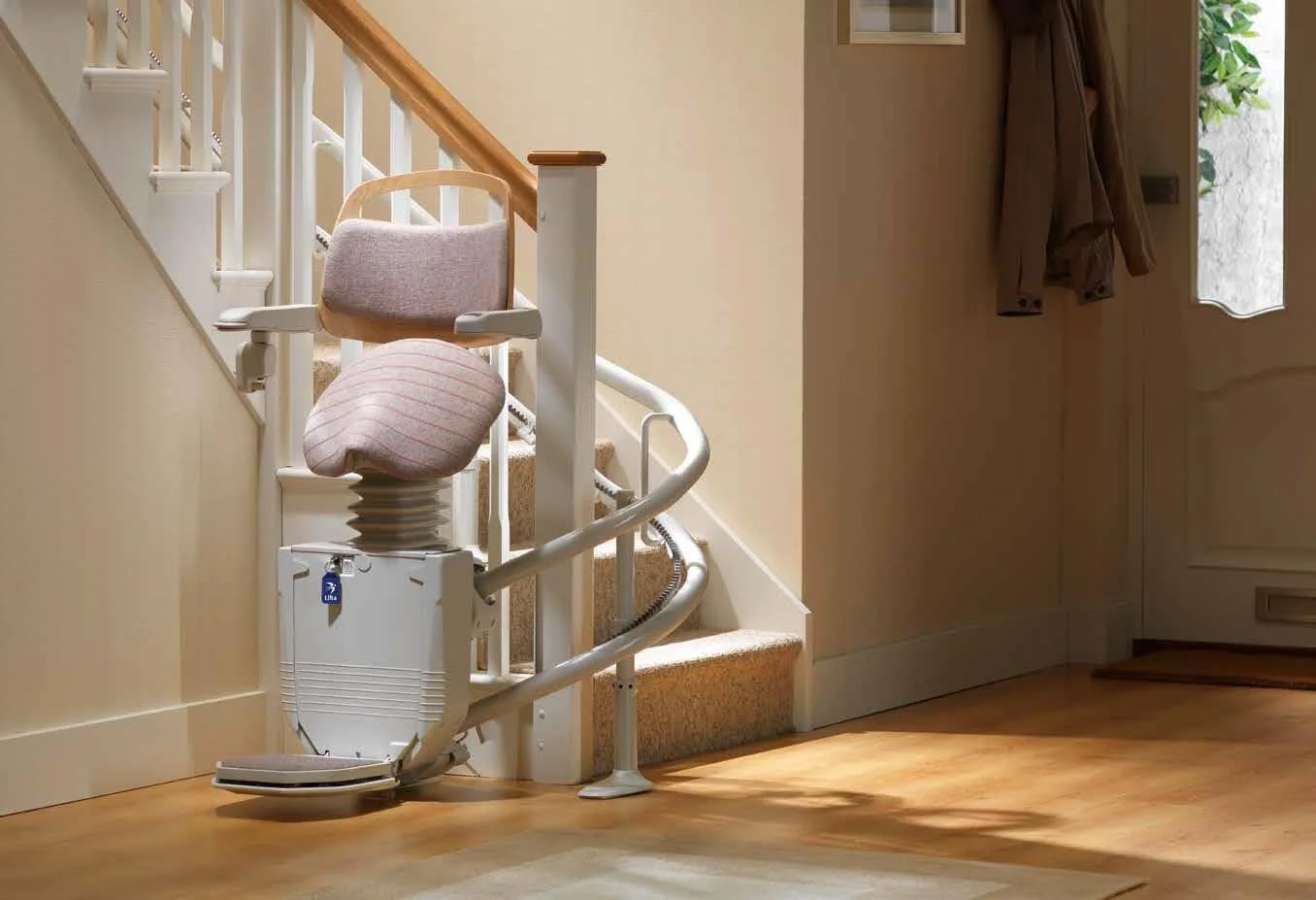
A single-family home with one straight run of stairs to a second floor or basement is the simplest job. A straight stair lift mounts to the stair treads, not the wall, and usually goes in without remodeling.
Split-level homes have short flights of stairs between levels, sometimes with a turn or landing. Short straight flights can each take their own lift, while a flight with a turn needs a curved rail built to fit that staircase.
Ranch-style homes and manufactured homes often keep their main living space on one floor. In those houses the problem is usually the entry steps or porch, where an outdoor stair lift or a vertical platform lift makes more sense than an indoor unit.
Big Horn County is classified as 100% rural and is the fifth-largest county in Montana by land area. That means scheduling matters: an assessment and an installation may be separate trips, so measure-once planning saves time for everyone.
Winter weather can make it harder to reach homes for care and modification services. If the stairs that give someone trouble are outside, ask about an outdoor-rated lift, and plan the install before the snow season when you can.
Around 62.9% of residents own their homes, which matters because most home-modification grants and loans require the applicant to own and live in the house.
Veterans should check VA rules before counting on VA money for a stair lift. One VA grant specifically excludes stair glides, while others may cover accessibility remodeling.
Cost is a real barrier here. Recent data puts the county's poverty rate at 22.1% and median household income at $58,750, so many families lean on Medicaid waiver, tribal and federal programs rather than paying out of pocket.
None of the programs below names stair lifts as a covered item on the sources reviewed, so call first and ask directly. Several cover related work such as ramps or general home modification, and a case manager can tell you whether a lift could qualify.
Statewide, you can also ask about the Montana Assistive Technology Loan (MATL), the Reverse Annuity Mortgage (RAM), Community First Choice Services (CFCS) and the Property Tax Assistance Program (PTAP) & Elderly Homeowner/Renter Credit. For local guidance, the Area II - Adult Resource Alliance of Yellowstone County in Billings is at (406) 259-5212, and the Montana Veterans Affairs Division - Billings Service Office is at (406) 495-2081.
Montana's main Medicaid home and community services waiver for people 65 and older, or physically disabled under 65, who need nursing facility level of care; it funds home modifications such as ramps, grab bars and wider doorways, but stair lifts are not named and waitlists may apply. Call (888) 706-1535.
The regional aging and disability center covering Big Horn County and the Crow and Northern Cheyenne Reservations offers information, referral and options counseling for people 60 and older and adults with disabilities 18 and older. It does not list a stair lift benefit, but it refers people to the Big Sky Waiver; call (406) 323-1320.
The county senior services office provides meals, transportation, health screening and information and referral, with satellite service at Lodge Grass Senior Center. Home modification help is not listed, so call (406) 665-9768 to ask about current referrals.
Very-low-income rural homeowners can get loans up to $40,000 at 1% interest, and homeowners 62 and older can get grants up to $10,000, for repairs and accessibility work such as ramps or walk-in tubs. Stair lifts are not specifically named on the source reviewed.
This VA grant pays for permanent medically necessary changes like ramps and roll-in showers, up to $6,800 or $2,000 depending on disability status. It does not cover stair lifts; the VA explicitly excludes stair glides and porch lifts.
Veterans with qualifying severe service-connected disabilities can use SAH (up to $126,526) or SHA (up to $25,350) to build, buy or remodel a home for accessibility. Stair lifts are not named on the official page reviewed.
This center for independent living serves people with disabilities of all ages in 18 counties, including Big Horn County, with information, referral, advocacy and skills training. No stair lift program is itemized; call (406) 259-5181.
Contracted by the Crow Tribe, HIP helps American Indian and Alaska Native households with substandard housing, including Interim Improvements up to $7,500 that cover handicap ramps. Stair lifts are not named; call (406) 638-2672.
Based in Crow Agency, this program lists Home Repair and Home Modification among its services for Crow Tribe elders, along with meals, case management and respite care. Stair lifts are not specifically named, so call (406) 638-4449 to ask.
This program assesses owner-occupied Northern Cheyenne tribal housing for hazards like mold, lead and radon, and its focus is environmental health rather than mobility changes; stair lifts are not mentioned. Funding is currently allocated with a waiting list; call (406) 477-6419.
This state program funds rehabilitation of homes for low-to-moderate-income households through a local government grantee and requires an ADA accessibility inspection, though stair lifts are not named. New applications were paused as of the source date; call (406) 841-2700.
Older adults
1505 Avenue D, Billings, 59102
Veterans
1500 University Dr, College of Education Bldg. Room 114, Billings, 59101
Usually, yes. Short straight flights between levels can each take a straight lift, and a flight with a turn or landing needs a curved rail made to fit it. An in-home measurement settles which one you need.
For outside entry steps, an outdoor stair lift or a vertical platform lift is the usual answer. Since winter weather can complicate access in Big Horn County, choose equipment rated for outdoor use.
The VA HISA grant does not; it specifically excludes stair glides. The SAH and SHA grants fund accessibility remodeling for veterans with qualifying service-connected disabilities, but stair lifts are not named, so ask the Montana Veterans Affairs Division - Billings Service Office at (406) 495-2081.
Yes, possibly. The Area II ADRC serves adults with disabilities 18 and older, the Big Sky Waiver covers physically disabled people under 65 who need nursing facility level of care, and LIFTT serves people with disabilities of all ages.
The Crow Tribal Elder Program in Crow Agency lists Home Repair and Home Modification among its services. Call (406) 638-4449 to ask whether a stair lift could be included.
For seniors, the Big Horn County Council on Aging at (406) 665-9768 or the Area II ADRC at (406) 323-1320 can point you toward the Big Sky Waiver and other programs. Tribal members can also start with their tribal program.
Tell us about the stairs in your home and we will explain which lift fits, what it costs and how installation works.
