From Marshall out to Minneota, Cottonwood, Balaton and the farmsteads between them, Lyon County covers about 722 square miles of low rolling hills cut by drainages and the Yellow Medicine, Redwood and Cottonwood rivers. The 2020 census split the population at 53.5% urban and 46.5% rural. That means many households sit a long drive from in-person services.
Most homes here are owned, not rented, and many owners have stayed in the same house for years. Single-family homes, detached houses and split-level homes make up much of what we see. When the bedroom or the only full bath is up a flight of stairs, a stair lift is often the change that lets someone keep living there.
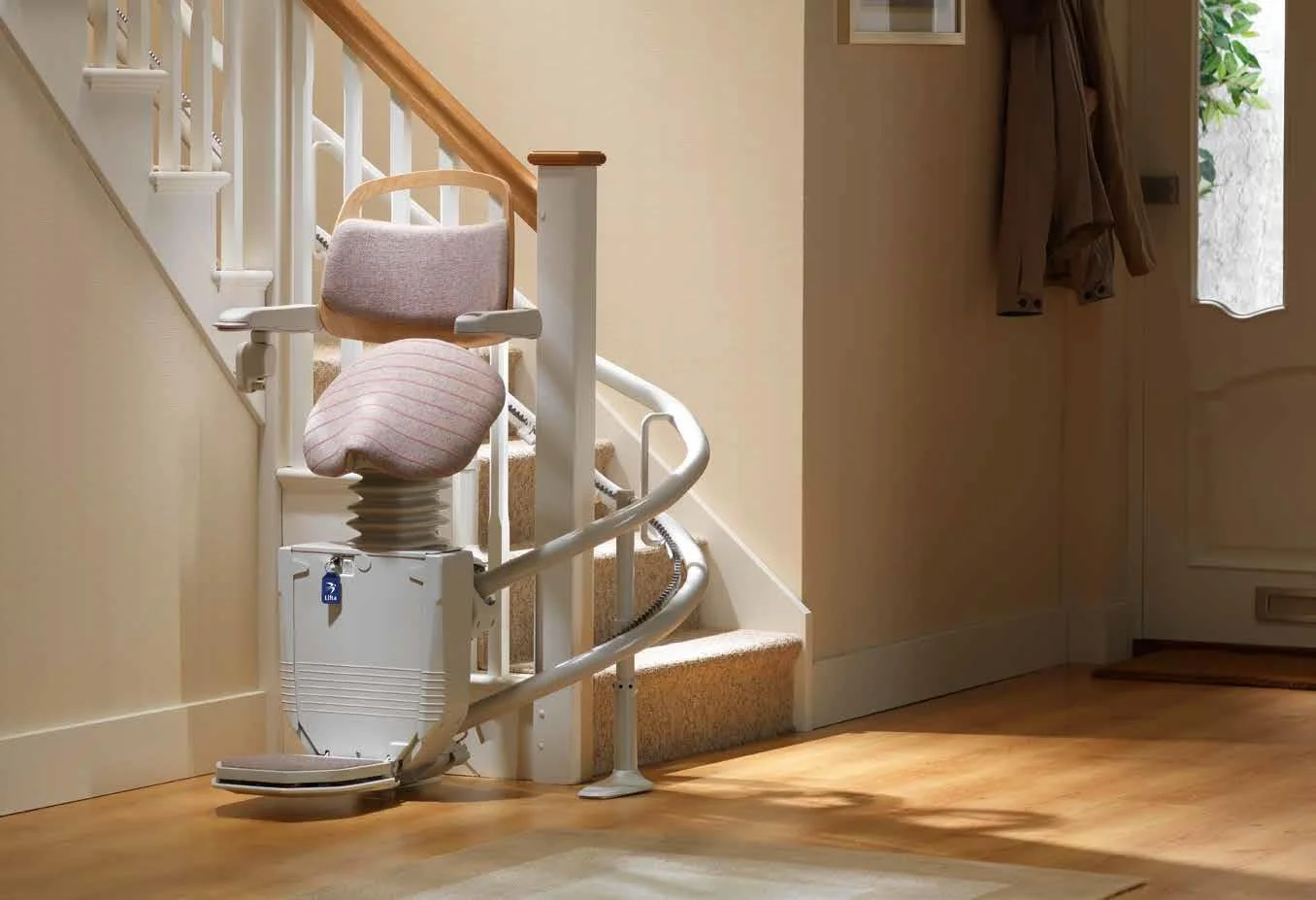
A single-family or detached house with one straight staircase is the simplest job. A straight rail mounts to the stair treads, not the wall, and usually goes in without remodeling.
Split-level homes are different. They often have two or more short flights joined by a landing or a turn. Depending on the layout, that can mean one curved rail that follows the turn or separate straight lifts on each run, and we measure before recommending either.
Walk-up apartments in Marshall and the smaller towns raise another question. With 33.6% of occupied units renter-occupied, a fair number of people need the building owner on board before anything is attached to the stairs.
Out on the farmsteads and in towns like Lynd, Ghent and Russell, the steps that cause trouble are sometimes outside: a porch, a deck or a side entry off the yard. Outdoor stair lifts are built with weather-resistant parts for that kind of run.
Where a wheelchair user needs to get up a few entry steps, a platform lift may make more sense than a seat. We look at the slope of the yard and the door location before suggesting one.
About 16.8% of Lyon County residents are 65 or older, and 65.9% of households own their home. Those owners are the people most able to make a permanent change to their stairs.
Lyon County Veteran Services at 607 W. Main St. in Marshall, (507) 537-6729, can help sort out which VA benefits apply, since not every VA grant covers a stair lift.
Two Minnesota Medical Assistance programs list home modifications as a covered benefit: the Elderly Waiver (EW) for people 65 and older, and Community First Services and Supports (CFSS). Both have income and asset limits, and both run through county offices.
For rural homeowners with very low income, the USDA Section 504 program offers repair loans and, for owners 62 and older, grants. Its source does not name stair lifts, so confirm with USDA before counting on it.
Other statewide programs to ask about include the Alternative Care (AC) Program, the Community Access for Disability Inclusion (CADI) Waiver, the Minnesota Housing Fix Up Loan (Accessibility Loan) and the Minnesota Housing Rehabilitation Loan Program (RLP). Southwest Minnesota AAA in Slayton, (507) 532-3260, is a good first call to sort through them.
A statewide Medicaid waiver for residents 65 and older who meet a nursing-facility level of care; it lists home modifications as a covered benefit, with a 2026 income limit of $2,982/month and an asset limit of $3,000 for a single applicant. Applications go through the county Long-Term Care Consultation office, and the program line is (800) 333-2433.
Minnesota's Medicaid personal-assistance program, replacing traditional PCA, covers home modifications for safety and accessibility for Medical Assistance recipients who need help with at least one daily activity. Apply through your county human services office or call (800) 657-3739.
Offers loans up to $40,000 at 1% over 20 years and grants up to $10,000 for homeowners 62 and older with very low income in eligible rural areas; the source does not specifically mention stair lifts. Call (651) 602-7800 to confirm your address and what work qualifies.
Pays up to $6,800 or $2,000 lifetime for medically necessary permanent alterations such as ramps and bathroom access, but the VA explicitly excludes stair glides, so it does not cover stair lifts. Lyon County Veteran Services at (507) 537-6729 can help with other VA options.
Grants of up to $126,526 (SAH) or $25,350 (SHA) in 2026 for veterans with qualifying severe service-connected disabilities to build, buy or remodel an accessible home; the source does not specifically mention stair lifts. Ask Lyon County Veteran Services at (507) 537-6729 whether your situation qualifies.
Older adults
2401 Broadway Ave., Suite 4, Slayton, 56172
Veterans
607 W. Main St., Marshall, 56258
The Elderly Waiver lists home modifications as a covered benefit, though the source gives no dollar cap or stair lift detail. You must be 65 or older, meet a nursing-facility level of care and fall under the income and asset limits. Start with the county Long-Term Care Consultation office or call (800) 333-2433.
CFSS has no age requirement listed. It is for Medical Assistance recipients who need help with at least one daily activity, and it covers home modifications for safety and accessibility. Call (800) 657-3739 or your county human services office.
No. The VA specifically excludes stair glides from HISA. It can fund permanent changes like an entrance ramp or bathroom access, and Lyon County Veteran Services in Marshall at (507) 537-6729 can talk through other VA benefits.
Marshall and the surrounding rural parts of Lyon County fall within USDA's rural-eligible footprint, but eligibility is checked address by address. You also need very low household income, and grants are limited to owners 62 and older. Call (651) 602-7800 and ask whether a stair lift counts as a health and safety repair.
Usually, yes. Depending on the layout, the answer may be a curved rail that follows the turn or a straight lift on each short flight. A measurement at the house settles which one fits.
Southwest Minnesota AAA, at 2401 Broadway Ave., Suite 4 in Slayton, serves this area and can be reached at (507) 532-3260. For veterans, Lyon County Veteran Services in Marshall is at (507) 537-6729.
Tell us about the stairs in your home and we will explain which lift fits, what it costs and how installation works.
