Lincoln County covers roughly 1,201 to 1,206 square miles of the Magic Valley and Snake River Plain, and the 2020 census classified all of it as rural. Most households live in or around three towns: Shoshone, the county seat, plus Richfield and Dietrich. US Routes 26 and 93 tie those towns to medical care and services in the Twin Falls area.
The homes here are mostly single-family, owner-occupied houses typical of agricultural south-central Idaho, not multi-story city buildings. That shapes which stair lift makes sense, how the install gets scheduled, and which local programs might help with the cost. This page walks through all three.
The 2020 census counted 1,948 housing units in the county, with 68.4% owner-occupied. Owning the home matters, because you can approve a rail bolted to the stair treads without asking anyone. Renters in a walk-up apartment or townhouse will need the owner's permission first.
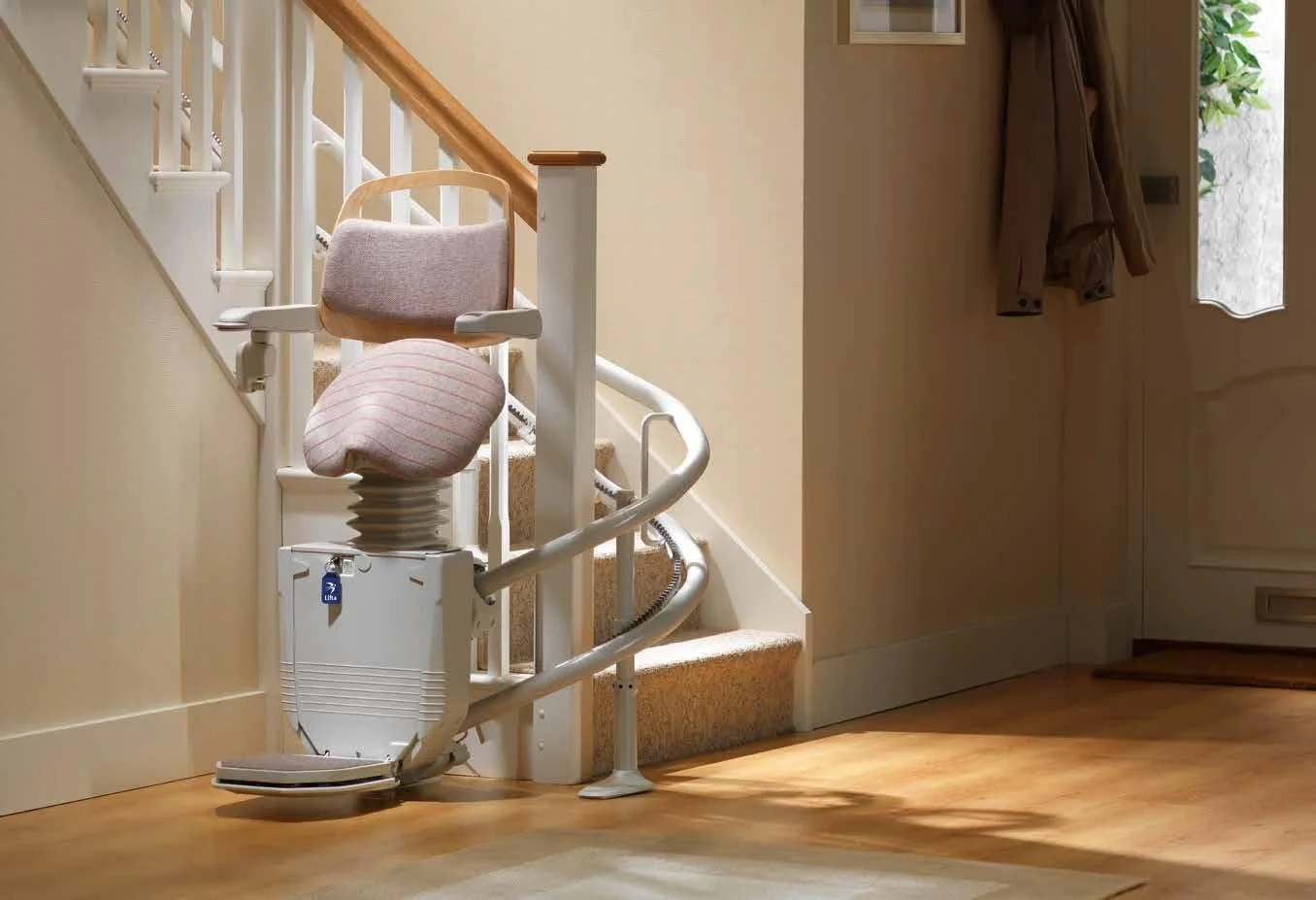
A single-family or detached house with one straight run of stairs is the simplest case. A straight rail is usually the quickest to measure, order and install. If the stairs turn at a landing, or change direction partway up, a curved rail built to that staircase is the usual answer.
Split-level homes have short flights between each level instead of one long staircase. Sometimes one short straight lift covers the flight that matters most, such as the one to the bedrooms. Other times a curved rail or two separate straight lifts work better, depending on where the person spends the day.
Steps outside to a porch or entry door can take an outdoor-rated lift built to handle weather. When someone uses a wheelchair and cannot transfer to a seat, a platform lift is the option to look at instead of a chair. We sort this out on a home visit by measuring the stairs and talking through daily routines.
Every part of Lincoln County is rural, and many installers and home-modification contractors work out of Twin Falls. Distance can add travel time to a visit, so it helps to have stair measurements, photos of the top and bottom landings, and any questions ready before the first appointment.
Grouping the assessment and any follow-up work into as few trips as possible keeps things moving. If you are helping a parent from out of town, ask to be on the phone during the visit so you hear the same details they do.
Those two groups are worth naming because several of the funding programs below are tied to age or military service. Some programs start at 60, some at 62, and the Idaho Medicaid waiver applies to people over 65 or with a qualifying disability.
The county's economy leans on agriculture, and median household income was $45,714 in 2010. For a senior homeowner on a modest budget, outside help can make the difference between buying a lift now and putting it off.
None of the programs listed on this page name stair lifts outright in their source material, so the honest answer is to call and ask. Several do cover accessibility changes to the home in general terms, which is the opening worth pursuing.
Veterans can start with Twin Falls Veterans' Services at (208) 734-9091. People 60 and older can call Area IV AAA at (208) 736-2122. Idaho residents can also ask about statewide options: the Idaho Medicaid Aged & Disabled (A&D) Waiver, the Idaho Assistive Technology Project, Low-Interest Financial Loan Program, VA Benefits for Veterans (HISA + Prosthetics), and the Idaho Property Tax Reduction (Circuit Breaker).
Federal grants for veterans and service members with qualifying service-connected disabilities who own or will own the home, with SAH up to $126,526 and SHA up to $25,350 for FY2026. The source describes covered work as ramps and widened doorways and does not mention stair lifts, so ask Twin Falls Veterans' Services at (208) 734-9091 for guidance.
A state Medicaid waiver for Idaho residents over 65 or with a qualifying disability who meet income limits and need an institutional level of care. It lists environmental accessibility adaptations as a covered service but does not mention stair lifts, so confirm with a DHW case manager.
The Twin Falls-based agency on aging for adults 60 and older in the South Central Idaho region. Its source page does not mention stair lifts or home modifications, so call (208) 736-2122 to ask about current programs and Lincoln County service.
Federal loans for very-low-income rural homeowners, with grants limited to applicants 62 or older, that can fund making a home accessible for household members with disabilities. Stair lifts are not named, so contact the local USDA Rural Development office to confirm eligibility and current limits.
A nonprofit center for independent living whose service area explicitly includes Lincoln County and serves people with disabilities. Its listing does not mention stair lifts or home modifications, so call (208) 733-1712 to ask about assistive technology resources.
Older adults
650 Addison Ave. West, Suite 100, Twin Falls, 83301
Veterans
650 Addison Avenue West, Suite 1077, Twin Falls, 83301
Yes, though many installers and contractors are based in Twin Falls, so the drive can add travel time. Having stair measurements and photos ready helps keep the number of trips down.
Not always. Split-level homes have short flights, and sometimes one straight lift on the most-used flight is enough. If the stairs turn or you need to reach more than one level, a curved rail or two straight lifts may fit better.
The Idaho Medicaid Aged and Disabled Waiver covers environmental accessibility adaptations but does not list stair lifts by name. A DHW case manager can tell you whether a lift qualifies under your care plan.
USDA Section 504 grants require age 62 or older, but Section 504 loans do not have that age limit. Area IV AAA serves adults 60 and older at (208) 736-2122, and LINC serves people with disabilities of any age at (208) 733-1712.
VA SAH and SHA grants help veterans with qualifying service-connected disabilities adapt a home they own. Stair lifts are not named in the source, so call Twin Falls Veterans' Services at (208) 734-9091 to ask.
Usually, but the rail attaches to the stairs, so you need the property owner's written permission before installation.
Tell us about the stairs in your home and we will explain which lift fits, what it costs and how installation works.
