Cordele, the Crisp County seat, has two neighborhoods on the National Register of Historic Places: the O'Neal School Neighborhood Historic District and the Gillespie-Selden Historic District. Many houses there date to the early 20th century, well before anyone designed homes with aging in mind, so a bedroom upstairs or a set of front steps can become the hardest part of the day.
Outside Cordele, homes in Arabi, Wenona and the rural stretches of the county are more often single-family and ranch-style houses, with split-level homes and townhouses in the mix. This page walks through which kind of stair lift tends to fit these homes, what to expect if you live far from town, and which Georgia programs to call about cost.
The O'Neal School Neighborhood Historic District has Colonial Revival, Italian Renaissance Revival and Queen Anne/Victorian houses from the early 20th century. In the Gillespie-Selden Historic District, a traditionally African-American neighborhood, you will find vernacular central-hallway cottages and American Foursquare homes. In many of these houses the only way to the second floor is a staircase, and the front door sits up a few steps.
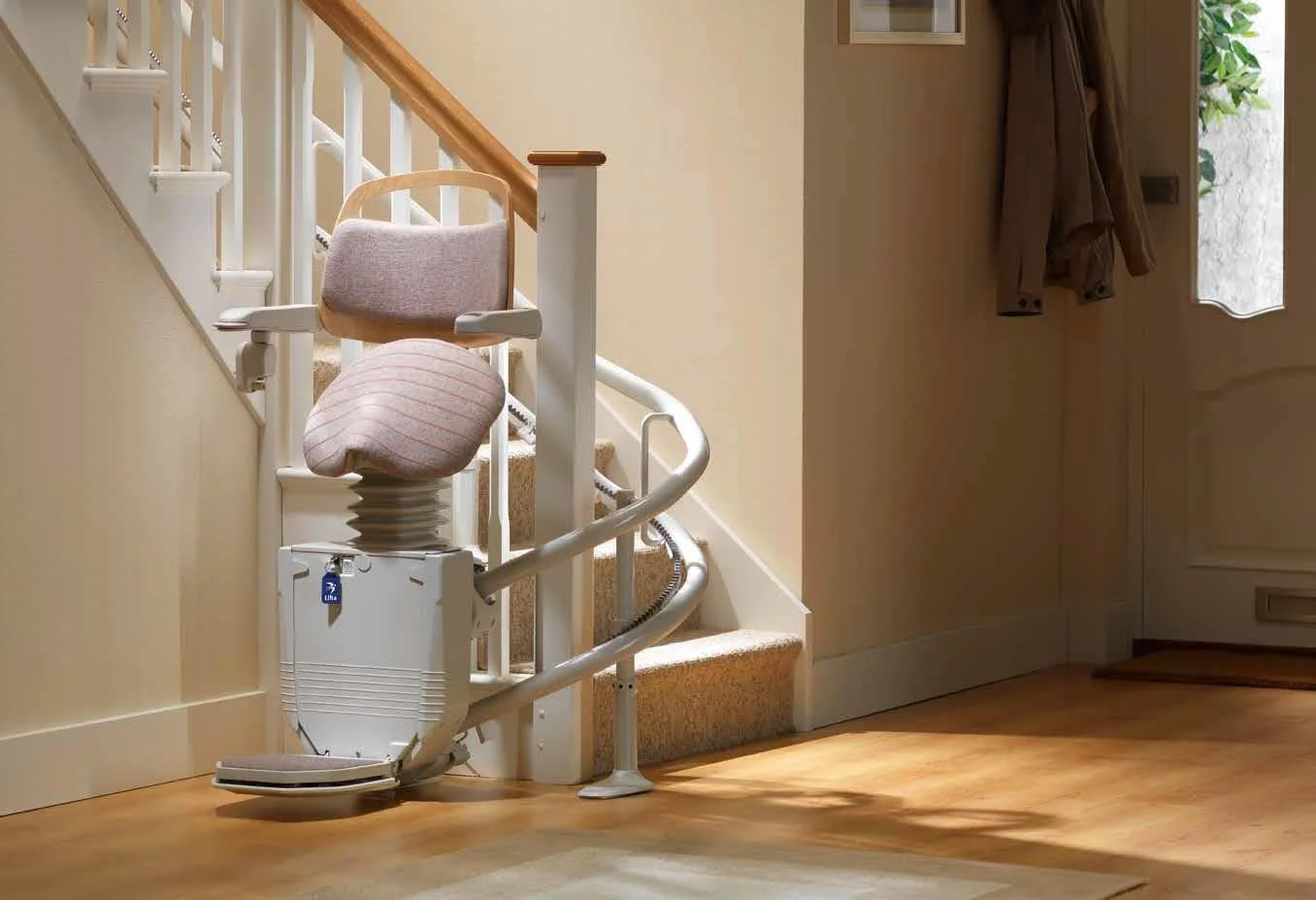
If the inside staircase runs straight from bottom to top, a straight rail lift is usually the simplest and least costly choice. If it turns at a landing or curves, the rail has to be custom made to follow it, which takes longer and costs more. We measure the stairs first so you know which one you are dealing with before any money changes hands.
Entry steps on a porch are a separate question. An outdoor stair lift built for weather can ride those steps, and for someone who uses a wheelchair, a platform lift may make more sense than a seat.
A ranch-style home often has everything on one floor, so the stairs that matter are the ones outside, at the front, back or carport door. That usually points to an outdoor lift or a platform lift rather than an indoor rail.
Split-level homes have short flights between levels, sometimes more than one. Each flight may need its own rail, or one curved rail if the layout allows it. Townhouses tend to have a straight interior staircase, which is a good fit for a straight rail lift, though narrow stairs need to be checked for clearance.
Crisp County covers 281 square miles, and as of the 2020 Census, 45.7% of residents lived in rural areas. Cordele sits along Interstate 75 and US Routes 41 and 280, but a farmhouse off a county road can be a long drive from installers and home-modification contractors based in Cordele or in regional hubs like Albany or Americus.
If you live out of town, plan for the measuring visit and the install to be scheduled trips. It helps to have the stairs clear and to know where the nearest outlet is, so the work can be finished in one visit when possible.
Only 38.4% of residents own their homes, which matters because some grant programs require that you own and live in the house being modified.
Median household income in the county is $45,105 and the poverty rate is 23.3%. For many households, paying the full cost of a stair lift out of pocket is hard, which is why the programs below are worth a phone call before you decide.
Be honest with yourself about one thing: none of the Georgia or VA programs listed below names stair lifts as a covered item on its official page, and the VA HISA grant specifically excludes stair glides. Some cover home modifications in general, which means approval would depend on your individual care plan.
A good first call for anyone 60 or older is the River Valley Area Agency on Aging at (877) 819-6348. Its office is the River Valley Regional Commission AAA at 710 Front Avenue, Suite A, Columbus, 31901, (706) 256-2910, and it is the intake point for SOURCE, EDWP and other in-home services.
Veterans can reach the Georgia Department of Veterans Service - Americus office at 1601 North Martin Luther King Jr., Blvd, Americus, 31719, (229) 931-2546. Georgia's statewide list also includes the Credit-Able Loan Program, which is worth asking about if grants fall short.
A Medicaid waiver for Georgians 65+ or younger with a qualifying disability who need a nursing-home level of care; its official page lists adult day care, personal care, meals and respite but does not mention home modifications or stair lifts. Call (866) 552-4464.
A Medicaid waiver for people 65+ (or younger with a qualifying disability) who meet nursing-home level of care and prefer care at home; the official page does not mention home modifications or stair lifts, and a waitlist may apply. Call (866) 552-4464.
A Medicaid waiver for adults 21-64 with a severe physical disability or traumatic brain injury; it lists home modifications in general, but stair lifts are not named, so coverage depends on individual plan approval. Call (800) 982-0411.
The aging agency serving Crisp County, offering information, referral and intake for in-home services for adults 60+ and adults with disabilities; it is not a cash grant and does not mention home modifications or stair lifts. Call (877) 819-6348.
A state home-modification grant for Georgians with a disability who own and live in the home, with $600,000 appropriated statewide for FY2026 and FY2027; listed work includes ramps and widened doorways, but stair lifts are not named. Call (770) 270-6860.
A Columbus-based Center for Independent Living that runs a home access modification program, though it serves Crisp County at the information-and-referral level only and does not name stair lifts. Call (706) 405-2393 to confirm current capacity.
A state tax credit of up to $125 for retrofitting an existing single-family home for someone with a permanent disability parking permit; stair lifts are not among the four qualifying features, so treat it as a small offset at most.
A lifetime VA grant of up to $6,800 or $2,000 for medically necessary structural changes, but it explicitly excludes stair glides and porch lifts, so it does not cover a stair lift. The general VA benefits line is (800) 827-1000.
VA grants of up to $126,526 (SAH) or $25,350 (SHA) lifetime for veterans with specific severe service-connected disabilities who own or plan to own the home; stair lifts are not named, so coverage within an adaptation plan is not confirmed. Call (800) 827-1000.
Older adults
710 Front Avenue, Suite A, Columbus, 31901
Veterans
1601 North Martin Luther King Jr., Blvd, Americus, 31719
The SOURCE and EDWP waiver pages do not mention stair lifts or home modifications. ICWP, for adults 21-64, lists home modifications in general, so a stair lift would depend on your individual plan. Call (866) 552-4464 for SOURCE and EDWP or (800) 982-0411 for ICWP.
The HISA grant explicitly excludes stair glides. The SAH and SHA grants do not name stair lifts, so it would depend on an approved adaptation plan for a veteran with a qualifying severe service-connected disability. The Americus veterans office at (229) 931-2546 can help you sort out which applies.
Start with the River Valley Area Agency on Aging at (877) 819-6348. It serves Crisp County and handles intake for SOURCE, EDWP and other in-home services for adults 60 and older.
Yes, possibly. ICWP serves Medicaid-eligible adults 21-64 with a severe physical disability or traumatic brain injury, and Access 2 Independence at (706) 405-2393 serves Georgians with a disability of any age at the referral level for Crisp County.
Often, yes. Outdoor stair lifts are built for porch and entry steps, and a platform lift is an option for someone in a wheelchair. We measure the steps and landing to see what fits.
Not directly. Stair lifts are not among its qualifying features, and the retrofit credit is capped at $125.
Tell us about the stairs in your home and we will explain which lift fits, what it costs and how installation works.
