From saltbox colonials in Norwich to the waterfront villages of Mystic, Noank and Groton Long Point, this corner of Connecticut along Long Island Sound has some of the oldest houses in the state. Some Norwich and New London homes date to the early 1700s, and central Norwich is full of Victorian- and colonial-style houses built in the mid-to-late 1800s.
Many of these homes have the bedrooms upstairs and no primary bedroom on the first floor. That is the situation where a stair lift usually comes up. This page walks through how local homes affect the kind of lift you need and where to look for help paying for one.
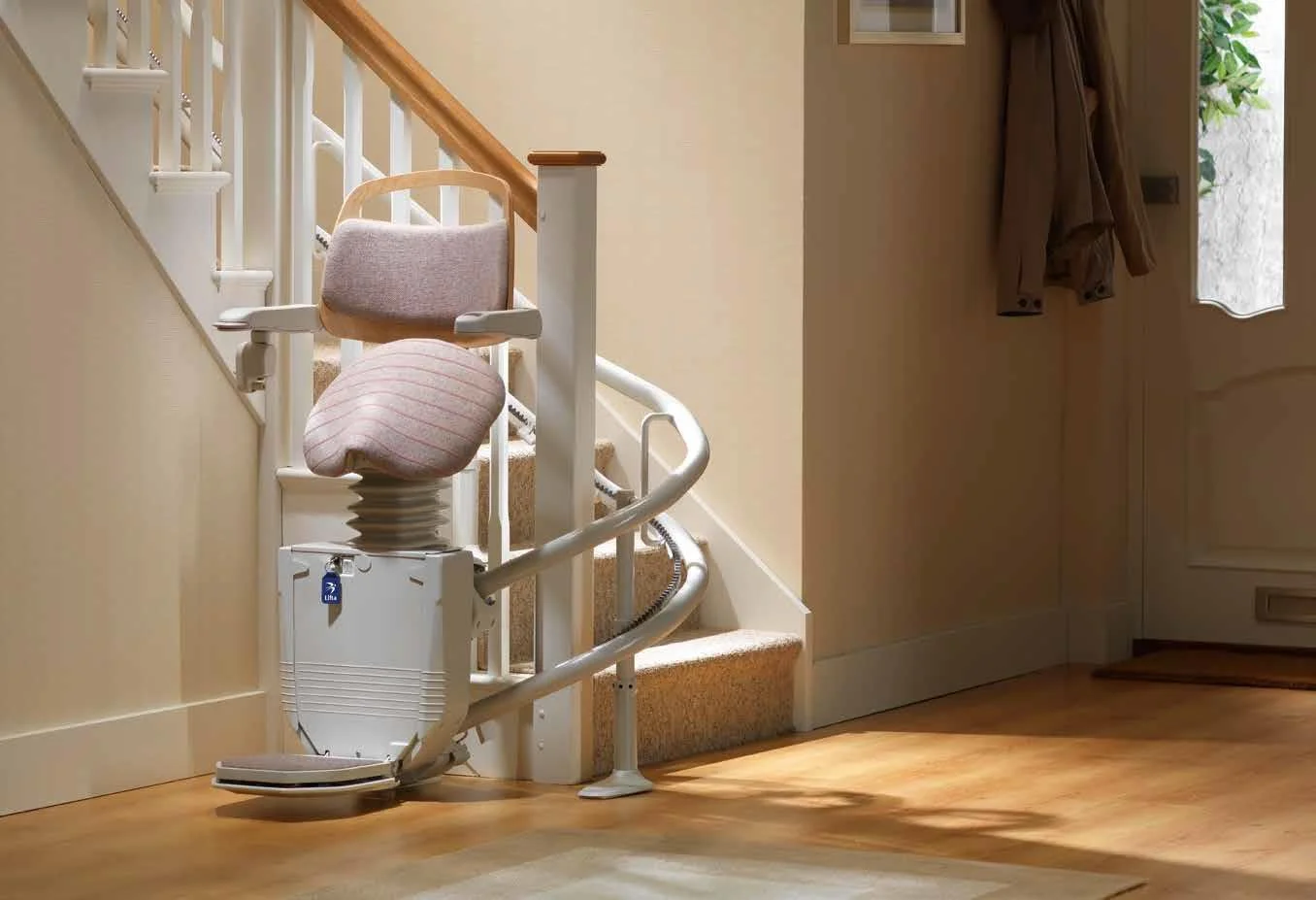
Antique saltboxes and 1800s houses often have narrow, steep staircases, and some turn at a landing or wind near the top. A straight stair lift fits only a single straight run, so a staircase with a turn usually calls for a curved lift built to that specific stair.
The mid-20th-century Cape Cod homes in outlying neighborhoods are a different case. Many have one straight flight to the upstairs rooms, which is the simplest and quickest kind of install. We measure the width, the pitch and the space at the top and bottom before recommending anything.
Split-level homes have short flights between levels, and getting from the garage or front door to the kitchen and then to the bedrooms can mean more than one set of stairs. Sometimes one lift covers the stairs that matter most, and sometimes two are needed.
Townhouses and walk-up apartments add a question of permission. With homeownership at 47.2% across the region, plenty of people here rent, so talk with the landlord or association before planning any install. Outdoor steps to a front entry can be handled with an outdoor lift or, for a wheelchair user, a platform lift.
About 16.8% of residents in the region are 65 or older, and many have lived in the same multi-story house for decades. Adult children often start the conversation after a parent has trouble with the stairs at night or carrying laundry.
The region spans about 598 square miles, so towns like Willimantic, Jewett City, Niantic and Pawcatuck may each be served by different local offices.
There is no single program that simply buys stair lifts for everyone. The clearest local option is the Assistive Technology Loan Program, whose source lists stair glides or lifts among the things it finances, with low-interest loans generally from $500 to $30,000.
Other programs cover home modifications in general terms without naming stair lifts, so you have to ask. A good first call is Senior Resources, the Area Agency on Aging in Norwich at (860) 887-3561, which helps people sort through funding sources. The programs below list who to contact.
A state home care program for Connecticut residents 65 and older who are at risk of nursing home placement, with income and asset limits. It lists Assistive Technology and Minor Home Modifications and Environmental Accessibility Adaptations as covered services but does not name stair lifts; call (860) 424-5040.
Low-interest loans, generally $500 to $30,000 with terms of 1-10 years, for Connecticut residents of at least 1 year with a permanent disability and their family members. The program lists stair glides or lifts as covered; call (860) 424-4881.
Not a grant, but the local agency that connects older adults, people with disabilities and caregivers to home-modification funding and benefits counseling. Its page does not mention stair lifts; call (860) 887-3561.
A Center for Independent Living at 19 Ohio Ave in Norwich with a Home Modification / Barrier Removal Program for people with disabilities in eastern Connecticut, awarded based on need and available funding. Stair lift coverage could not be confirmed in the source; call (860) 823-1898.
Loans at 1% interest and grants for very-low-income homeowners in USDA-eligible rural areas, with grants for owners 62 and older; combined help up to $50,000 and a $10,000 lifetime grant cap. It covers making a home accessible to persons with disabilities but does not name stair lifts, and your address must be in an eligible area.
A housing rehabilitation program for HUD income-eligible property owners in the City of Norwich, aimed at fixing unsafe conditions. Stair lifts are not mentioned; call (860) 823-3700.
A VA grant of up to $6,800 lifetime for a service-connected disability, or up to $2,000 for other eligible conditions, with a VA physician's prescription. The VA's HISA page places stair glides in its excluded category; call (203) 932-5711.
Up to $126,526 for FY2026 for veterans with a permanent and total service-connected disability to build, remodel or buy an adapted home. The source does not name stair lifts specifically; call (800) 827-1000.
Older adults
401 West Thames St., Suite 201, Norwich, 06360
Veterans
100 Broadway, Room 305, Norwich, 06360
Often, yes, but older staircases in Norwich and New London are frequently narrow or turn at a landing. Those usually need a curved lift made for that stair, so an in-home measurement comes first.
The Assistive Technology Loan Program lists stair glides or lifts among covered items, with low-interest loans generally from $500 to $30,000. Call (860) 424-4881 or apply through a Center for Independent Living.
The VA's HISA page lists stair glides as excluded equipment. Veterans can still contact the Connecticut Department of Veterans Affairs Office of Advocacy and Assistance in Norwich at (860) 887-9162 to review other benefits.
CHCPE is for residents 65 and older, but the Assistive Technology Loan Program is based on disability rather than age. USDA Section 504 grants start at 62 for very-low-income homeowners in eligible rural areas.
You will need the landlord's approval before any install. For veterans, the HISA grant allows a rented primary residence with landlord authorization.
Senior Resources, the Eastern CT Area Agency on Aging at 401 West Thames St., Suite 201 in Norwich, can be reached at (860) 887-3561. They help families find home-modification funding and benefits counseling.
Tell us about the stairs in your home and we will explain which lift fits, what it costs and how installation works.
