In Craig, a split-level house, a ranch home with porch steps, or a raised front entry can be the one thing standing between someone and staying home. Out past town, toward Dinosaur and the small unincorporated communities spread across the county, those few steps often sit outside, in the snow and ice.
This page walks through which homes in Moffat County tend to need a stair lift, what local winters mean for outdoor installs, and which public programs may help with the cost. It covers the questions families usually raise when we sit down to measure a staircase.
Much of the county's housing comes from its ranching roots: single-family homes, ranch-style homes, split-level homes and some low-rise buildings. The 2020 census counted 6,091 housing units countywide, 68.5% of them owner-occupied.
A single-story ranch home cuts down on the need for an inside lift, but it rarely removes it. Many have a basement stair or a set of steps up to the front door. Split-level homes are a different case, since every trip between living space and bedrooms means a short flight of stairs.
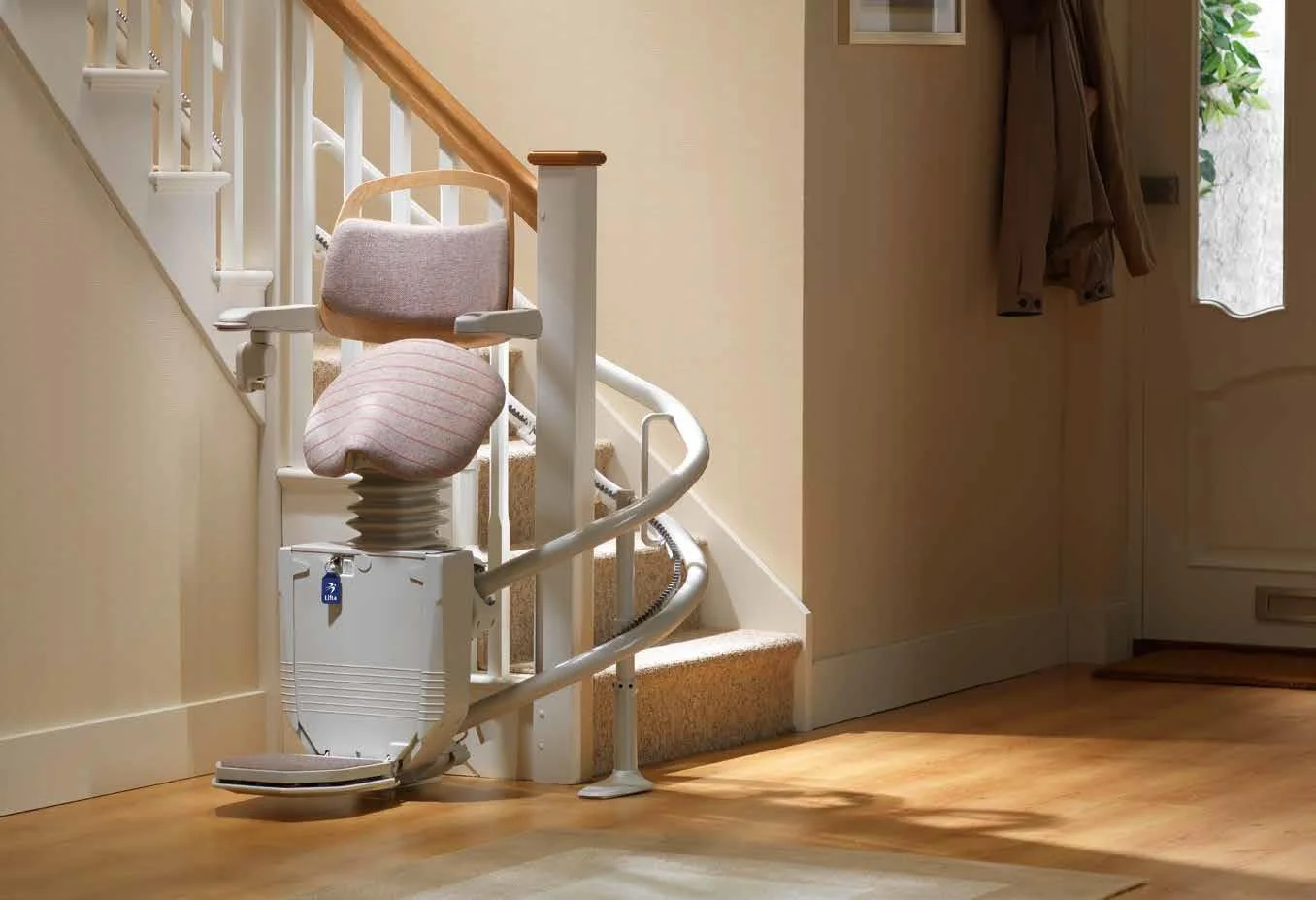
A short, straight run is the simplest install, with a rail that follows the steps in one line. If the stairs turn at a landing, a curved rail built to that staircase is the usual answer. Where the stairs are too tight for a seat, or a wheelchair has to go up, a platform lift may fit better.
Craig sits at 6,198 feet. Winters are long, with a January mean daily minimum of 7.0°F and average annual snowfall of 76.2 inches. Porch stairs and unramped entries become a real fall risk for months at a time.
For that reason, we look at the outside of the house during an assessment, not just the inside. An outdoor stair lift on the porch or entry steps can matter more than an indoor one. Plan for who will keep snow off the rail and landing, because the lift is only as safe as the path to it.
Moffat County covers 4,751 square miles, the second-largest county by area in Colorado, behind Las Animas County. About 72.6% of residents live in urban areas, mostly Craig, while 27.4% live rural, among mountain ranges and high plateaus such as Cold Spring Mountain.
When a parent lives far from town, a fall on the stairs can mean a long wait for help. Families in these spots often decide on a lift sooner rather than later. About 16.5% of county residents are 65 or older, so this is a question many households here are already facing.
If a service-connected disability makes stairs hard, VA housing grants are worth asking about before paying out of pocket.
Veteran Office Moffat is at 1198 W. Victory Way Suite 100, Craig, CO 81625, phone (970) 870-5469. They can help with the paperwork and point you toward the right VA contact.
The clearest path is the Health First Colorado EBD waiver, whose Home Modification benefit has a $14,000 lifetime maximum. State construction specifications for that benefit list stairway chair lifts, which must comply with ASME 18.1; cable-driven lifts are not allowed.
USDA Section 504 repair loans and grants, VA disability housing grants, and Area Agency on Aging vouchers may also help, though their sources do not name stair lifts. Call and ask before you buy. Statewide, you can also look into VA Benefits for Veterans (HISA + Prosthetics), the Assistive Technology Act Program of Colorado (AT Partners), and the Colorado Senior Property Tax Exemption (Senior Homestead Exemption).
The Associated Governments of Northwest Colorado AAA, 122 Lion Blvd., Suite 104, Vail, CO 81657, can be reached at (970) 625-1723. The programs below list each phone number.
This Medicaid waiver's Home Modification benefit covers stairway chair lifts, up to a $14,000 lifetime maximum, for members who need a nursing-facility level of care and meet income and resource limits. Apply through a local Single Entry Point agency or call (800) 221-3943.
Very-low-income rural homeowners can get repair loans up to $40,000 at 1% interest, and those 62 or older who cannot repay a loan can get grants up to $10,000; stair lifts are not named, though accessibility repairs are described. Craig and unincorporated Moffat County are generally eligible; call (800) 414-1226.
These grants help veterans and service members with qualifying service-connected disabilities modify a home, with FY2026 maximums such as SAH up to $126,526 and SHA up to $25,350; stair lifts are not named in the source. Call (800) 827-1000 to ask whether a specific installation qualifies.
This agency offers vouchers to older adults and adults with disabilities in Garfield, Mesa, Moffat and Rio Blanco counties, including Health Equipment vouchers; stair lifts are not listed by name. Call (970) 248-2717 to ask whether a voucher can go toward a lift.
Older adults
122 Lion Blvd., Suite 104, Vail, 81657
Veterans
1198 W. Victory Way Suite 100, Craig, 81625
It can, through the EBD waiver's Home Modification benefit, which allows stairway chair lifts up to a $14,000 lifetime maximum. The member must qualify for the waiver, and the lift must comply with ASME 18.1. Call (800) 221-3943 or a local Single Entry Point agency.
The EBD waiver also covers adults ages 18-64 who are blind, have a physical disability, or have an HIV/AIDS diagnosis, as long as they meet the other requirements.
Maybe not inside, but check the entry. Many ranch homes in the area have porch steps or a raised entry, and with Craig's icy winters an outdoor lift or a ramp is often where the real need is.
Craig and unincorporated Moffat County are rural and generally eligible on the USDA property map. Grants are limited to very-low-income homeowners 62 or older who cannot repay a loan. Call (800) 414-1226.
Start with Veteran Office Moffat in Craig at (970) 870-5469. For VA housing grant questions, the VA benefits line is (800) 827-1000.
Tell us about the stairs in your home and we will explain which lift fits, what it costs and how installation works.
