Selma has roughly 200 years of history, and its historic district counts more than 1,250 contributing structures. Many of those houses were built long before anyone planned for accessibility, so raised entry steps, front porches and multi-story or split-level layouts are common. Valley Grande and Selmont-West Selmont add their own mix of single-family homes, detached houses, townhouses and walk-up apartments.
Outside Selma, Dallas County is mostly rural, spread across 994 square miles of the Black Belt and split by the Alabama River. This page covers what local homes usually need in a stair lift, how distance can affect scheduling, and which programs may help with the cost.
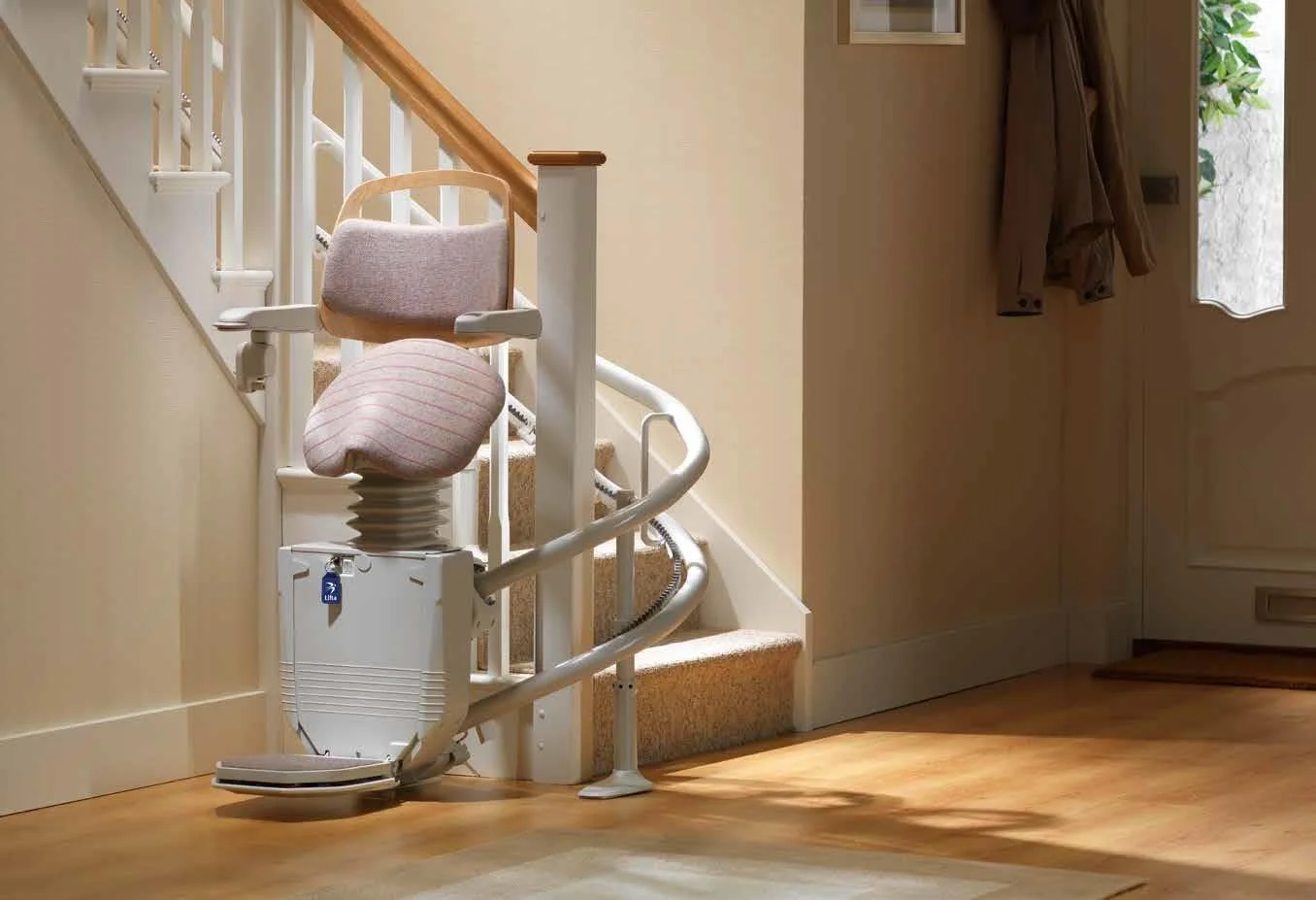
A lot of homes in and around Selma have steps in more than one place: a set up to the porch, a main staircase inside, and sometimes a short run between levels. Each one is a separate decision. A straight staircase with no turns or landings is the simplest case and usually takes a straight rail.
Older staircases with a turn, a landing or a narrow curve need a curved rail built to fit that exact stair. Raised porches and entry steps are often better handled by an outdoor lift made for weather, or by a platform lift when a wheelchair has to come along. We look at all of these on the same visit so you are not solving one set of steps and stuck on the next.
Split-level homes put a few steps between almost every part of the house. Sometimes one short straight lift on the run used most often makes the biggest difference, and the rest can wait.
Townhouses and walk-up apartments raise a different question: who owns the stairs. Only 57.4% of households in the area own their home, so renters should talk with the landlord before an installation. Inside stairs in a townhouse are usually the owner's call, while shared stairs in a walk-up apartment are not.
About 55.1% of county residents lived in urban areas as of 2020, which leaves a large share living in the rural stretches outside Selma. The county has also shrunk from 56,667 people in 1960 to 38,462 in 2020, with a 2025 estimate of about 35,140, so homes are more spread out than they used to be.
If you live away from the county seat, plan for a little more lead time on the in-home assessment and the install. Having the stair measurements, photos of the steps and a rough idea of who will use the lift ready before the visit helps everything move faster.
About 18.6% of residents are 65 or older, and many of them live in the older houses described above. Adult children often call first, after noticing a parent avoiding the upstairs bedroom or the porch steps.
That matters because veterans may have VA options, though not every VA grant covers a stair lift, as the program list below explains.
Money is a real concern here. Selma is described as one of Alabama's poorest cities, with an average income of $35,500, which is 30% less than the state average, and one in every three residents lives below the state poverty line. Many seniors will need outside help to cover a home modification like a stair lift.
The Alabama Elderly and Disabled (E&D) Medicaid HCBS Waiver is the one program on our list that names home modifications as a covered service. The Alabama Tombigbee Regional Commission (ATRC) Area Agency on Aging is the local intake point for that waiver, so it is a good first call. Veterans can reach the Dallas County Veterans Service Office at (334) 874-2533, at 105 Lauderdale Street, Dallas County Courthouse, Room 132, Selma 36702.
Alabama's largest Medicaid home and community waiver lists Home Modifications as a covered service, though no dollar cap was stated on the source reviewed and covered services should be confirmed through ATRC. It serves people 65 and older, or younger if disabled, who meet a nursing-facility level of care; call (800) 243-5463.
The local Area Agency on Aging for Dallas County and nine other counties handles intake and case management for the Medicaid waiver, nutrition and homemaker programs. Its source does not mention stair lifts or home modifications, so call (334) 682-5206 to ask what is available.
A self-directed budget for people who already qualify for Medicaid waiver services, usable for personal care and other items that sustain or improve health. Stair lifts and home modifications are not named as allowable uses; call (334) 242-5743 to confirm.
Offers repair loans up to $40,000 at 1% interest for 20 years, and grants up to $10,000 lifetime for homeowners 62 and older in eligible rural areas, which includes most of Dallas County outside central Selma. Approved repairs listed include ramps, grab bars and walk-in tubs; stair lifts are not named.
Pays for permanent structural changes like entrance access and roll-in showers, up to $6,800 or $2,000 lifetime depending on disability status. Stair glides are specifically excluded, so this grant does not cover a stair lift.
Grants of up to $126,526 (SAH) or $25,350 (SHA) for FY2026 for veterans with qualifying severe service-connected disabilities. The VA page names ramps and wider doorways but does not mention stair lifts; call (800) 827-1000.
A Montgomery-based center serving people with disabilities in an 18-county area that includes Dallas County. Its source does not itemize home-modification or stair lift help, so call (334) 240-2520 to ask.
Older adults
5900 Carmichael Place, Montgomery, 36117
Veterans
105 Lauderdale Street, Dallas County Courthouse, Room 132, Selma, 36702
Possibly. The Alabama Elderly and Disabled (E&D) Medicaid HCBS Waiver lists Home Modifications as a covered service. You must be 65 or older, or younger if disabled, meet a nursing-facility level of care, and fall under the 2026 limits of $2,982 in monthly income and $2,000 in countable assets for a single applicant. Confirm coverage with ATRC at (334) 682-5206.
No. The VA lists stair glides among excluded removable equipment for HISA. It can help with permanent changes such as entrance access. The Dallas County Veterans Service Office at (334) 874-2533 can walk you through other VA options.
Most of Dallas County outside central Selma qualifies, but it depends on the USDA eligibility map for your specific property. Keep in mind the USDA program names ramps, grab bars and walk-in tubs, not stair lifts.
Often, yes, because indoor and outdoor steps are different jobs. An outdoor or platform lift may suit the porch, and a straight or curved rail fits the inside stairs. We look at both during one visit.
It can. Dallas County covers 994 square miles and is mostly rural outside Selma, so travel adds time. Calling early and having stair photos ready helps.
Yes, if they are disabled. The E&D waiver accepts younger applicants who are disabled and meet a nursing-facility level of care, and Independent Rights & Resources at (334) 240-2520 serves people with disabilities in Dallas County.
Tell us about the stairs in your home and we will explain which lift fits, what it costs and how installation works.
